
Indigenous Children’s Eye Examination Project Confronts Vision Care Gaps in Remote Communities
Thursday, August 14 2025 | 08 h 30 min | News
A pediatric eye care initiative launched in Northern Ontario is helping address one of Canada’s most persistent healthcare inequities: access to vision care for Indigenous children in remote communities.
The Indigenous Children’s Eye Examination (ICEE) Project was founded in 2019 by Dr. Kourosh Sabri, pediatric ophthalmologist and professor at McMaster University, in response to the Truth and Reconciliation Commission of Canada’s Calls to Action on health. Working with lead optometrist and national coordinator Dr. Yasmin Jindani, ICEE brings teams of physicians, optometrists, orthoptists, opticians, and eye technicians directly into underserved Indigenous communities.
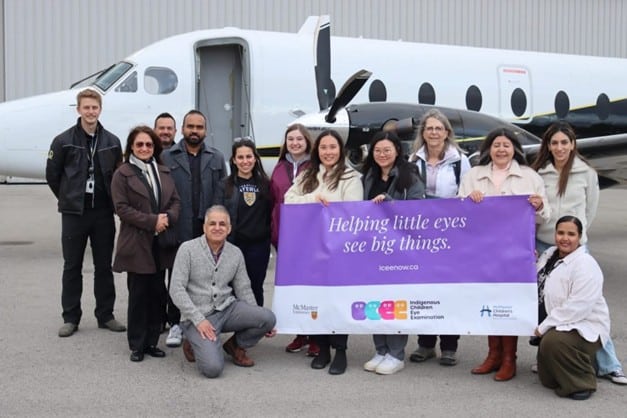
According to ICEE, more than 75% of children examined through the program require corrective lenses—provided at no cost to families. Those needing specialized treatment are referred to pediatric tertiary care centres. Since its inception, ICEE has examined over 1,000 children in the James Bay region of Ontario and Northern Saskatchewan.
Four Pillars of Care
ICEE’s approach combines on-site comprehensive eye exams, follow-up via weekly telemedicine clinics, training of Indigenous youth as community-based eye technicians, and relationship-building to facilitate other healthcare services. In one example, the program’s trusted presence helped enable the launch of remote wound-care clinics in partnership with plastic surgeons.
Addressing Barriers to Access
In many northern communities, residents may travel more than 900 kilometres to see an eye doctor. While the federal Non-Insured Health Benefits (NIHB) program covers patient transportation, ICEE notes that administrative delays, high costs, and the emotional strain of leaving family can make this an impractical option. Blindness is six times more common among Indigenous children than among non-Indigenous peers, and diabetes—on the rise in Indigenous youth—further increases the risk of vision loss.
Funding Challenges
Despite its reach and outcomes, ICEE’s future is uncertain. The program reports that applications for sustainable funding have been unsuccessful, and current resources may be depleted within a year, potentially limiting services and halting expansion into other provinces.
ICEE is seeking public, professional, and institutional support to maintain operations. More information is available at www.iceenow.ca.
Source: Canadian Ophthalmological Society
Want to see more like this article? Click here to subscribe to our FREE print magazines and e-newsletters!