
Every $1 Invested in Eye Health Could Yield a $28 Return
Thursday, October 9 2025 | 08 h 58 min | News
Simple, cost-effective eye health interventions could unlock nearly half a trillion dollars in global economic gains annually, according to new research unveiled during the United Nations General Assembly in New York.
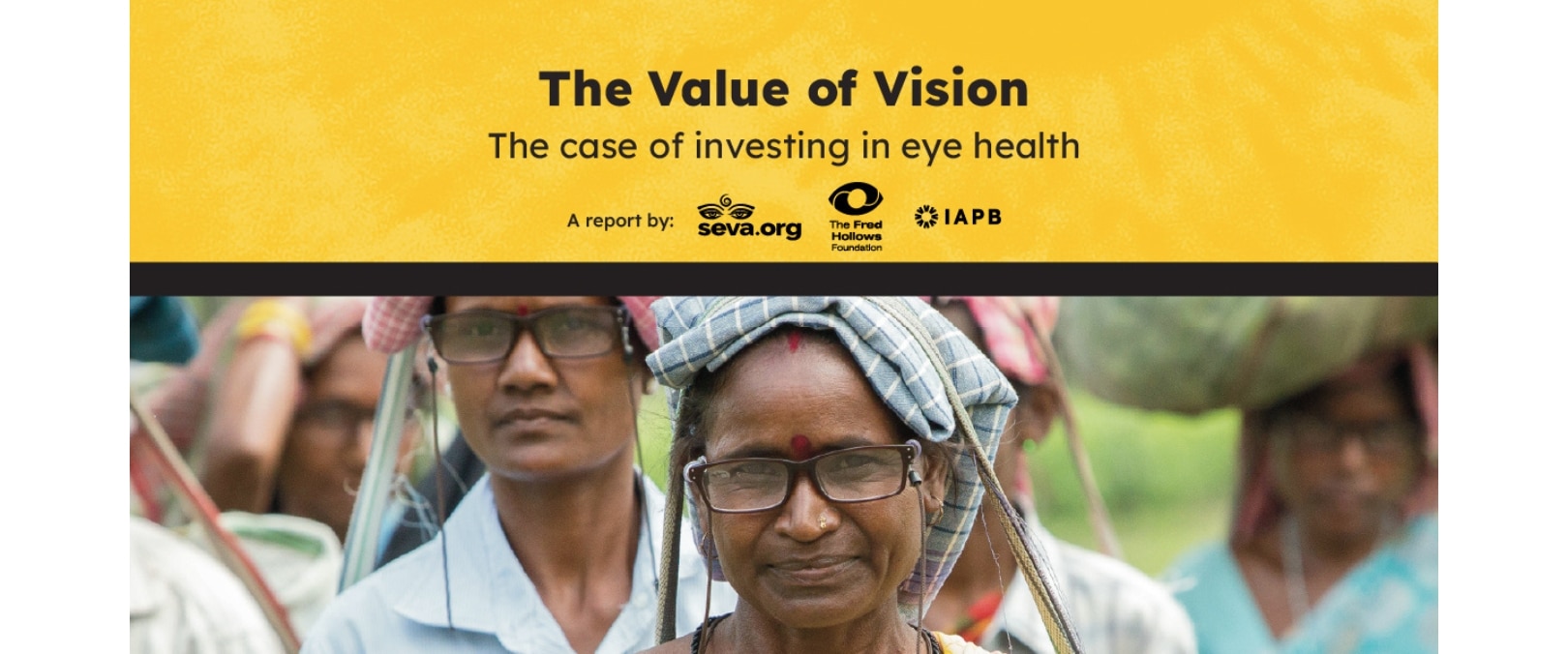
The Value of Vision report, published by the International Agency for the Prevention of Blindness (IAPB) in collaboration with Seva Foundation and The Fred Hollows Foundation, reveals that interventions such as school screenings and distributing ready-made reading glasses in low- and middle-income countries (LMICs) could return $28 for every $1 invested.
The findings estimate that scaling up 6 priority interventions would generate $447 billion in economic returns each year, create 22 million new jobs, and free 304 million people from unpaid caregiving responsibilities—impacts that ripple across education, employment, and health systems.
Six Priority Eye Health Actions
The report outlines six areas governments can prioritize to reduce avoidable vision loss:
- Early detection through school, community, and workplace screenings
- On-the-spot distribution of reading glasses following screenings
- Workforce expansion through training and technology
- Boosting surgical productivity with streamlined workflows
- Removing barriers such as cost, stigma, and distance
- Improving cataract surgery outcomes with biometry and stronger post-op care standards
A $7.1 billion investment by 2030 could recoup $199 billion. Sustained investment beyond that horizon could fully eliminate vision impairment, generating lasting social and economic benefits.
Call to Action at the UN
Speaking at the high-level meeting, Antigua and Barbuda Prime Minister Gaston Browne urged world leaders to develop national eye health roadmaps ahead of the 2026 Global Summit for Eye Health.
“Unlike some difficult and complex policy issues, eye health already has solutions that are affordable and implementable. What is needed now is action,” he said.
IAPB CEO Peter Holland emphasized that vision loss is a universal challenge too often sidelined in development agendas:
“Eye health is one of the most powerful ways governments can build stronger economies. Ahead of the Global Summit, we must integrate eye care into national health and economic strategies.”
Experts from Seva Foundation and The Fred Hollows Foundation echoed the findings, calling eye health one of the most cost-effective global health investments available.
The full Value of Vision report and data are available via the IAPB Vision Atlas.
Source: IAPB
Want to see more like this article? Click here to subscribe to our FREE print magazines and e-newsletters!