
fbpx

A Shady Past: The History of Sunglasses

By Sarah Bureau, RO

The earliest known sunglasses were crafted by the Inuit people by carving a slit into a piece of bone and fastening it tightly in front of their eyes using leather strapping. Soot and gunpowder were often rubbed onto the bone to further reduce reflections. This creation both shielded their eyes from the bright sun and the snow’s reflected light and sharpened their vision as they scanned the horizon during hunting. 

We’ve come a long way since this very early invention, with lenses designed for nearly every function we can think of, advances in technology, and even the recent addition of electronics!  

Between the 13th and 18th century, eyewear fluctuated between being a symbol of disability to an indication of wealth and stature in the Renaissance period. The craftsmanship of opticians also evolved from using natural materials like horn and tortoiseshell to rolled metals and from basic reading lenses to more complex optics such as multifocals.

The history of sunglasses includes The Roman Emperor Nero who was said to have worn polished gemstones to reduce sunlight while viewing Gladiator matches and 12th century Chinese magistrates who chose to wear tinted panes of smoke tinted quartz to hide their expressions during court proceedings. 

As we entered the 18th century, eyewear began to take the shape of what we now dispense daily, with lenses mounted into metal chassis with wire extending over the ear to hold them in place. At this time, a man named James Ayscough speculated that coloured lenses would help with specific visual impairments and began experimenting with green and blue tinted glass as a way to improve the wearer’s vision. The first examples of tinted lenses being prescribed for therapy were in the 20th century when yellow and brown lenses were recommended to patients suffering from photophobia caused by syphilis.   

Our modern use of sunglasses, and the fashion and status symbol they now represent, really came into vogue when celebrities started sporting sunwear as Hollywood became the epicenter of film making in the 1920s. With beautiful weather nearly year-round, Hollywood celebrities needed to protect their eyes from the sun during their film shoots. With the paparazzi publishing photos around the world of the actors on set, this became the perfect marketing tool for sunglasses to have their shining debut in the fashion world.  

Innovation in motorcars and airplanes began to expand in the 20th century and the need for protective eyewear to be used in open cockpits and convertibles at these new high speeds emerged. Eyewear became larger in size and incorporated protective side shields. As technology advanced with enclosed cockpits, the need for side shields to protect the eyes was no longer necessary and the U.S. Army Air Corps introduced the first iteration of the aviator sunglasses in 1941, a style which is just as popular worldwide today as it was then. These sunglasses became a symbol of heroism during the Second World War and were proudly worn by the public as well as the armed forces. Before the War, plastic eyewear was made of celluloid which had many drawbacks, including its lack of durability and potential to explode with heat. As materials such as rubber became more scarce, new technology in plastic production became necessary. Previously, eyewear designers focused on making the celluloid material look like the traditional horn and tortoiseshell patterning of the past, but the new use of plastics for a wide variety of manufacturing ushered in a new era of fashionable colours and patterns being embraced.

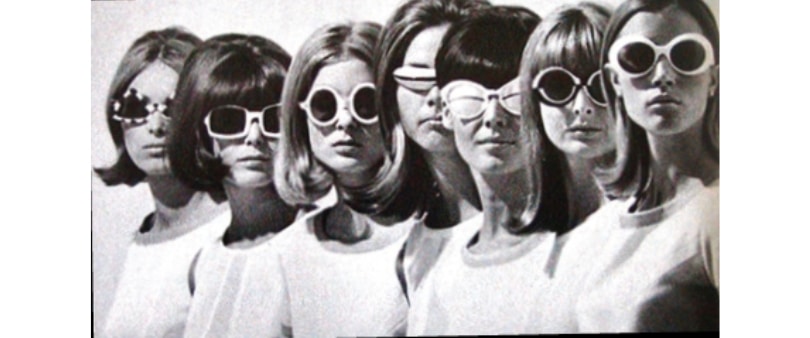
The end of the Second World War heralded the beginning of sunglasses being the fashion accessory they are today. As the world rebounded from the depression, poverty and shortages the war created, the public began to celebrate by embracing little luxuries in their lives. Simultaneously, as the hairstyles of modern women began to change, the need for ornate hair combs diminished. The artisans who crafted the beautiful hair combs of the past transitioned their skill set into creating stunning and ornate eyewear with elaborate designs and contemporary colours. Inexpensive sunglasses also became accessible to the masses as they started to be sold in local shops and pharmacies. It was at this time that marketing geniuses introduced collaborations with fashion houses to conceive branded eyewear that paid out a percentage of sales in exchange for using the fashion house’s name with their designs. The development and success of those early partnerships are the backbones of what has become the massive market that proliferates the industry now.

A special thanks to the research and publication of “Eyewear A Visual History” by Moss Lipow. I recommend this gem of a book to any optical nerd like me!

Check out Sarah’s article in the May-June issue of Optik magazine!

Featured Posts

ClearVision logo

ClearVision Optical Names 2025 Fred Friedfeld Scholarship Recipient

ClearVision Optical recognizes Monica Van Duyne as the 2025 Fred Friedfeld Memorial Scholarship recipient, supporting optometry education.

Learn More
Vision Expo new logo

Vision Expo 2026 Marks 40 Years with Unified Annual Event in Orlando

Vision Expo returns to Orlando in March 2026 as a unified annual event, featuring accredited education, new product launches and a 40th anniversary celebration.

Read more
CRO logo image for Research Updates in Optik magazine

Role of B Vitamins in Preventing the Development and Progression of Age-Related Macular Degeneration

A 2025 review highlights evidence linking vitamins B6, B9 and B12 to reduced risk and slower progression of age-related macular degeneration, with AREDS3 set to explore added benefit.

Read more
Neurolens Newton Standard Prism versus contoured prism

Large Retrospective Study Reports Greater Symptom Relief with Neurolens Contoured Prism Technology

A real-world analysis of nearly 100,000 patients found greater improvement in headaches and visual fatigue with Neurolens compared to conventional prism.

Read more
WestGroupe logo

WestGroupe Marks Third Year Supporting Waterloo Eye Institute Initiatives

WestGroupe continues its partnership with the University of Waterloo’s Waterloo Eye Institute, supporting education, research and expanded patient care facilities.

Read more
ClearVision logo

ClearVision Optical Names 2025 Fred Friedfeld Scholarship Recipient

ClearVision Optical recognizes Monica Van Duyne as the 2025 Fred Friedfeld Memorial Scholarship recipient, supporting optometry education.

Learn More
Vision Expo new logo

Vision Expo 2026 Marks 40 Years with Unified Annual Event in Orlando

Vision Expo returns to Orlando in March 2026 as a unified annual event, featuring accredited education, new product launches and a 40th anniversary celebration.

Read More
CRO logo image for Research Updates in Optik magazine

Role of B Vitamins in Preventing the Development and Progression of Age-Related Macular Degeneration

A 2025 review highlights evidence linking vitamins B6, B9 and B12 to reduced risk and slower progression of age-related macular degeneration, with AREDS3 set to explore added benefit.

Read More
Neurolens Newton Standard Prism versus contoured prism

Large Retrospective Study Reports Greater Symptom Relief with Neurolens Contoured Prism Technology

A real-world analysis of nearly 100,000 patients found greater improvement in headaches and visual fatigue with Neurolens compared to conventional prism.

Read More
WestGroupe logo

WestGroupe Marks Third Year Supporting Waterloo Eye Institute Initiatives

WestGroupe continues its partnership with the University of Waterloo’s Waterloo Eye Institute, supporting education, research and expanded patient care facilities.

Read More
ClearVision logo

ClearVision Optical Names 2025 Fred Friedfeld Scholarship Recipient

ClearVision Optical recognizes Monica Van Duyne as the 2025 Fred Friedfeld Memorial Scholarship recipient, supporting optometry education.

Learn More
Vision Expo new logo

Vision Expo 2026 Marks 40 Years with Unified Annual Event in Orlando

Vision Expo returns to Orlando in March 2026 as a unified annual event, featuring accredited education, new product launches and a 40th anniversary celebration.

Read more
CRO logo image for Research Updates in Optik magazine

Role of B Vitamins in Preventing the Development and Progression of Age-Related Macular Degeneration

A 2025 review highlights evidence linking vitamins B6, B9 and B12 to reduced risk and slower progression of age-related macular degeneration, with AREDS3 set to explore added benefit.

Read more
Neurolens Newton Standard Prism versus contoured prism

Large Retrospective Study Reports Greater Symptom Relief with Neurolens Contoured Prism Technology

A real-world analysis of nearly 100,000 patients found greater improvement in headaches and visual fatigue with Neurolens compared to conventional prism.

Read more
WestGroupe logo

WestGroupe Marks Third Year Supporting Waterloo Eye Institute Initiatives

WestGroupe continues its partnership with the University of Waterloo’s Waterloo Eye Institute, supporting education, research and expanded patient care facilities.

Read more
ClearVision logo

ClearVision Optical Names 2025 Fred Friedfeld Scholarship Recipient

ClearVision Optical recognizes Monica Van Duyne as the 2025 Fred Friedfeld Memorial Scholarship recipient, supporting optometry education.

Learn More
Vision Expo new logo

Vision Expo 2026 Marks 40 Years with Unified Annual Event in Orlando

Vision Expo returns to Orlando in March 2026 as a unified annual event, featuring accredited education, new product launches and a 40th anniversary celebration.

Read more
CRO logo image for Research Updates in Optik magazine

Role of B Vitamins in Preventing the Development and Progression of Age-Related Macular Degeneration

A 2025 review highlights evidence linking vitamins B6, B9 and B12 to reduced risk and slower progression of age-related macular degeneration, with AREDS3 set to explore added benefit.

Read more
Neurolens Newton Standard Prism versus contoured prism

Large Retrospective Study Reports Greater Symptom Relief with Neurolens Contoured Prism Technology

A real-world analysis of nearly 100,000 patients found greater improvement in headaches and visual fatigue with Neurolens compared to conventional prism.

Read more
WestGroupe logo

WestGroupe Marks Third Year Supporting Waterloo Eye Institute Initiatives

WestGroupe continues its partnership with the University of Waterloo’s Waterloo Eye Institute, supporting education, research and expanded patient care facilities.

Read more