

The Vision Council Foundation and EyeMed Launch Video Series Highlighting Eye Exams’ Role in Diabetes Care
Thursday, November 12 2026 | 11 h 55 min | News
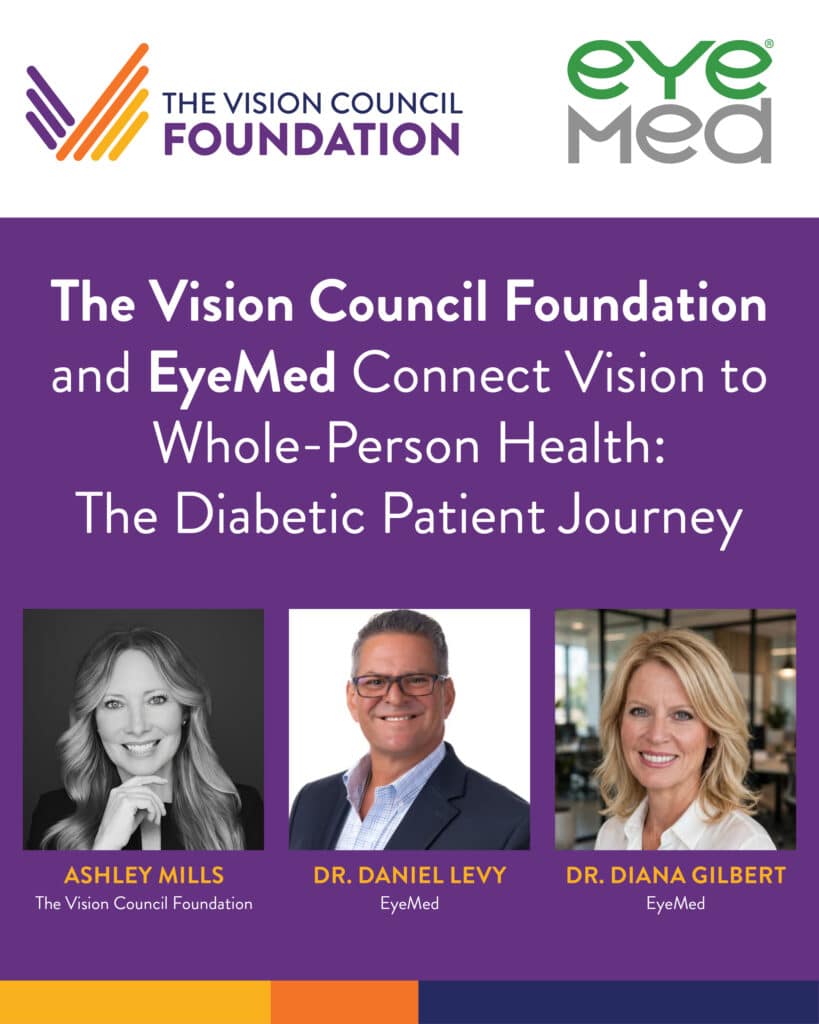
The Vision Council Foundation and EyeMed Vision Care have launched a new three-part video series aimed at highlighting the important role routine eye exams play in diabetes care and overall health.
Released in recognition of National Diabetes Awareness Month, the free series, Beyond the Routine Vision Exam: Connecting Eye Care to Whole-Person Health, follows the diabetic patient journey and explores how comprehensive eye examinations can support the early detection and management of diabetes-related health issues.
Moderated by Ashley Mills, CEO of The Vision Council and The Vision Council Foundation, the discussions feature Dr. Diana Gilbert and Dr. Daniel Levy, Medical Directors at EyeMed Vision Care. The panel explores topics including early detection, patient education, communication among healthcare providers and coordinated care.
Bridging eye care and diabetes management
According to the U.S. Department of Health and Human Services’ Healthy People 2030 initiative, approximately one in three adults diagnosed with diabetes did not receive an eye examination within the previous year, despite diabetic retinopathy remaining the leading cause of new blindness cases among working-age adults in the United States.
Data from The Vision Council’s Consumer inSights Q3 2026 survey of more than 12,000 adults also suggests many patients may underestimate the importance of routine eye care. Among adults who had not undergone an eye examination in the previous year, 42% said the primary reason was that they were not experiencing vision problems.
The survey further found that adults with vision insurance were half as likely as those without coverage to report that their last eye examination had been more than two years earlier.
“The eye is often a window to a patient’s overall health,” said Ashley Mills. “For patients with diabetes, a routine eye exam can find signs of disease before they notice any change in their vision. This series looks at what it takes to turn that finding into care: clear communication, patient education and a care team that stays connected.”
Supporting coordinated patient care
According to Dr. Diana Gilbert, routine eye examinations create important opportunities for early detection of diabetes-related eye disease.
“Many patients see their eye doctor regularly, which gives us a real opportunity to spot signs of diabetes-related eye disease early,” said Dr. Gilbert. “What matters just as much is what happens next: helping patients understand what we found and making sure that information reaches the rest of their care team.”
Dr. Daniel Levy emphasized the role eye care providers can play within a broader healthcare network.
“Eye doctors often see patients more regularly than other providers do, so we’re in a good position to be part of the broader care team,” said Dr. Levy. “When exam findings are shared and referrals go both ways, patients with diabetes get more coordinated care, and that’s where we see better outcomes.”
Three-part educational series
The video series will be released throughout November:
- Part 1: It Starts with the Exam explores how eye examinations can reveal important information about a patient’s overall health and diabetes risk.
- Part 2: Beyond the Exam Room focuses on helping patients understand their results and improving communication among members of the healthcare team.
- Part 3: Moving the Patient Forward examines opportunities to better connect vision care with the broader healthcare system.
The initiative coincides with the launch of Life in Focus: An Interactive Guide to Diabetic Retinopathy, the newest educational toolkit in the Life in Focus series developed by EyeMed and The Vision Council Foundation.
The resource explains diabetic retinopathy, risk factors, symptoms, treatment options and includes interactive educational materials. The toolkit is available free of charge to eye care professionals, educators and patients.
Source: The Vision Council
Want to see more like this article? Click here to subscribe to our FREE print magazines and e-newsletters!