

The Kids Category: From Afterthought to Growth Engine
Tuesday, July 28 2026 | 08 h 53 min | Optik Magazine, Practice Management
By Dr. Trevor Miranda, OD
Children’s eyewear and myopia management have become one of the most dynamic and profitable areas in modern optometry.
Twenty or thirty years ago, the children’s category in most optical practices was often treated as an afterthought. Kids’ eyewear was typically displayed in a small corner with limited frame options, basic lenses, and very little focus on style, technology, or experience. It was often seen as a lower-margin category where the goal was simply to get a child into a functional pair of glasses and move on. Today, that could not be further from the truth.
A Category Transformed
The children’s eyewear category has evolved into one of the most exciting, clinically important, and relationship-driven areas of optometry. In many practices, it has become a major driver of growth, patient loyalty, and long-term profitability.
One of the biggest shifts has been how children themselves view eyewear. Years ago, many children would cry when told they needed glasses. Today, many cry when they are told they do not need them. Glasses have become more socially accepted, more fashionable, and in some cases even aspirational. Kids see eyewear as part of their identity. They want frames that reflect their personality, interests, favourite colours, or even the social media trends they follow.
That shift has driven major innovation in frame design. Today’s pediatric frames are lighter, more durable, more flexible, and far more stylish than they used to be. We now have options with memory metals, spring hinges, silicone components, sports-specific designs, and frame geometries that better fit smaller faces and developing nasal bridges. The result is a better patient experience, improved comfort, and better compliance.
Better Lenses, Better Experiences
Lens technology has also changed dramatically. Children are no longer limited to basic plastic lenses. Parents are increasingly interested in premium lens options such as impact-resistant materials, anti-reflective coatings, blue light filters, photochromic lenses, and digital lens designs. For active kids, second pairs for sports, sunwear, or outdoor activities are becoming increasingly common. In many cases, these upgrades improve not only the child’s visual experience but also the practice’s average revenue per patient.
Myopia Management Changes the Conversation
Of course, perhaps the most significant development in pediatric eye care has been the rise of myopia management. For years, childhood myopia was approached with a relatively simple model: the child became more nearsighted, we prescribed stronger glasses, and we waited until next year. Today, we know that progressive myopia is not just an inconvenience. It is a long-term eye health issue associated with higher risks of retinal detachment, glaucoma, myopic maculopathy, and cataracts later in life.
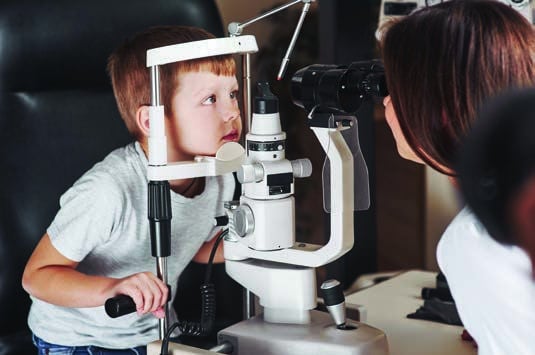
That knowledge has transformed pediatric eye care from a transactional visit into a long-term care relationship. Modern myopia management now includes options such as orthokeratology, soft multifocal contact lenses, low-dose atropine, specialty spectacle lenses, and increasingly, axial length measurement to monitor progression more precisely. We are no longer simply correcting blurred vision. We are actively trying to slow progression and protect long-term eye health.
That creates a very different type of conversation with families. Parents are often highly motivated when they understand the long term implications of progressive myopia. It also creates a recurring care model with regular follow-up visits, imaging, testing, treatment adjustments, and ongoing education.
A Meaningful Business Opportunity
From a business standpoint, this is one of the most important opportunities in modern optometry. Myopia management programs create recurring revenue, stronger patient retention, increased capture rate, and multi-year family relationships. A child enrolled in a myopia program often returns several times per year, may purchase glasses and contact lenses, may require sports eyewear or sunglasses, and often brings siblings and parents into the practice as well.
The profitability opportunities in the children’s category extend well beyond the first pair of glasses. Premium coatings, warranties, second-pair promotions, contact lenses, subscription-style myopia management plans, and family referrals all contribute to growth. Perhaps most importantly, pediatric patients often become lifelong patients. A child who starts in your practice at age six may still be seeing you at age 26. That is why the children’s category should never be viewed as low value.
Optometry Becomes “Medical Retail”
In many ways, this is where optometry truly becomes “medical retail.” We are not selling. We are presenting opportunities, educating families, and allowing them to decide what is best for their child. When handled ethically and collaboratively, that creates trust, loyalty, and better outcomes.
The Next Phase of Pediatric Eyewear
Looking ahead, the future of the category is incredibly exciting. We will likely see more wearable technology, smarter lenses, AI driven monitoring tools, personalized frame design, and even more advanced approaches to myopia care. The practices that embrace these changes early will be well positioned to grow.
Children’s eyewear is no longer a side category. Remember also that each child is often accompanied by a parent that may be present opportunity to update their own eyewear and ensure they have had a recent eye examination. It is one of the strongest engines for clinical impact, patient loyalty, and profitability in the modern practice.
About the Author:
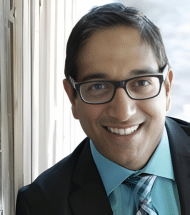
Dr. Trevor Miranda, OD
Dr. Miranda is a partner in a multi-doctor, five-location practice on Vancouver Island. He is a strong advocate for true Independent Optometry. As a serial entrepreneur, Trevor is constantly testing different patient care and business models at his various locations. Many of these have turned out to be quite successful. Dr. Miranda is a regular contributor to Eye Care Business Canada under the category “Independent SightLines”. His latest project is the Optometry Unleashed podcast.
Want to see more articles like this? Click here to subscribe to our FREE print magazine and newsletters!