
fbpx

Students and Binocular Vision: The Hidden Obstacle

By Dr. Jenny Lee, OD

Two weeks into the start of the school year, young adults returning to the lecture hall are frantically requesting appointments to the office. The tale, although presented differently, always echoes a familiar story – students, particularly those in post-secondary school, are finding their vision not quite as crisp as it used to be. Some may even present with headaches that distract them from their homework. Increased in-person schooling after years of pandemic lockdowns and a laptop for company only serve to highlight this glaring issue.

The initial answer is obvious – with the advent of online learning for all age groups, it is not surprising that adult-onset myopia is on the rise. Two or three clicks of minus in the phoropter is generally all it takes for these once-emmetropes to appreciate the 20/20 line.

However, it is important to provide not just the appropriate counselling for these patients, but also incorporate tools for these patients to reduce symptoms such as headaches, eye strain, and ocular surface irritation.

Digital Eye Strain Affects Children Too

Digital eye strain is not a new concept. A variety of ocular conditions can be attributed to increased screen time, such as dry eye syndrome and accommodative stress or spasm. For instance, excessive screen time has already been linked to severe meibomian gland atrophy in children aged 6 to 17 years old.

A quick view under the slit lamp of the corneal surface can already elucidate signs of dry eye syndrome and are worthwhile to add to the standard child eye exam. However, the strain of increased screen time and near work on binocular vision is not as glaringly obvious and can often masquerade as other elusive symptoms.

Back to School Highlights Vision Issues

For instance, consider a teenager entering university who spent their past summer playing extensively for a soccer team. They report that they suffered a concussion a few months ago, but never had any symptoms and was cleared to continue playing for the season. Now that they are a few weeks into school, they notice frequent headaches, blur at distance, and feeling unmotivated in class.

As an eye care professional, one could consider convincing this teenager that glasses are trendy and proceed to direct them to the optician. This may solve the initial concern of squinting at the lecture hall. But it is important to consider the host of binocular vision issues that are rapidly developing in this demographic, with intensive near work demands. Schooling is already mentally taxing to begin with, and dealing with additional symptoms, concussion-related or not, can make such obstacles even more insurmountable.

One does not need to be a vision therapy or rehabilitation specialist to add elements into the office to help screen and highlight the potential need for further assistance in school to help such patients improve their quality of life. Rather, identifying such students who could benefit from vision therapy or even spectacle therapy such as a low near add could help improve symptoms substantially.

Consider computer spectacles which are already being prescribed to pre-presbyopes who frequently spent hours in front of the computer in the office or at home. Don’t forget that young children are also spending equally as long, if not more time, in front of a screen.

Incorporating Binocular Vision Screening

Moreover, the inclusion of surveys or questionnaires in the waiting room can easily help pinpoint youths in need of intervention. The Convergence Insufficiency Symptom Survey (CISS) is one example of a survey that can be easily employed in the office, which may help better quantify symptoms related to binocular vision issues such as convergence insufficiency.

The Convergence Insufficiency Treatment Trial (CITT) Investigator Group previously determined that CISS scores can distinguish children with symptomatic CI, and were not affected by examiner bias. However, some literature states that screening for CI may not be indicated as visual symptoms can be common and unrelated to binocular vision issues. Therefore, it is important to rely on one’s own clinical judgement to interpret the results of such questionnaires and surveys.

The King-Devick test is another example of a screening test that can be easily employed in the office with minimal training or equipment required – one simply needs a paper, pen, and a booklet. By evaluating the speed of rapid number-naming, the test can screen for patients with a concussion who may be suffering from long-term symptoms. Those with head trauma have been found to be over five seconds slower on the King-Devick test.

As students head back into another school year, remember that this is an opportunity to identify and address binocular vision issues early before they begin to impact schooling and their quality of life.

To read Dr. Lee’s article on Optik Magazine, click HERE.

Myopia Profile Enhances its Managing Myopia Reference Guide to Elevate Patient Care

Myopia Profile

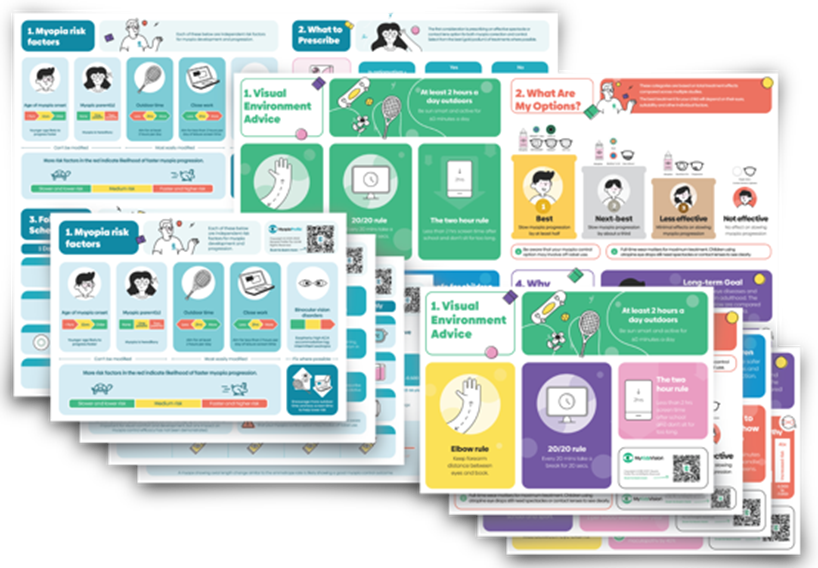
Myopia Profile introduces its enhanced Managing Myopia Guidelines Infographic, a high-value tool developed with input from clinicians and industry advisers. This user-friendly resource simplifies myopia management processes and practices, empowering ECPs in prescribing, communication, and ongoing care for young patients. Originally launched in 2019 and downloaded by thousands, the guide has been extensively updated and is now available in 10 languages, with another seven in current development.

“Introducing the revised Managing Myopia Guidelines Infographic is an important step in our ongoing mission to transform myopia care practices,” said Dr. Kate Gifford, co-founder of Myopia Profile. “This resource streamlines complexities and helps ECPs deliver optimal patient care by offering engaging and evidence-based prescribing guidelines and communication strategies. From the initial exam chair consultation to post-visit education and long-term clinical care, it guides practitioners in every step of the myopia management journey.”

The infographic contains two components differentiated by their color schemes. The predominately blue section is a chairside reference guide for ECPs, offering information on myopia risk factors, prescribing recommendations, follow-up schedules, and evaluation of long-term outcomes.

The multi-colored section assists with patient and parent communication tactics, including addressing visual environments, available interventions, the ease of children wearing contact lenses, and myopia management’s importance. A companion take-home brochure for parents and careers is also provided for those seeking further information.

QR codes provide links from the Infographic to further information on MyopiaProfile.com for ECPs, and to MyKidsVision.org for parents and careers. It can be used as a digital display or printed in a variety of sizes for use as a practice wall poster or handheld communication tool.

To facilitate the integration of the Infographic guide into daily practice, Myopia Profile has developed accompanying resources to assist ECPs in its effective utilization. A feature article, “Using the Managing Myopia Guidelines Infographics,” not only provides valuable insights but also includes links for additional reading on the evidence base and communication tips housed on MyKidsVision.org. Dr. Gifford further elaborates on practical applications in a video available on Myopia Profile’s YouTube channel.

Click HERE for the full press release.

For more related content on Optik NOW, click HERE.

Registration Now Open for Vision Expo East 2024

Vision Expo

The Vision Council and RX announce that registration for Vision Expo East 2024 is officially open. Scheduled to take place from March 14 to 17 at the Javits Center, Vision Expo East 2024 will mark nearly four decades of showcasing cutting-edge products, fostering education, and bringing together ophthalmic professionals in New York City.

Register here, and secure Vision Expo hotel accommodations here.

Vision Expo East attendees can expect an unforgettable experience for 2024, and enjoy access to:

  • More than 150,000 square feet of exhibit space, featuring 450+ eyecare and eyewear brands displaying countless new products and emerging technologies.
  • 300+ hours of continuing education courses and workshops for participants to gain valuable insights and knowledge to enhance their expertise.
  • Exclusive special events, paying tribute to the event’s legacy in New York City before its relocation to Orlando, Florida, starting in 2025.

Fran Pennella, Vice President of Vision Expo at RX, expressed enthusiasm for the upcoming event, stating, “Vision Expo East 2024 will be an unforgettable occasion—a blend of honoring our industry’s past and embracing its future. We look forward to commemorating nearly 40 years of growth and innovation in the optical industry while spotlighting the brands, products, and technologies shaping our industry today. Join us this March in New York City where we will celebrate all that we’ve accomplished and unveil plans for a new Vision Expo East experience in the sunshine state.”

In addition to the extensive exhibit hall and educational conference, Vision Expo East 2024 will feature compelling presentations and panel discussions by industry leaders and innovators at The Bridge, the main stage destination for the event.

Highly anticipated Show floor highlights for 2024 include:

  • Flaunt the Frame, a fashion show series developed with sponsor VuePoint Media and IMAGINEM magazine, showcasing independent eyewear designs.
  • The much-anticipated return of the dynamic NOW Pavilion, showcasing a curated selection of over 150 of the latest frame designs and brands from around the globe, as well as the second annual NOW Awards, recognizing designs across various categories including sustainability and new technology.
  • The Atelier, Vision Expo’s luxury exhibition will expand to spotlight over 90 of the industry’s most well-known independent designers and artisans, becoming the destination in New York City for buyers interested in sourcing the best of the best and all their design needs under one roof.
  • Lookout @ The Atelier, a vibrant display of today’s emerging independent designers from around the globe who have been in business for five years or less, looking to launch their collections and break into the market.

The accredited educational program of Vision Expo, VisionEd, comprising more than 200 sessions, 300 hours, and 100 speakers, along with OptiCon at Vision Expo, will begin on Thursday, March 14. The Exhibit Hall will officially open its doors on Friday, March 15. 

Click HERE for the full press release.

For more related content on Optik NOW, click HERE.

Optometry to Optometry: An Untapped Resource for Better Health Care Delivery

By Dr. Sophia Leung, OD, FAAO, FCCSO, Dipl ABO, Dipl Ant Seg

Intraprofessional collaboration is not new to health care. Although only making up a minority of referrals, referrals within a profession address commonly faced pain points: wait-times, access to specialized care, and communication. There are tremendous advantages for our patients when optometrists embrace this type of referral practice.

A referral is defined by the World Health Organization as “a dynamic process in which a health professional at one level of the health system (…) seeks the help of another facility at the same or higher level to assist in the care pathway.”

Other Profession’s Experience

In dentistry, general practitioners with advanced training (ie. in oral pain or sleep apnea) accept referrals from their colleagues while maintaining streamlined referral patterns.

In physiotherapy, intraprofessional referrals look like a patient seeing their primary physiotherapist for running optimization, another physiotherapist for biking-related injuries, and another specialist for glute and lower leg health.

We are no strangers to intraprofessional referral pathways in medicine. Specializations have been traditionally well delineated within medicine, allowing traditional intraprofessional referral pathways to exist.

In optometry, intraprofessional referrals are increasing, though there is room to be more supportive of each other’s areas of expertise. For some, intradisciplinary referrals might be conceptually challenging because historical referral pathways positioned optometry as primary care and ophthalmology as secondary care. However, we must recognize that access to appropriate care is improved when everyone practices to their highest ability.

Optometry Referral Opportunities


Optometric specializations include specialty contact lenses, myopia management, vision therapy, and many advanced ocular disease subspecialties. As subspecialties grow, the goal is not to multiply professional silos but rather, to improve collaboration and integration in the context of knowledge-sharing; a principal borrowed from operations management. As a profession, we must stop fighting this because all we accomplish is an attack on ourselves and a disservice to our patients. Intraprofessional referrals done properly lessen the volume burden on tertiary care and enhances patient care overall.

Dr. Debbie Luk, a Canadian leader in Sports Vision and Vision Therapy, describes optometry-to-optometry referrals being key in increasing awareness for optometry’s scope. Patients better understand their options and have better accessibility that can ultimately improve their quality of life.

To adopt intraprofessional referral pathways as a referrer, one must be self-aware. Being humble to know where one’s competency starts and ends is a sign of a prudent practitioner. It is not a weakness to not know everything. In fact, it is a strength to recognize it. Learn what you do not know. Talk to those who specialize in areas that you do not and learn the referral protocol that you can adopt.

To adopt this as a referee, one must have training and one must be willing to add value to the referring community; to be trusted with referred patients. This is a commitment to communicating well with referring doctors and an openness to respecting the level of referral they prefer. For example, some may be referring to you for co-management whereas others may be referring for a complete transfer of care. And of course, the patient must be clearly communicated with regarding the referral arrangement as they have complete choice in their care. 

Dr. Natalie Chai, who has a thriving referral practice for Dry Eye Disease and Myopia Management, intentionally empowers her patients and provides education to referring doctors to demonstrate that they may one day be able to offer the service themselves.

The Power of Together


For myself, one of the most exciting things about building an optometry-led ocular disease triage model is brainstorming with referring doctors to find solutions for their patients. Every correspondence is an opportunity to collaborate and to provide more efficient access to secondary or tertiary medical management and surgical access.

However, a pearl of wisdom: it is vital that anyone receiving referrals be self-aware too. It is just as crucial to a patient’s care to accept a referral within one’s area of expertise versus denying a referral when that patient is best served elsewhere. 

There is power in learning collectively and there is power in working together. Regarding hesitations because of unfamiliarity, know that you are not alone and trust that the hesitation can be overcome by having a dialogue about it. On concerns about knowledge or competency gaps, know that you are not alone in that either. You can learn anything if you really want to. 

Finally, if there is a fear in getting started, a quick chat with your colleagues who are a few steps ahead of you will show you that we have all been there too. Remind yourself that you have started big things before and have come out on the other side better for it. 

Optometry, let us believe in ourselves and in each other – for the sake of our patients, and for the sake of health care of which we play a crucial part.

To read Dr. Leung’s article on Optik magazine, click HERE.

Featured Posts

Canadian Association of Optometrists logo

CAO Appoints Joelle Walker as New CEO, Effective January 2026

The Canadian Association of Optometrists has appointed Joelle Walker as its new CEO, effective January 2026, succeeding François Couillard after more than 40 years of leadership.

Learn More
World Council of Optometry

ECPs Share How they Use the WCO Alcon Dry Eye Wheel in New Video

The World Council of Optometry and Alcon have released a new video featuring eye care professionals from around the world sharing how they use the Dry Eye Wheel to support dry eye diagnosis, education, and management.

Read more
Optik Voilàs November-December 2025- COS Silhouette SPX_Illusion_2978_5530

SPX Illusion 2025: Lightness Meets Bold Style

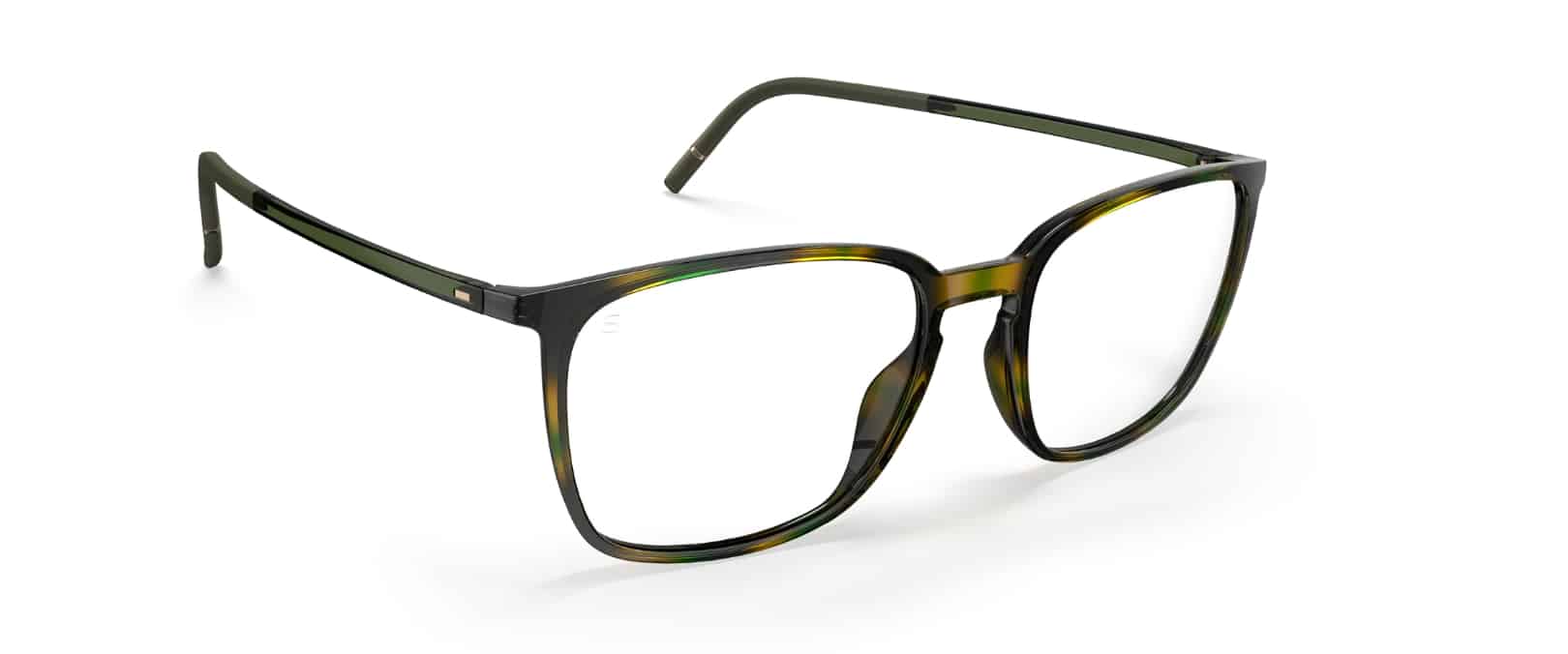
Silhouette unveils SPX Illusion 2025, featuring two new lightweight shapes— including a striking geometric design—offered in five trend-forward colors like Canary Green Havana and Smokey Blossom. A refined, featherlight way to express personal style with elegance.

Read more
EssilorLuxottica

EssilorLuxottica Expands Ophthalmology Footprint with Acquisition of Signifeye

EssilorLuxottica will acquire Signifeye, adding 15 Belgian clinics to its growing ophthalmology network and strengthening its integrated medical eye-care strategy.

Read more
Centre for Ocular Research & Education (CORE)

CORE Summarizes TFOS DEWS III Reports to Boost Dry Eye Knowledge

CORE has published issue 87 of Contact Lens Update, summarizing key findings from the TFOS DEWS III dry eye reports. Expert-authored content and downloadable PDFs provide clinicians with practical guidance on diagnosis, management, and evolving best practices.

Read more
Canadian Association of Optometrists logo

CAO Appoints Joelle Walker as New CEO, Effective January 2026

The Canadian Association of Optometrists has appointed Joelle Walker as its new CEO, effective January 2026, succeeding François Couillard after more than 40 years of leadership.

Learn More
World Council of Optometry

ECPs Share How they Use the WCO Alcon Dry Eye Wheel in New Video

The World Council of Optometry and Alcon have released a new video featuring eye care professionals from around the world sharing how they use the Dry Eye Wheel to support dry eye diagnosis, education, and management.

Read More
Optik Voilàs November-December 2025- COS Silhouette SPX_Illusion_2978_5530

SPX Illusion 2025: Lightness Meets Bold Style

Silhouette unveils SPX Illusion 2025, featuring two new lightweight shapes— including a striking geometric design—offered in five trend-forward colors like Canary Green Havana and Smokey Blossom. A refined, featherlight way to express personal style with elegance.

Read More
EssilorLuxottica

EssilorLuxottica Expands Ophthalmology Footprint with Acquisition of Signifeye

EssilorLuxottica will acquire Signifeye, adding 15 Belgian clinics to its growing ophthalmology network and strengthening its integrated medical eye-care strategy.

Read More
Centre for Ocular Research & Education (CORE)

CORE Summarizes TFOS DEWS III Reports to Boost Dry Eye Knowledge

CORE has published issue 87 of Contact Lens Update, summarizing key findings from the TFOS DEWS III dry eye reports. Expert-authored content and downloadable PDFs provide clinicians with practical guidance on diagnosis, management, and evolving best practices.

Read More
Canadian Association of Optometrists logo

CAO Appoints Joelle Walker as New CEO, Effective January 2026

The Canadian Association of Optometrists has appointed Joelle Walker as its new CEO, effective January 2026, succeeding François Couillard after more than 40 years of leadership.

Learn More
World Council of Optometry

ECPs Share How they Use the WCO Alcon Dry Eye Wheel in New Video

The World Council of Optometry and Alcon have released a new video featuring eye care professionals from around the world sharing how they use the Dry Eye Wheel to support dry eye diagnosis, education, and management.

Read more
Optik Voilàs November-December 2025- COS Silhouette SPX_Illusion_2978_5530

SPX Illusion 2025: Lightness Meets Bold Style

Silhouette unveils SPX Illusion 2025, featuring two new lightweight shapes— including a striking geometric design—offered in five trend-forward colors like Canary Green Havana and Smokey Blossom. A refined, featherlight way to express personal style with elegance.

Read more
EssilorLuxottica

EssilorLuxottica Expands Ophthalmology Footprint with Acquisition of Signifeye

EssilorLuxottica will acquire Signifeye, adding 15 Belgian clinics to its growing ophthalmology network and strengthening its integrated medical eye-care strategy.

Read more
Centre for Ocular Research & Education (CORE)

CORE Summarizes TFOS DEWS III Reports to Boost Dry Eye Knowledge

CORE has published issue 87 of Contact Lens Update, summarizing key findings from the TFOS DEWS III dry eye reports. Expert-authored content and downloadable PDFs provide clinicians with practical guidance on diagnosis, management, and evolving best practices.

Read more
Canadian Association of Optometrists logo

CAO Appoints Joelle Walker as New CEO, Effective January 2026

The Canadian Association of Optometrists has appointed Joelle Walker as its new CEO, effective January 2026, succeeding François Couillard after more than 40 years of leadership.

Learn More
World Council of Optometry

ECPs Share How they Use the WCO Alcon Dry Eye Wheel in New Video

The World Council of Optometry and Alcon have released a new video featuring eye care professionals from around the world sharing how they use the Dry Eye Wheel to support dry eye diagnosis, education, and management.

Read more
Optik Voilàs November-December 2025- COS Silhouette SPX_Illusion_2978_5530

SPX Illusion 2025: Lightness Meets Bold Style

Silhouette unveils SPX Illusion 2025, featuring two new lightweight shapes— including a striking geometric design—offered in five trend-forward colors like Canary Green Havana and Smokey Blossom. A refined, featherlight way to express personal style with elegance.

Read more
EssilorLuxottica

EssilorLuxottica Expands Ophthalmology Footprint with Acquisition of Signifeye

EssilorLuxottica will acquire Signifeye, adding 15 Belgian clinics to its growing ophthalmology network and strengthening its integrated medical eye-care strategy.

Read more
Centre for Ocular Research & Education (CORE)

CORE Summarizes TFOS DEWS III Reports to Boost Dry Eye Knowledge

CORE has published issue 87 of Contact Lens Update, summarizing key findings from the TFOS DEWS III dry eye reports. Expert-authored content and downloadable PDFs provide clinicians with practical guidance on diagnosis, management, and evolving best practices.

Read more