
fbpx

Organic Retinal Prosthesis Restores Vision in Rats

Scientists at the Italian Institute of Technology have developed a prosthesis that can be implanted into the eye to serve as a substitute for the damaged retina.

In degenerative diseases such as retinitis pigmentosa, the photoreceptive cells in the retina die off but the retinal nerve cells are left intact. An implant of organic photoreceptors, such as the one developed by Fabio Benfenati et al. and reported in the March 2017 issue of Nature Materials, can interface with the undamaged retinal nerves and function as a replacement retina to restore an amount of vision.

A layer of semiconductive polymer on a silk-like substrate acts as a photovoltaic device, converting incoming photons into an electrical signal to stimulate the rat’s retinal neurons. The Royal College of Surgeon (RCS) rat, a rat bred to inherit retinal degeneration and widely used for research into hereditary retinal dystrophies, was used as the model to test the implants.

30 days after surgery to implant the artificial retinas, the pupillary reflexes responded to a light source of 4-5 lux (equivalent to a twilight sky) similarly to healthy rats, though a light source of 1 lux (slightly brighter than full moon) did not generate a response.

The rats were retested at six months and then again at ten months after surgery and the implants were still effective, with a measurable increase in the activity of the rats’ primary visual cortex when exposed to light sources.

The researchers are hopeful that these results will successfully translate to humans, and the first human trials are scheduled to begin in the second half of 2017.

Full paper available at: http://www.nature.com/nmat/journal/vaop/ncurrent/full/nmat4874.html

Dream a Little Dream, Wear Your Dream

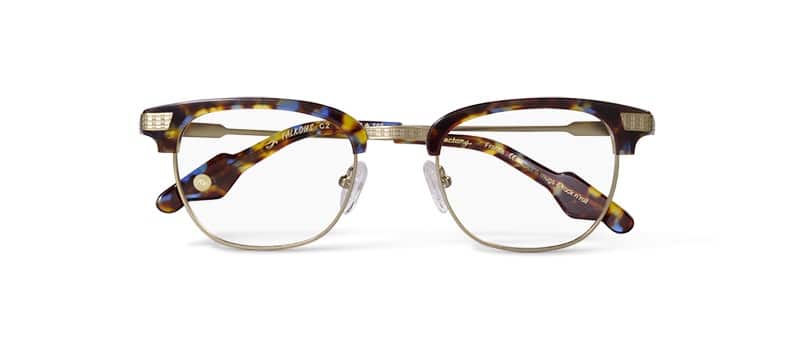
Nine West proudly presents THE DREAMWEAVER COLLECTION.  NW5112, a perfectly handcrafted frame with elegant nature inspired details making it a strong and timeless statement piece.  The stunning crystal hue adds gorgeous illumination to every woman’s face and eyes.  This stunner of a frame is finished with a stylish weave pattern along its temples and is currently available in a chic ophthalmic and dazzling sunglass.

Nine West is distributed by Marchon: www.marchon.com

Westgroupe to Unveil Redesigned Booth at VEE

Montreal, QC – WestGroupe will be unveiling their completely redesigned booth at Vision Expo East, from March 31 to April 2 in New York, NY.  The new booth features a bright open concept and reflects WestGroupe’s fashion-forward, contemporary take on eyewear.

The new lounge-inspired seating areas at the front of the booth add a welcoming atmosphere to the new, sophisticated design.  With private meeting rooms located at either end of the booth and bright, uncluttered order desks, customers will be able to see the new collections in their best light.  Another feature is the glass display cases located around the perimeter where the hottest new styles will be showcased.

Click HERE to read the full press release.


Drug Delivery Through Contact Lenses

Advances in nanotechnology and lens materials means contact lenses capable of controlled delivery drugs to the eye could be just around the corner, and could represent a breakthrough in the treatment of glaucoma, myopia and other eye diseases.

Delivering medication through eye drops has always been tricky business. Eye drops have their advantages; they are easy to administer and they avoid first-pass metabolism (where most of the drug is lost to the digestive system before reaching its target). There are also disadvantages: much of the drug in eye drops is lost due to the high drainage rate of tears and to absorption by the conjunctiva. Some studies estimate the bioavailability, the amount of the drug that actually ends up where it can be beneficial, in eye drops is as low as 1-2%.1 As a result, eye drops must be repeated frequently to be effective, in some treatments as often as every hour.

This has lead scientists to try and seek out a better method of delivering drugs into the eye. Plugs and stents are options, but need to be surgically implanted. Drug delivery through disposable contact lenses offer a method of controlled delivery of drugs into the eye that prevents high concentration spikes from regular eye drops. Some reports estimate the bioavailability of drugs delivered through contact lenses is up to 20%, five to ten times more effective than eye drops.1

Lyndon Jones of the University of Waterloo School of Optometry and the director of the Centre for Ocular Research and Education (CORE, formerly known as CCLR), spoke at the American Academy of Optometry Annual Meeting. “Today, we don’t have a commercially available contact lens drug delivery device, but we do have a real opportunity to be able to incorporate drugs into the lens material and then control its delivery so that they maintain not only an appropriate level but are also delivered at an appropriate time to the ocular surface.”

Myopia Prevention with Atropine

In September of 2017, Dr. Jones published an article in Clinical Ophthalmology on in vitro experiments where anti-myopia drugs atropine and pirenzepine were released through commercially available daily disposable contact lenses made from common contact lens materials including etafilcon A (Johnson & Johnson), omafilcon A (CooperVision) and narafilcon A (Johnson & Johnson).2 The release of the drugs could be prolonged up to as much as eight hours. Since atropine appears to work well at concentrations around 0.1%, slow release through a contact lens could be an effective method of delivery that would prevent large concentrations in the eye all at once.

Another study from Dr. Jones’s lab explored the release of moxifloxacin and ciprofloxacin (anti-microbial agents important in treating bacterial conjunctivitis and other eye diseases) from commercial contact lenses.3 By building a device that could simulate the natural volume and flow of tears, and the agitation that would come from a person’s natural blinking, his team was able to show that commercial contact lenses could control the release of anti-microbial agents for a 24 hour period.

Fighting Glaucoma with Vitamins

Many research teams around the world are dedicated to developing an effective contact lens-based delivery of glaucoma medication. A Korean research group loaded vitamin E, timolol (a beta blocker)  and brimonidine (an α2-blocker) onto a pHEMA-hydrogel contact lens.5 A group from Harvard Medical School developed latanoprost ( a prostaglandin analogue) eluting contact lenses by attaching a latanoprost-polymer coating to a methafilcon hydrogel lens.6 The drug-eluting contact lenses were at least as effective in an animal trial as daily eye drops.

Some of the iniatives are less well supported with independent research. In one of the first examples of vitamin-enhanced contact lenses hitting the market, United Kingdom-based contact lens subscription company Waldo are marketing vitamin-enhanced contact lenses: lenses which have absorbed a saline solution of vitamins E, B6, and B12.4 The company claims this will help contact lens users prevent cataracts, glaucoma and macular degeneration, and allow more oxygen to reach the eyes. However, there is no peer-reviewed publication to support to the claim.

Is Nanotechnology the Future?

Using nanoparticles for drug delivery to fine-tune drug release rates has long been a desirable goal for nanotechnologists. In this model, medications (for example timolol) would be attached by a bond on particles only a few nanometres in diameter. Contact lenses could be loaded up with these nanoparticles, and when the lens is worn the particles would diffuse into the eye and release the drug molecule. However, health and environmental concerns about what happens to nanoparticles after delivering their drug payload and their long-term stability has limited their use to clinical trials

Another promising avenue of research is using nanotechnology to control the shape and structure of the contact lenses themselves. One experiment showed that incorporating cyclodextrins (cup-like compounds that can hold smaller drug molecules inside them) into hydrogels can increase the drug uptake by 40%. Other avenues for “smart”, nanoengineered contact lenses include lenses imprinted with microcavities and mulitilayer contact lenses with drug molecules sandwiched between the layers.

Scientists acknowledge that the commercially available lens materials are not optimal for drug delivery, but according to a review1 by Anuj Chauhan, Professor of Chemical Enginering at University of Florida, there “has been a spurt of activity on designing contact lenses for drug delivery, particularly focusing on increasing the release durations, without sacrificing any critical lens property.”Ted Lachmansingh, General Manager of Acuvue Canada, told Optik7, “The combination of contact lenses and therapeutic agents are in the pipeline, and coming sooner than people may think, and will likely appear in Canada in the next few years.”

According to Lachmansingh, contact lenses capable of delivering medication have the potential to “transform the industry and change the way optometry operates.” Despite the challenges that must be overcome, the advantages of these products are sure to reward the early innovators.

References

  1. Review of ophthalmic drug delivery by contact lenses MORE
  2. https://www.dovepress.com/in-vitro-release-of-two-anti-muscarinic-drugs-from-soft-contact-lenses-peer-reviewed-fulltext-article-OPTH
  3. https://www.ncbi.nlm.nih.gov/pmc/articles/PMC5106195/
  4. https://www.mirror.co.uk/3am/style/3am-fashion-celebrity-beauty/could-vitamin-enhanced-contact-lenses-11791630
  5. https://www.ncbi.nlm.nih.gov/pmc/articles/PMC5039753/
  6. Latanoprost-Eluting Contact Lenses in Glaucomatous Monkeys
  7. Focus on Contact, July 2017

Vuarnet Introduces Cable Car Cateye

The Cable Car Cateye is Vuarnet’s most glamorous model to date, designed to bring an added touch of feminine sensuality. The distinctive frame shape is inspired by the curves of the legendary Vuarnet 02 model updated with stainless steel nose bridge. The featured colour is a tortoise frame accented by a rose gold stainless steel nose bridge and pure brown purple flash lenses. Like all Vuarnet sunglasses, the new Cable Car Cateye features Vuarnet mineral glass lenses.

www.vuarnet.com/ca

Featured Posts

Canadian Association of Optometrists logo

CAO Appoints Joelle Walker as New CEO, Effective January 2026

The Canadian Association of Optometrists has appointed Joelle Walker as its new CEO, effective January 2026, succeeding François Couillard after more than 40 years of leadership.

Learn More
World Council of Optometry

ECPs Share How they Use the WCO Alcon Dry Eye Wheel in New Video

The World Council of Optometry and Alcon have released a new video featuring eye care professionals from around the world sharing how they use the Dry Eye Wheel to support dry eye diagnosis, education, and management.

Read more
Optik Voilàs November-December 2025- COS Silhouette SPX_Illusion_2978_5530

SPX Illusion 2025: Lightness Meets Bold Style

Silhouette unveils SPX Illusion 2025, featuring two new lightweight shapes— including a striking geometric design—offered in five trend-forward colors like Canary Green Havana and Smokey Blossom. A refined, featherlight way to express personal style with elegance.

Read more
EssilorLuxottica

EssilorLuxottica Expands Ophthalmology Footprint with Acquisition of Signifeye

EssilorLuxottica will acquire Signifeye, adding 15 Belgian clinics to its growing ophthalmology network and strengthening its integrated medical eye-care strategy.

Read more
Centre for Ocular Research & Education (CORE)

CORE Summarizes TFOS DEWS III Reports to Boost Dry Eye Knowledge

CORE has published issue 87 of Contact Lens Update, summarizing key findings from the TFOS DEWS III dry eye reports. Expert-authored content and downloadable PDFs provide clinicians with practical guidance on diagnosis, management, and evolving best practices.

Read more
Canadian Association of Optometrists logo

CAO Appoints Joelle Walker as New CEO, Effective January 2026

The Canadian Association of Optometrists has appointed Joelle Walker as its new CEO, effective January 2026, succeeding François Couillard after more than 40 years of leadership.

Learn More
World Council of Optometry

ECPs Share How they Use the WCO Alcon Dry Eye Wheel in New Video

The World Council of Optometry and Alcon have released a new video featuring eye care professionals from around the world sharing how they use the Dry Eye Wheel to support dry eye diagnosis, education, and management.

Read More
Optik Voilàs November-December 2025- COS Silhouette SPX_Illusion_2978_5530

SPX Illusion 2025: Lightness Meets Bold Style

Silhouette unveils SPX Illusion 2025, featuring two new lightweight shapes— including a striking geometric design—offered in five trend-forward colors like Canary Green Havana and Smokey Blossom. A refined, featherlight way to express personal style with elegance.

Read More
EssilorLuxottica

EssilorLuxottica Expands Ophthalmology Footprint with Acquisition of Signifeye

EssilorLuxottica will acquire Signifeye, adding 15 Belgian clinics to its growing ophthalmology network and strengthening its integrated medical eye-care strategy.

Read More
Centre for Ocular Research & Education (CORE)

CORE Summarizes TFOS DEWS III Reports to Boost Dry Eye Knowledge

CORE has published issue 87 of Contact Lens Update, summarizing key findings from the TFOS DEWS III dry eye reports. Expert-authored content and downloadable PDFs provide clinicians with practical guidance on diagnosis, management, and evolving best practices.

Read More
Canadian Association of Optometrists logo

CAO Appoints Joelle Walker as New CEO, Effective January 2026

The Canadian Association of Optometrists has appointed Joelle Walker as its new CEO, effective January 2026, succeeding François Couillard after more than 40 years of leadership.

Learn More
World Council of Optometry

ECPs Share How they Use the WCO Alcon Dry Eye Wheel in New Video

The World Council of Optometry and Alcon have released a new video featuring eye care professionals from around the world sharing how they use the Dry Eye Wheel to support dry eye diagnosis, education, and management.

Read more
Optik Voilàs November-December 2025- COS Silhouette SPX_Illusion_2978_5530

SPX Illusion 2025: Lightness Meets Bold Style

Silhouette unveils SPX Illusion 2025, featuring two new lightweight shapes— including a striking geometric design—offered in five trend-forward colors like Canary Green Havana and Smokey Blossom. A refined, featherlight way to express personal style with elegance.

Read more
EssilorLuxottica

EssilorLuxottica Expands Ophthalmology Footprint with Acquisition of Signifeye

EssilorLuxottica will acquire Signifeye, adding 15 Belgian clinics to its growing ophthalmology network and strengthening its integrated medical eye-care strategy.

Read more
Centre for Ocular Research & Education (CORE)

CORE Summarizes TFOS DEWS III Reports to Boost Dry Eye Knowledge

CORE has published issue 87 of Contact Lens Update, summarizing key findings from the TFOS DEWS III dry eye reports. Expert-authored content and downloadable PDFs provide clinicians with practical guidance on diagnosis, management, and evolving best practices.

Read more
Canadian Association of Optometrists logo

CAO Appoints Joelle Walker as New CEO, Effective January 2026

The Canadian Association of Optometrists has appointed Joelle Walker as its new CEO, effective January 2026, succeeding François Couillard after more than 40 years of leadership.

Learn More
World Council of Optometry

ECPs Share How they Use the WCO Alcon Dry Eye Wheel in New Video

The World Council of Optometry and Alcon have released a new video featuring eye care professionals from around the world sharing how they use the Dry Eye Wheel to support dry eye diagnosis, education, and management.

Read more
Optik Voilàs November-December 2025- COS Silhouette SPX_Illusion_2978_5530

SPX Illusion 2025: Lightness Meets Bold Style

Silhouette unveils SPX Illusion 2025, featuring two new lightweight shapes— including a striking geometric design—offered in five trend-forward colors like Canary Green Havana and Smokey Blossom. A refined, featherlight way to express personal style with elegance.

Read more
EssilorLuxottica

EssilorLuxottica Expands Ophthalmology Footprint with Acquisition of Signifeye

EssilorLuxottica will acquire Signifeye, adding 15 Belgian clinics to its growing ophthalmology network and strengthening its integrated medical eye-care strategy.

Read more
Centre for Ocular Research & Education (CORE)

CORE Summarizes TFOS DEWS III Reports to Boost Dry Eye Knowledge

CORE has published issue 87 of Contact Lens Update, summarizing key findings from the TFOS DEWS III dry eye reports. Expert-authored content and downloadable PDFs provide clinicians with practical guidance on diagnosis, management, and evolving best practices.

Read more