
Myopia Care and the Optician as a Key Provider
Thursday, August 20 2026 | 07 h 59 min | Optik Magazine, Practice Management
By Dorina Reiz, RO
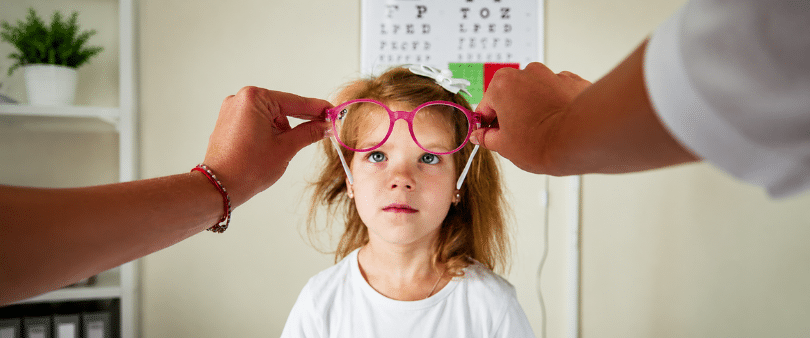
Myopia has long been understood as a very common refractive error. For many families, it is still thought of simply as “needing glasses to see far away.” A child squints at the board, struggles to see road signs, or holds objects closer than usual, and the solution appears straightforward: an eye examination, a prescription, and corrective lenses.
But the story of myopia has changed.
In recent decades, myopia has increased significantly in both prevalence and severity, particularly among children and adolescents. Researchers around the world are documenting earlier onset and faster progression. At the same time, modern childhood has shifted dramatically toward indoor, screen-based learning and entertainment.
For opticians, this changing landscape matters. Opticians are often among the most accessible eye care professionals for families seeking vision correction and guidance. and opticians are in a strong position to help families understand why myopia deserves attention.
A Changing Visual World for Children
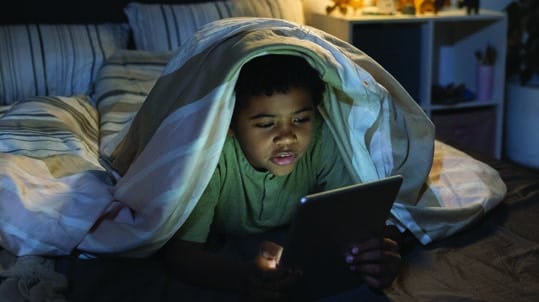
Digital technology is now deeply embedded in education. Classrooms increasingly rely on tablets, laptops, online learning platforms, educational applications, and digital communication tools. These technologies offer clear educational benefits.
However, children are now spending more time than ever focusing at near distances for classroom instruction, and social interaction. The concern is not that digital technology should be rejected. Rather, it is a part of a broader change in children’s visual environment that places demands on a child’s developing visual system.
Why Myopia Progression Matters
As myopia reaches higher levels, the risk of serious ocular complications increases including retinal detachment, glaucoma, and myopic macular degeneration. These complications can lead to permanent vision impairment if not detected and managed appropriately.
For opticians, this creates an important educational opportunity. When families view myopia only as a need for stronger lenses, they underestimate the importance of regular examinations, follow-up, and healthy visual habits. We can shift the conversation from “just glasses” to a broader understanding of children’s eye health.
The Emerging Myopia Epidemic
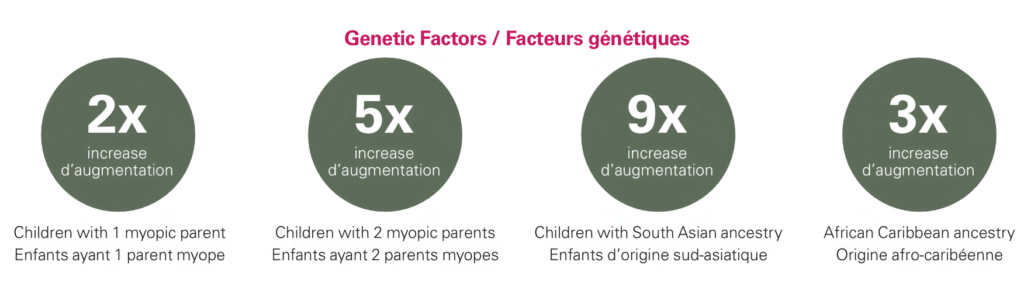
Aside from changing visual demands, genetics still matter. But heredity alone cannot explain the rapid changes observed over recent decades. Children’s daily routines have changed too quickly for genetics to be the only answer.
Screen Exposure, Near Work and Reduced Outdoor Time
Research has found that frequent electronic device use is associated with a higher risk of developing myopia and faster progression. Smartphone use is particularly relevant because screens are small and often held very close to the eyes. Screens also affect ocular comfort which manifests in digital eye strain, dry eye symptoms, and binocular vision challenges.
Less outdoor activity also plays a protective role in visual development. Natural light and opportunities to view objects at varying distances help reduce the risk of myopia onset and progression. The message for families is practical: screen time, near work, and outdoor activity are not abstract research topics. They are everyday habits that may influence children’s visual development.
Parents and Educators Need Better Awareness
While educators are often enthusiastic about digital applications, the health implications are not always part of the conversation leaving little attention to visual development.
Parents often believe mild myopia does not require urgent attention. Others worry that wearing glasses will make a child dependent on them. Some delay eye exams because they view eyewear as undesirable or they do not understand the connection between lifestyle factors and visual development. This is where opticians can make a meaningful contribution.
Opticians regularly speak with parents and children at moments when vision correction becomes real. These interactions create opportunities to reinforce simple but important messages: myopia should be monitored, children should have regular eye examinations, outdoor time matters, and prolonged near work deserves attention. This is not about creating alarm. It is about building awareness.
Refractive Error or Disease?
The Joint World Health Organization–Brien Holden Vision Institute report notes that there is no universally agreed threshold for defining high myopia. In 2024, the National Academies recommended that myopia be formally classified as a disease. Such a classification encourages greater attention from public health agencies, supports further research, and strengthens prevention strategies.
For opticians, terminology matters less than the practical implication: myopia deserves to be taken seriously. Whether described as a refractive error, a disease, or a condition with disease-like consequences at higher levels, it requires awareness and informed care.
The Optician’s Role in a Public Health Conversation – A Call to Action
Opticians are not simply observers of the myopia epidemic. They are part of the everyday response.
Opticians are well positioned to support better awareness and can help parents recognize that myopia is common, but not trivial. They can encourage healthy visual habits and attention to children’s visual symptoms and reduce the stigma of eyewear.
If parents delay care because they fear glasses will harm their child or create dependency, opticians can provide calm, practical reassurance. If educators or families see digital learning only through the lens of convenience and engagement, opticians can help broaden the view to include children’s visual health.
Our role does not require overstating the optician’s scope. It simply recognizes the influence we already have in the conversation – trusted communication matters.
For opticians, the opportunity is clear. By understanding the growing myopia epidemic and communicating its importance to families, opticians can help bring greater awareness to an issue that affects children today and potentially shapes their eye health for decades.
In that larger conversation, the optician is a key provider.
About the Author:

Dorina Reiz, RO
Dorina is a registered optician with more than 20 years of experience in the optical field. She is a professor in the School of Optics at Seneca Polytechnic, where she educates and mentors future optical professionals. Since becoming licensed in Ontario, she has been active in patient care, student education, regulatory engagement, professional advocacy and the advancement of opticianry. Dorina holds a degree in Allied Health Sciences and a Master of Education from Ontario Tech University.
Want to see more articles like this? Click here to subscribe to our FREE print magazine and newsletters!