

Succession Planning Starts Long Before Retirement
Friday, September 18 2026 | 08 h 33 min | Optik Magazine, Practice Management
By Dr. Trevor Miranda, OD
If your office manager, lead optician, associate doctor, or practice owner left tomorrow, what would happen next? For many practices, the answer is uncomfortable.
Succession planning is often viewed as something owners think about near retirement. In reality, the most successful practices are building succession plans every day. They recognize that succession planning is not simply about ownership transition—it is about developing people, strengthening leadership, and protecting culture.
The most resilient practices are not built around a single person. They are built around systems, shared knowledge, and team members who are continuously growing into their next opportunity.
Succession Planning Starts with Every Position
One of the biggest risks a practice can face is having critical knowledge concentrated in a single individual. Whether it is an optician, technician, office manager, associate doctor, or owner, every role should have a plan for continuity. Cross-training is one of the most effective tools for reducing this risk. Team members who understand multiple areas of the practice become more adaptable, confident, and valuable. They can step in during vacations, illnesses, parental leaves, or unexpected departures without disrupting patient care.
More importantly, cross-training creates growth opportunities. Team members gain a deeper understanding of the practice as a whole and begin developing the skills necessary for future leadership positions. Every practice should perform a simple continuity test: if a key team member were suddenly unavailable, could someone else step into the role and maintain continuity of care, service, and operations?
Every position in the practice should pass this test
At Cowichan Eyecare, we use a talent matrix to identify emerging skills, track competency development, and highlight future leadership opportunities. Rather than waiting until a position becomes vacant, we actively prepare team members for future roles. This allows us to identify strengths, recognize future leaders, and create development opportunities before they become urgent needs.
Developing Talent Intentionally
Succession planning should not be left to chance. Practices need systems to identify, track, and develop future talent. Some team members may be developing clinical skills. Others may be interested in leadership, management, training, operations, or business development. By understanding where people want to grow, practices can align development opportunities with organizational needs.
The goal is not simply to fill positions. The goal is to build people.
When team members see a future for themselves within the organization, engagement increases, retention improves, and leadership pipelines become stronger. Rather than scrambling to fill vacancies, practices create a steady flow of capable individuals ready to take on greater responsibility.
The Four Levels of Succession Planning
Many practice owners think about succession planning primarily in terms of ownership. In reality, effective succession planning operates at four levels.
Role Succession
Who can perform the job if someone leaves, retires, or takes an extended absence?
Leadership Succession
Who can lead the team, make decisions, and maintain accountability?
Ownership Succession
Who will ultimately acquire or lead the business in the future?
Cultural Succession
Who will protect and reinforce the values, standards, and patient experience that define the practice?
A practice may successfully transfer ownership and still struggle if leadership or culture is not intentionally developed. All four levels must be considered together.

Owners Need a One-Year, Five-Year, and Ten-Year Plan
Practice owners often spend considerable time planning equipment purchases, clinic expansions, and financial goals. Yet many spend far less time planning their own succession. Every owner should have a clear vision for the future of their practice.
One Year
What key leadership responsibilities can be delegated?
Which team members should begin taking on additional responsibilities?
What skills need to be developed within the organization?
Five Years
Who are the emerging leaders?
Will associate doctors move into ownership opportunities?
Are management structures in place to support growth?
Ten Years
Who will ultimately lead the practice?
What ownership structure will exist?
How will culture and patient experience be preserved?
The answers may evolve over time, but having a roadmap creates intentionality and allows future leaders to be developed rather than discovered at the last minute.
Leadership Succession Matters as Much as Ownership Succession
Many succession plans focus heavily on financial transactions and ownership transfer. Yet leadership succession is often the greater challenge. A practice can be sold with the stroke of a pen, but leadership credibility, trust, and culture take years to develop. Future leaders must be identified early and given opportunities to grow. They need experience leading projects, mentoring colleagues, managing conflict, solving problems, and making decisions long before they receive a formal title.
Strong leaders also help preserve what makes a practice special. Patients often stay because of the experience they receive. Staff stay because of the culture they are part of. If leadership transitions are poorly managed, both can be lost. Successful practices deliberately develop leaders long before they need them.
Protecting the Culture
Perhaps the most overlooked aspect of succession planning is culture. Buildings, equipment, and systems can be purchased. Culture cannot. The values that define a practice must be taught, reinforced, and modeled consistently over time. Future leaders should understand not only how the practice operates, but why it operates that way.
At Cowichan Eyecare, we often talk about building an organization that is bigger than any one individual. That means creating systems, documenting processes, cross-training team members, and developing leaders at every level of the practice. It means ensuring that the next generation understands both the operational side of the business and the cultural foundation that makes it successful. Succession planning is ultimately about stewardship. It is about ensuring that the mission, values, and patient-centered culture that took years to build can continue for years to come. The practices that thrive for decades are not those with the best buildings, equipment, or technology. They are the ones that continuously develop people.
Succession planning starts long before retirement. It starts with cross-training a technician, mentoring a future leader, documenting a process, or helping an associate doctor grow into ownership. Every role needs a successor. Every leader needs a replacement. Every practice needs a plan.
About the Author :
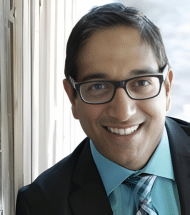
Dr. Trevor Miranda, OD
Dr. Miranda is a partner in a multi-doctor, five-location practice on Vancouver Island. He is a strong advocate for true Independent Optometry. As a serial entrepreneur, Trevor is constantly testing different patient care and business models at his various locations. Many of these have turned out to be quite successful. Dr. Miranda is a regular contributor to Eye Care Business Canada under the category “Independent SightLines”. His latest project is the Optometry Unleashed podcast.
Want to see more articles like this? Click here to subscribe to our FREE print magazine and newsletters!