


Opticians See StrongerRole in Contact LensWear and Care
Thursday, October 1 2026 | 08 h 30 min | Optik Magazine, Practice Management
By Mark Matthews
A new Canadian survey highlights opticians’ interest, involvement and training needs in supporting contact lens patients.
Canadian opticians are playing a significant role in the contact lens experience, and many would welcome an even greater opportunity to contribute to patient success, according to a new national survey from the Contact Lens Institute, conducted in partnership with the Opticians Association of Canada and Optik Magazine.
The report, Vision for Growth: Opticianry’s Essential Role in Contact Lens Wear and Care, is part of the Contact Lens Institute’s See Tomorrow series, which explores attitudes affecting contact lens prescribing, adoption and long-term wear. The survey was conducted online from April 23 to May 5, 2026, with 247 Canadian opticians from independent, corporate and optometry-led settings. The findings point to a profession that sees contact lenses not simply as a product category, but as an important part of patient care, practice growth and the visual experience.
Strong Interest in the Contact Lens Experience
One of the clearest findings is that opticians are highly interested in helping patients get more from their eyewear and contact lens options. When asked about their interest in helping patients optimize their wearing experience, 89% expressed significant interest in glasses and 77% expressed significant interest in contact lenses. Another 22% expressed moderate interest in optimizing contact lens wear.
Opportunities to Enhance Contact Lens Interest & Knowledge
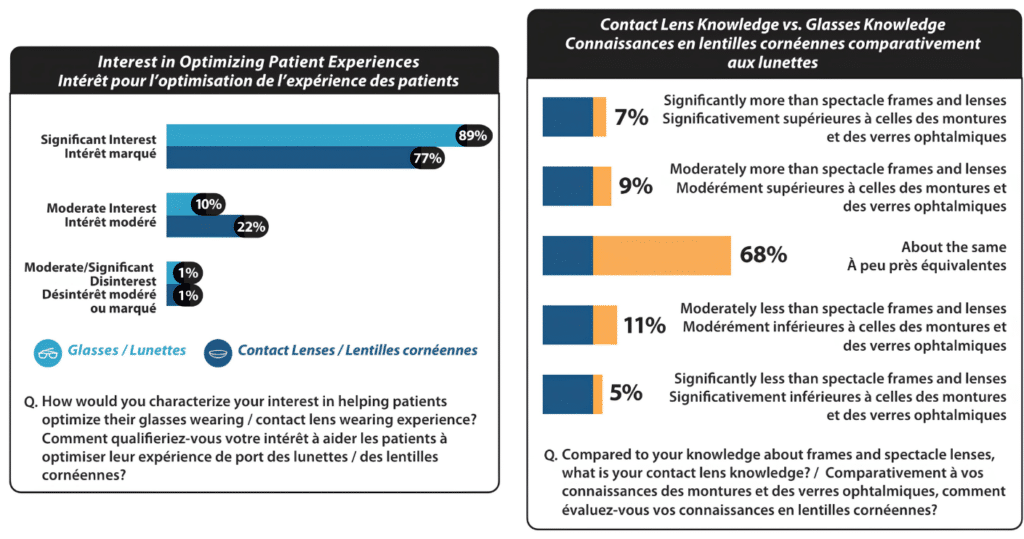
The survey asked opticians to compare their contact lens knowledge with their knowledge of frames and spectacle lenses. Most respondents felt their knowledge was comparable: 68% said their contact lens knowledge was about the same as their knowledge of frames and spectacle lenses. A further 16% said their contact lens knowledge was moderately or significantly greater, while an equal proportion said it was moderately or significantly less.
That finding may be relevant for practices looking to expand their contact lens activity. It suggests a strong foundation exists, but that some opticians may benefit from further professional development.
Opticians Are Already Deeply Involved
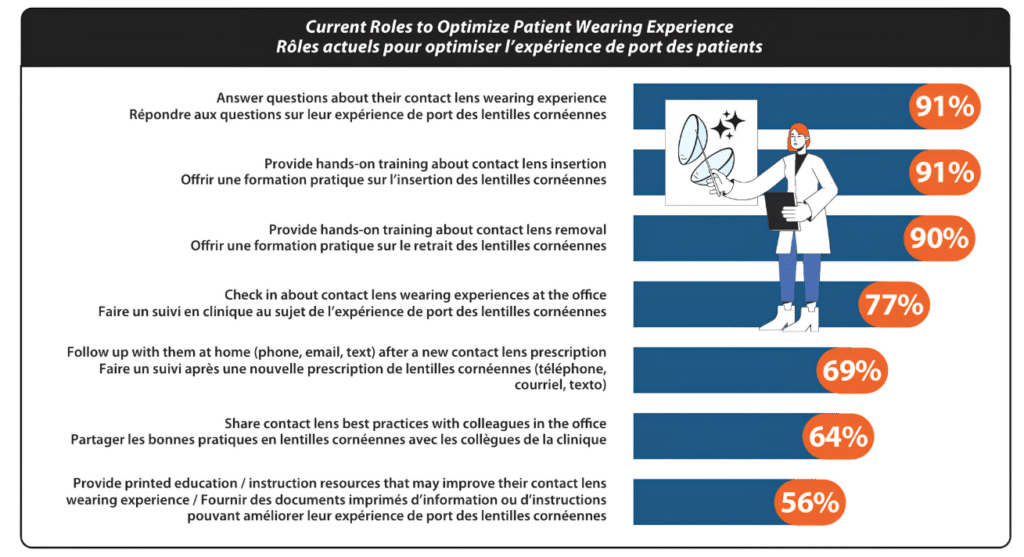
The survey makes clear that opticians are not simply adjacent to contact lens care. In many practices, they are directly involved in key parts of the patient journey. Among respondents, 91% said they answer patient questions about the contact lens wearing experience. The same percentage provide hands-on training for contact lens insertion, while 90% provide hands-on training for removal.
Other activities are also common. Checking in with patients about their contact lens wearing experiences at the office was reported by 77% of respondents, while 69% follow up with patients at home after a new contact lens prescription. In addition, 64% share best practices with colleagues, and 56% provide printed education or instruction resources.
When asked whether they wanted more involvement in the patient wearing experience, two-thirds of opticians said yes. By contrast, only 7% said they did not want more involvement, while 26% were uncertain. That appetite for broader participation may represent an opportunity for practice owners and managers. Giving opticians a more structured role in contact lens education, troubleshooting and follow-up may help improve retention and satisfaction.
Opticians’ Contact Lens Roles & Involvement
Dual Wear Remains a Strong Opportunity
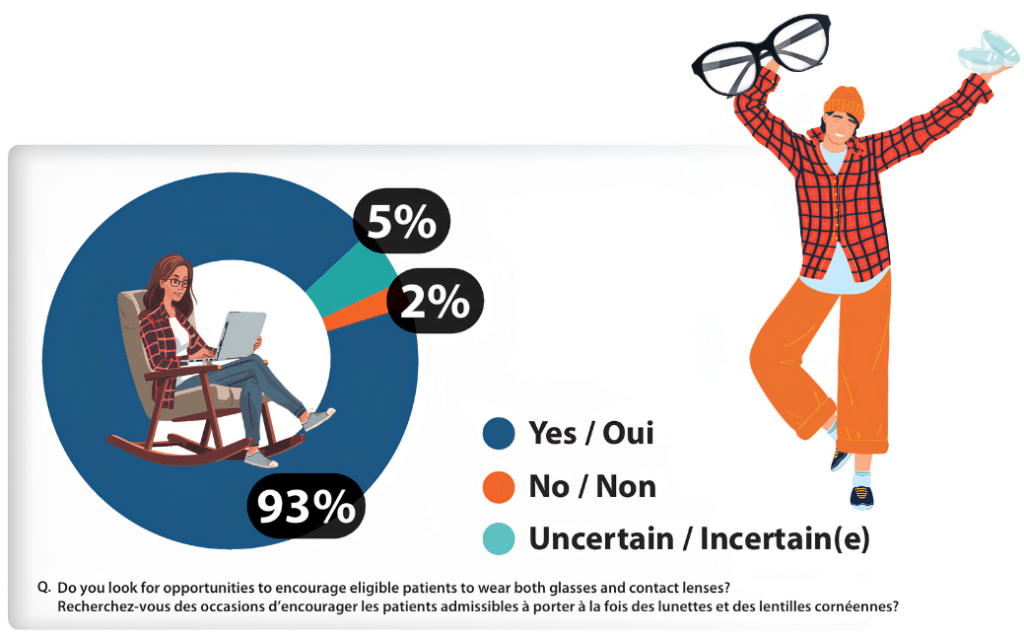
The survey also shows strong support for encouraging eligible patients to wear both glasses and contact lenses. A very large majority of respondents, at 93%, said they look for opportunities to encourage eligible patients to consider both options. By contrast, only 2% said no, while 5% were uncertain. Rather than positioning contact lenses and glasses as competing choices, dual wear allows patients to use each modality in ways that suit lifestyle, comfort, work, recreation and visual demands.
Dual Wear Enthusiasm Encouraging Both Contact Lens & Glasses Wear Among Patients
Insertion and Removal Training Remains Critical
Insertion and removal training remains one of the most important areas where opticians can support patient success. In the survey, 89% of respondents said a patient’s understanding of how to insert contact lenses matters significantly to their willingness to continue wear. The same percentage said understanding removal matters significantly. Another 10% said each area matters somewhat, while only 1% said insertion or removal understanding has no effect.
Contact Lens Training
The report also notes that prior Contact Lens Institute research indicates new patients may find removal more challenging after leaving the office, suggesting that this part of training should not be underestimated.
Among opticians who assist with insertion and removal training, half said they spend equal time on insertion and removal. A further 31% said they spend more time on insertion, while 17% spend more time on removal.
Training Demand Is High
The report also highlights strong interest in additional contact lens education. Current training sources are varied: 83% of respondents receive training from manufacturer-provided courses and materials, while 78% use professional association courses and materials. Colleagues or coworkers were cited by 45% of respondents, followed by online search sources at 39%, and magazines and journals at 37%.
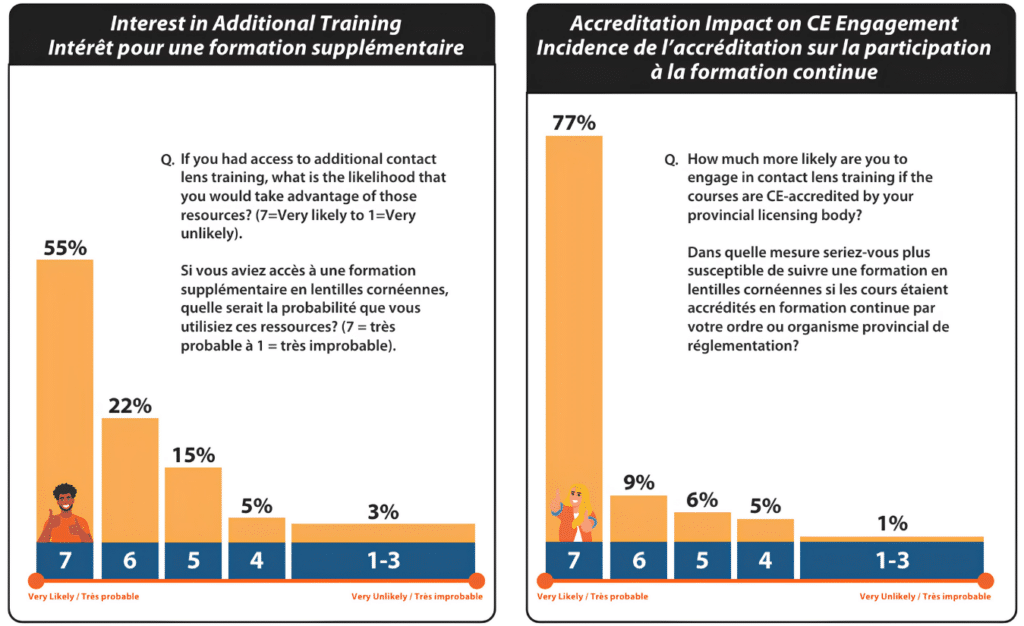
When asked about additional training, 77% indicated they were very likely to take advantage of new resources if made available (self-rating six or seven on a seven-point scale).
Contact Lens Training
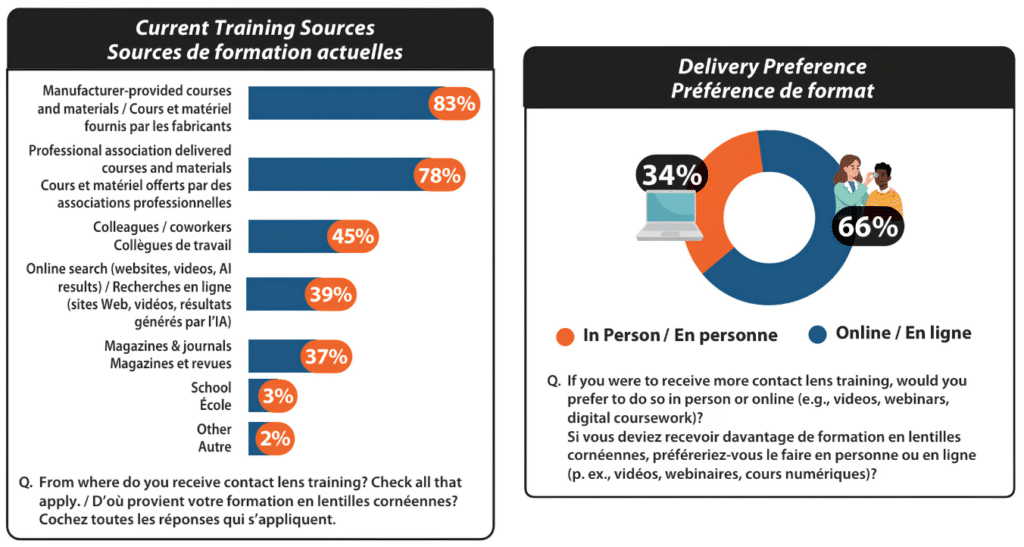
Continuing education accreditation appears to be a powerful motivator: 77% said they would be very likely to engage in contact lens training if the courses were CE-accredited by their provincial licensing body. Online education was preferred by two-thirds of respondents.
Contact Lenses and Practice Growth
The business relevance of contact lenses was well understood, among owners. Among owner respondents, 98% said they were completely or somewhat familiar with how contact lenses contribute to practice revenue and profitability. Among non-owners, 83% said the same.
Non-owner respondents also perceived enthusiasm among practice owners or location managers. Their owner or manager was described as extremely enthusiastic by 32% of respondents, very enthusiastic by 33%, and moderately enthusiastic by 34%. By contrast, only 2% said their owner or manager was not enthusiastic, while none said contact lenses were actively discouraged.
Taken together, the findings suggest a contact lens environment with strong alignment across patient care, staff engagement and business opportunity. With added training, structured involvement and continued emphasis on patient education, opticians’ role can become even more valuable.
As contact lens technology continues to evolve, the human side of the experience remains critical. Patients need confidence, reassurance, practical instruction and ongoing support. Canadian opticians appear ready to provide it.
Want to see more articles like this? Click here to subscribe to our FREE print magazine and newsletters!