fbpx

SILMO Paris 2025: International Optician of the Year – Meet the Finalists!

International Opticians Association logo

From 26 to 29 September, SILMO Paris, “the place to be, to see & to foresee”, will bring together the entire optical and eyewear industry at the Paris Nord Villepinte Exhibition Centre.

As an international hub for innovation, creativity, and expertise, the trade show will once again showcase the excellence of the sector.

Among the highlights of this major event, the IOA Award Ceremony, scheduled for Saturday, 27 September, will celebrate the dedication and vision of opticians, in an edition marked by talent and discovery.

In the meantime, discover the 2025 finalists in this exclusive preview!

Kim Jurina, Licensed optician & Founder of Eye Stylist, Canada

“I launched Eye Stylist to do things differently. It’s not just about glasses; it’s about bringing clarity, confidence, and care—wherever my clients are.”

Charlie Saccarelli, Licensed optician & CEO of Chadwick Optical, United States

“By pushing the boundaries of optics and challenging inefficiencies in the healthcare system, we are committed to going beyond standard care to deliver exceptional vision and service to every patient.”

Barry E. Santini, Licensed Optician, President of Long Island Opticians, United States

“With over five decades of experience, I strive to advance the field of optics by combining technical expertise, innovation, and an unwavering commitment to excellence in vision care.”

William Snelgrove, Licensed Optician, Co-founder of Kawartha Vision Care & Director at the Ontario Opticians Association, Canada

“By combining technical expertise with personalized care, we create vision solutions that enhance our clients’ lives with compassion and professionalism.”

Frits Van Den Bosch, Licensed optician & Optical business owner, Belgium

“By placing the client at the heart of every decision and combining passion with precision, we create visual experiences that transform their daily lives with confidence and satisfaction.”

Blair Wong, Licensed Optician, Chair of the Department of Eye Health Technology at Benjamin Franklin Cummings Institute of Technology, Executive Director of the Opticians Association of Massachusetts, Chair of the board of directors for GoodVision USA, United States

“As a blind individual living with retinitis pigmentosa, I strive to advocate for the visually impaired and to build sustainable vision care solutions for underserved populations around the world.”

Visit silmoparis.com for more information on the International Optician of the Year Award and its 2025 finalists.

Click HERE for the press release.

Want to see more like this article? Click here to subscribe to our FREE print magazines and e-newsletters!


The Perfect Pair: Glasses AND Contact Lenses

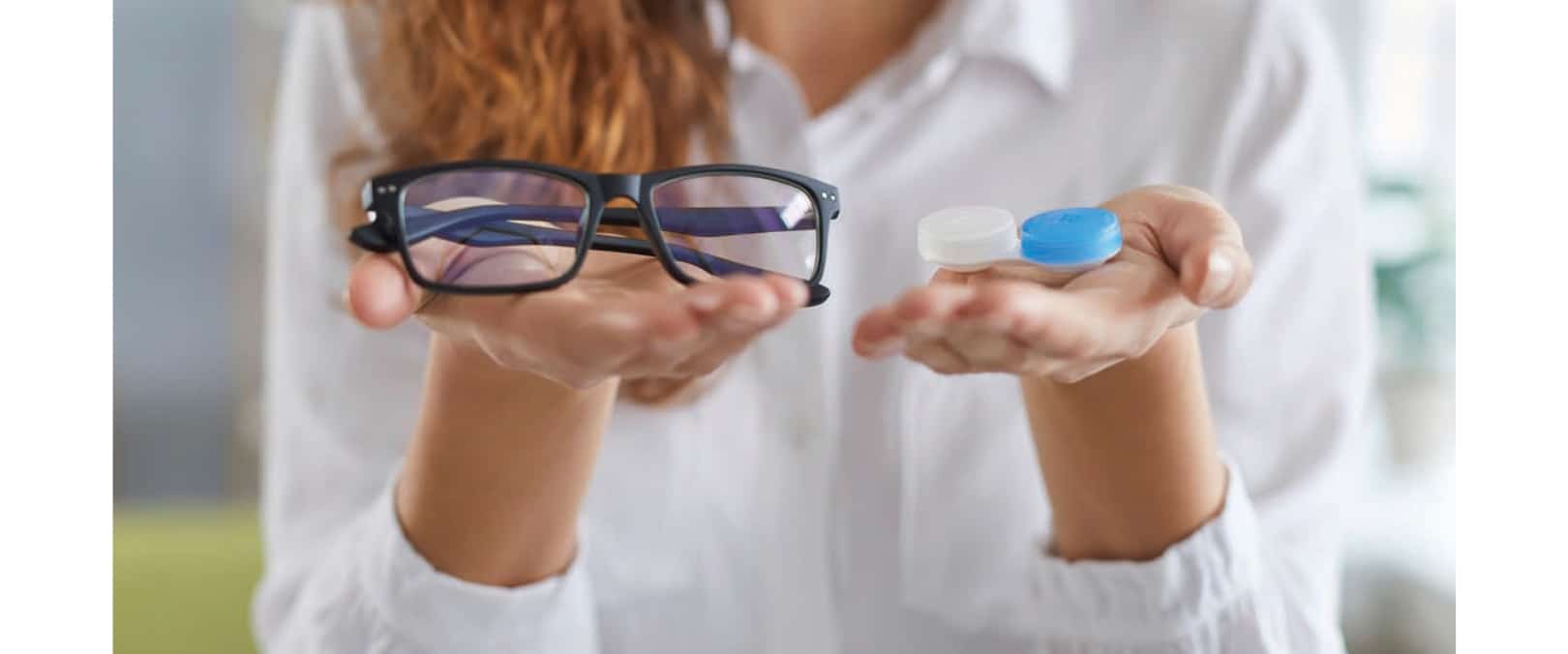
July-August Optik 2025 images Dual wear contact lenses and glasses 810 x 338

By Dr. Mark Shaeffer, OD, FAAO

New data sheds light on patient interest in dual wear—and missed opportunities in practice.


A recent survey commissioned by the Contact Lens Institute reveals a critical disconnect in the delivery of care: despite being strong candidates for both glasses and contact lenses, most patients are rarely encouraged to consider both. This dual-wear approach—alternating between frames and lenses based on lifestyle and context—may be the key to higher patient satisfaction and practice growth.

The findings come from a survey of 2,004 adults who use vision correction. Participants were grouped into exclusive glasses wearers, exclusive contact lens wearers, and those who use both—so-called dual wearers. The results highlight knowledge gaps, outdated perceptions, and untapped potential for ECPs to better meet the diverse needs of modern patients.

Glasses, Lenses—or Why Not Both?

Exclusive glasses wearers still dominate the field, with 1,416 in the survey versus just 115 exclusive contact lens wearers. But a notable 473 individuals reported using both, indicating that dual wear is far more common—and desirable—than many practitioners may realize.

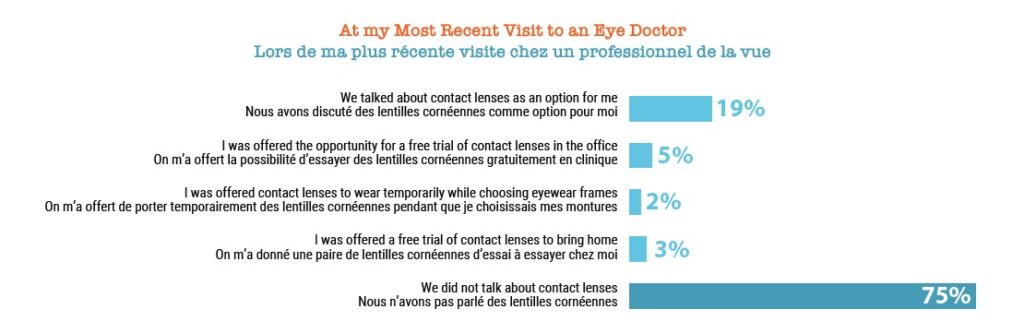
Interestingly, 75% of all patients said that contact lenses weren’t even mentioned at their last eye exam. Of the remaining 25%, most had to initiate the conversation themselves. Only 5% were offered a trial pair.

July-August Optik 2025 At my Most Recent Visit to an Eye Doctor- fig 1

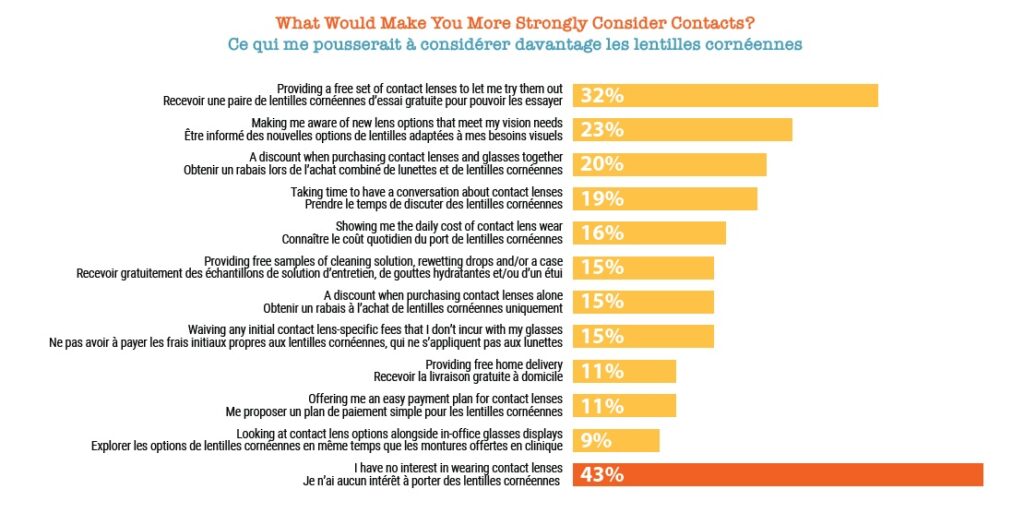
This matters, because patients are curious. Nearly one in five glasses wearers said they were “very interested” in trying lenses, and many cited a free trial set, better awareness of options, and discounts as incentives to consider both.

July-August Optik 2025 What Would Make You More Stongly Consider Contacts- fig 2

Barriers—Real and Perceived

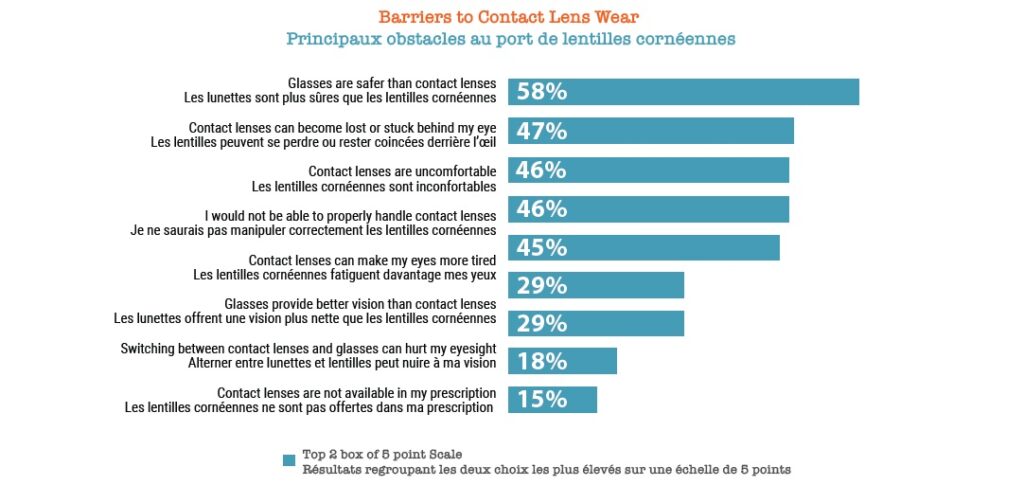
When asked why they avoided contact lenses, glasses-only wearers cited concerns like safety (58%), comfort (46%), and fears about touching their eyes (46%). These lingering perceptions suggest that many patients remain unaware of the technological advancements that have improved comfort, ease of use, and lens customization over the years.

July-August Optik 2025 Barriers to Contact Lens Wear- fig 3

Conversely, contact lens wearers who didn’t wear glasses saw them as providing inferior vision (70%) or causing undesirable thick lenses. Some feared that switching between corrections could harm their eyesight—a misconception that calls for more proactive education.

Lifestyle-Driven Choices

Dual wearers, those who already embrace both modalities, offer a window into modern visual lifestyles. Their habits are dictated less by vision needs and more by situational preference.

For instance, glasses were favoured when working from home or flying. Contact lenses, on the other hand, were preferred for workdays, physical activity, social outings, and even dating.

July-August Optik 2025 Survey the Situation- fig 4
July-August Optik 2025 images Dual wear contact lenses and glasses

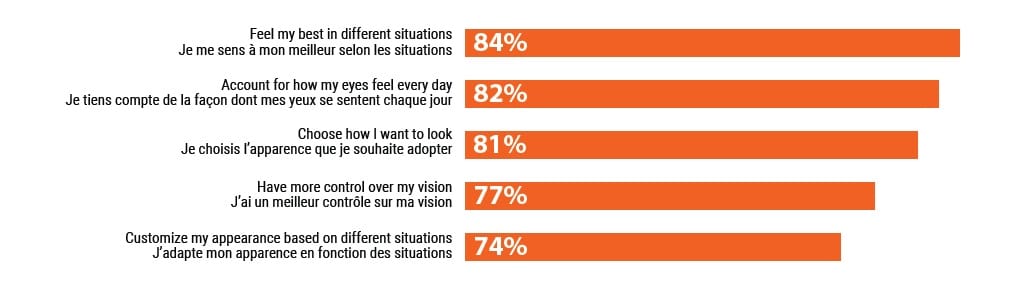
Dual wearers also reported a high degree of satisfaction. They described being able to “feel their best” (84%), match their vision correction to how their eyes felt each day (82%), and even pair their correction with their mood (60%). This illustrates how today’s patients view eyewear and lenses as part of a larger self-expression toolkit—not just a medical device.

July-August Optik 2025 - high degree of satisfaction- fig 5

Where ECPs Can Do More

Most patients continue to purchase their devices from their ECPs, suggesting a strong foundation of trust. However, this trust is undermined if patients don’t hear about all their options.

Too often, practitioners wait for the patient to ask about contact lenses or glasses. Meanwhile, patients assume that if something isn’t mentioned, they must not be a candidate.

Closing this communication gap is essential. Whether it’s offering an in-office trial pair of lenses, explaining that prescriptions can be used across modalities, or simply bringing up the subject, initiating the conversation makes a measurable difference.

Freedom to Choose

Dual wear isn’t just a fashion statement or a matter of convenience, it’s a patient-centered strategy that aligns with modern lifestyles. For ECPs, it also represents a missed opportunity if overlooked.

Today’s patients want options, control, and personalization. By embracing a mindset that encourages both glasses and contact lenses where appropriate, practitioners can boost satisfaction, improve outcomes, and strengthen loyalty.

Glasses and contact lenses aren’t in competition. When paired effectively, they’re the perfect team.

Want to see more like this article? Click here to subscribe to our FREE print magazines and e-newsletters!
Essilor Announces Latest Progressive Lens Innovation: Varilux® Physio® extensee Lens

Essilor Varilux physop extensee logo

Essilor® presents its first Varilux® lens developed using a dynamic replica of the human pupil to offer high vision intensity in any light for extra visual sharpness and contrast(1).

Powered by Varilux® lens AI twinning technology and pupil-variation predicting, the Varilux® Physio® extenseeTM lens is designed to provide optimized correction for each wearer’s pupil dynamics to reduce high-order aberrations and offer extra visual sharpness and contrast(1).

The pupil is dynamic, constantly adapts to new lighting conditions, its ability to change size and adapt to light is unique to each individual. Most progressive lenses are designed based on the wearer’s pupil size remaining constant in all lighting situations, but this can be problematic and negatively impact vision. Indeed, even the most satisfied progressive lens wearers complain about a drop in visual performance in various lighting environments:

39% are very interested in corrective lenses designed to improve their vision comfort regardless of light intensity(2).

Sébastien Fricker, Vision and Perception Modelling Team Manager at EssilorLuxottica said: “When the size of the pupil increases, the light beam entering the eye crosses a bigger portion of the lens. As a result, it can contain more high-order aberrations and induce a loss in image quality.

“Therefore, accounting for pupil-size variation in lens design is key for maximizing contrast perception and visual performance for wearers.”

Pupilizer

AI Digital Twinning + computer-lr

Only recently have vision scientists been able to derive a model which considers the main parameters that influence pupil size(3). The result is a state-of-the-art dynamic pupil model that integrates multiple studies and datasets to describe and detail pupil size variations.

Enriched for the first time by this comprehensive dynamic pupil model, Varilux® AI twinning technology replicates thousands of wearer profiles, performing multiple tasks at all distances, in different light conditions. It then analyses this powerful data to predict wearers’ pupil size variation, resulting in Pupilizer(TM) lens technology.

Thanks to pupil-variation prediction, Pupilizer(TM) lens technology is built into the Varilux® Physio® extensee(TM) lens to reduce high-order aberrations and minimise distortion when light passes the lens. By associating a prescription to a predicted pupil dynamism profile, the lens can be produced to closely match the wearer’s daily, real-life pupil variations.

Dual Booster

Dual Booster horizontal-lr

Close-up vision is one of the major pain points for progressive lens wearers, with 41% reporting have difficulty reading fine print(2). Dual BoosterTM lens surfacing technology is designed to optimize near vision. Varilux® Physio® extensee™ is a dual-sided lens, carefully engineered between the back and front surfaces to provide a magnification effect in the near vision zone ; without impacting the aesthetic of the lens or the overall progressive power.

This dual surface provides a high quality of vision at near to aid with tasks such as reading fine print.

Synchroneyes®

Synchroneyes - print-lr

The management of binocular vision in Varilux® Physio® extenseeTM lens is enhanced thanks to integrating the Synchroneyes® lens technology.

This balances the left and right lenses’ designs to match power distributions and patterns of unwanted astigmatism, and allows for a wider field of vision.

A real-life consumer study carried out by an independent institute on 79 progressive lens wearers equipped with Varilux® Physio® extensee™ lenses in their daily lives showed that:

  • 94% experienced high vision intensity in any light(1).
  • 92% felt confident in low light conditions (1).
  • 96% experienced a high quality of vision at near (4).

AI simulations were also performed using twinning technology to compare the performance of the Varilux® Physio® extenseeTM lens compared to similar lenses on the market and showed a 25% enhancement in contrast and sharpness in all light conditions, even in low light(5).

As 9/10 people have a unique near vision behaviour(6), Varilux® Physio® extensee™ lenses can now include Near Vision Behaviour measurement. It personalizes the near vision zone by adjusting its position and size.

  • 71% of wearers easily accessed the near vision zone(7)
  • 78% of wearers experienced extra comfortable vision during a long task in near vision(7)

EXPERT Q&A

Experts from EssilorLuxottica answer some questions on the new lens and how it can benefit wearers.

How does Varilux® Physio® extensee™ lens improve vision quality across various light environments?

Sébastien Fricker, Vision and Perception Modelling Team Manager at EssilorLuxottica, said: “Today there is still a pain point amongst progressive lens wearers, with our recent consumer study revealing that 39% are very interested in corrective lenses designed to improve their vision comfort regardless of light intensity.(2)

“It was therefore evident that we should continue addressing this issue and with our fourth generation of Varilux® Physio® lens, we are now able to take advantage of improved calculations and design capability to create a better lens to help manage low light conditions.

“Thanks to AI twinning technology, pupil size variations can be predicted for each wearer and during the design of this PupilizerTM lens technology we not only considered low light conditions but a whole range of environments to find the best surface to provide optimal vision at all times.”

Can you simplify how the lens works for wearers?

Sébastien Fricker said: “When the pupil is behind a progressive lens it can be prone to high-order aberrations, which are optical defects that lead to vision being less sharp. When the pupil is small in bright light these defects are negligible but the bigger the pupil gets in lower light settings, the more these high- order aberrations will have an impact on vision quality. This affects contrast sensitivity which is the ability to see differences in shades of the same colour ; and sharpness which is the ability to distinguish the fine details of an object.”

“However, during the design of Varilux® Physio® extenseeTM lens, our R&D team used the pupil-variation modelling in the digital twin, which is a virtual wearer that can simulate a real person in daily life.”

“With this extra data, AI simulations were carried out by the digital twin based on wearers of different ages, in different light environments from dim to bright light and in-between, at different distances, performing different tasks. Using all this data we were able to create PupilizerTM lens technology and modify the shape of the lens to reduce these optical defects caused by low light.”

How is the pupil model used to personalise the lens?

Sébastien Fricker said: “The pupil size is related to four parameters which have the most impact. One is age and as we grow older our pupil size decreases. The others are related to the environment including the brightness, proximity and the size of the object being viewed.”

“The data from the pupil-variation modelling is fed into our digital twin allowing us to personalise the optical lens even further. When the lab receives a patient’s prescription, they will incorporate the pupil dynamic profile as part of the lens calculation to optimise and build the lens.”

How does the latest technology meet the needs of today’s presbyopes?

Meena Puar, Global Medical Advisor – Presbyopia at EssilorLuxottica, said: “Presbyopia, a condition that impairs near vision, tends to worsen over time, with the challenges increasing as the severity of the

condition progresses. These near vision tasks are typically more challenging if the lighting is not optimal, which can affect contrast and sharpness. In modern day scenarios, today’s presbyopes are seeking high quality vision across all lighting environments throughout the day.

“To prescribe the latest lens technologies is an opportunity to address the evolving needs of presbyopic patients. The Varilux® Physio® extensee™ lens is designed to cater to a wide range of presbyopes. It incorporates an innovative dynamic pupil model, which takes the pupil size into account in different lighting conditions and across various distances.”

References

  1. Varilux® Physio® extensee™ – in-real life consumer study – Eurosyn – 2024 – France (n=79 progressive lens wearers)
  2. Essilor International – Vision Care Usage and Attitudes – CN/FR/US – June Marketing – 2023 (n=10 611 respondents). • 39% : Analysis based on 481 (45-65 yo PAL wearers) • 41% : Analysis based on 1 350 (45-65 yo PAL wearers)
  3. Zapata-Díaz, Juan F., Hema Radhakrishnan, W. Neil Charman, and Norberto López-Gil. (2019). Accommodation and Age-Dependent Eye Model Based on in Vivo Measurements. Journal of Optometry, 12(no. 1), 3–13.
  4. Varilux® Physio® extensee™ – in-real life consumer study – Eurosyn – 2024 – France (n=60 progressive lens wearers)
  5. Simulations vs relevant progressive lens products – done with AI twinning technology during activities in near vision in various luminance – Comparison between mean’s value based on several prescriptions & materials – Internal R&D simulations – 2024
  6. EssilorLuxottica R&D analysis of near vision behavior data from 160k orders, at least one parameter out of four of visual behavior differs from the average
  7. Varilux® Physio® extensee™ track – in-real life consumer study – Eurosyn – 2024 – France (n=57 progressive lens wearers).
  8. Euromonitor, Eyewear 2023 edition; Essilor International company; worldwide retail value sales at RSP.
  9. Quantitative research conducted among a representative sample of 958 independent ECPs by CSA in February 2019 – France, the UK, Germany, Italy, Spain, the US, Canada, Brazil, China, India.

Click HERE for the press release.

Want to see more like this article? Click here to subscribe to our FREE print magazines and e-newsletters!
MiSight® Spectacle Lenses Powered by Diffusion Optics Technology™ Launches in Canada to Slow Myopia Progression

CooperVision

CooperVision announced the launch of breakthrough MiSight® Spectacle Lenses powered by Diffusion Optics Technologyfor myopia control in Canada. 

Diffusion Optics Technology™ uses a unique, patent-protected mechanism to lower contrast signals that can cause myopia progression in children.1 Beginning July 1st, Canadian Eye Care Professionals will be able to prescribe this proven intervention to help slow the progression of myopia in their young patients.±2

The innovative approach is backed by extensive research, including the pivotal CYPRESS clinical trial conducted across 14 sites in North America1 and the ongoing CATHAY clinical trial across 5 sites in China.3 MiSight® Spectacle Lenses slow average myopia progression by up to 75% after 12 months of wear across diverse populations of children.‡1,3

The rigorous, multi-site four-year CYPRESS clinical trial demonstrated that among children wearing MiSight® Spectacle Lenses, 41% of children showed no meaningful progression in refractive error over 24 months.†2 

“MiSight® Spectacle Lenses provide another scientifically proven myopia control option alongside our MiSight® 1 day.* We are enthusiastic about bringing this advancement to Eye Care Professionals in Canada, and about the potential it offers for so many children,” said Enrique Contreras, Country Manager for CooperVision Canada.

“We expect the availability of MiSight® Spectacle Lenses to significantly expand myopia control access4 for children in Canada, particularly among younger patients for whom spectacles may be a preferred form of treatment. Adding MiSight® Spectacle Lenses to an Eye Care Professional’s toolbox helps to increase access to evidence-based technologies, especially for younger children, which helps drive towards a shared goal of making myopia management a standard of care,” said Andrew Sedgwick, CEO of SightGlass Vision.

MiSight® Spectacle Lenses provide a positive wearing experience with 93% of children saying they love their MiSight® Spectacle Lenses.│2 Studies also show that MiSight® Spectacle Lenses provide a clinically equivalent visual experience to standard single vision lenses.5-7

For more information, visit CooperVision.ca and SightGlassVision.com.

_______________________________________

* USA Indication: MiSight® 1 Day (omafilcon A) Soft (Hydrophilic) Contact Lenses for daily wear are indicated for the correction of myopic ametropia and for slowing the progression of myopia in children with non-diseased eyes, who at the initiation of treatment are 8-12 years of age and have a refraction of -0.75 to -4.00 diopters (spherical equivalent) with ≤ 0.75 diopters of astigmatism. The lens is to be discarded after each removal. Canadian Indications for Use: MiSight (omafilcon A) Soft Contact Lenses for Myopia Control may reduce the rate of myopia progression in children (6-18) and correct ametropia. Reduction of myopia progression was observed in children with wearing time of 12 hours (8-16 hours) per day, 6.4 days (5-7) per week in a clinical study. Permanent myopia control after lens treatment is discontinued is not supported by clinical studies. MiSight (omafilcon A) Soft Contact Lenses for Myopia Control are indicated for single-use daily disposable wear. When prescribed for daily disposable wear, the lens is to be discarded after each removal.

± Reduction in progression of spherical equivalent refraction and axial length from baseline over 24 months was 47% and 24% on average, respectively (p<0.0041).

‡ Based on a North American patient population aged 6–10 years (least-squared means) and a Chinese patient population aged 6–13 years (unadjusted means). Significant progression is defined as >0.25 D change from baseline.

† No clinically meaningful change in refractive error means that there was less than a 0.25D increase in myopia from baseline as measured by cycloplegic autorefraction. (p<0.0001). 

│Proportion agreeing to “I love my DOT glasses” at the 30-day visit.

References

1 Rappon et al. Control of myopia using diffusion optics spectacle lenses: 12-month results of a randomized controlled, efficacy and safety study (CYPRESS). Br J Opthalmol. 2023 Nov; 107(11): 1709:1715. 

2 SGV data on file 2021. Control of Myopia Using Peripheral Diffusion Lenses: Efficacy and Safety Study, 24-month results (n = 256, 14 North American sites).

3 Laughton D., et al. Control of myopia using diffusion optics spectacle lenses in a Chinese population: 12-month results. 2025 ARVO poster presentation. 24-month, randomized and controlled clinical trial across 5 Chinese hospital sites, evaluating DOT spectacle lenses (n=128) versus control standard single vision spectacle lenses (n=58) in myopic children aged 6–13. 

4 Rappon et al. Two-year effectiveness of a novel myopia management spectacle lens in full-time wearers. Invest. Ophthalmol. Vis. Sci. 2022;63(7):408.

5 SGV data on file 2022. Control of Myopia Using Peripheral Diffusion Lenses: Efficacy and Safety Study, 3-Year Report (n = 256, 14 North American sites).

6 Laughton D et al. Safety and efficacy of a novel spectacle lens for myopia control over three years. AAOptom conference 2022 presentation.

7 Wolffsohn JS, Hill JS, Laughton D, Hunt C, Young G. Visual Impact of Diffusion Optics Technology Lenses for Myopia Control. AAOptom conference poster presentation 2023.

Click HERE for the press release.

Want to see more like this article? Click here to subscribe to our FREE print magazines and e-newsletters!
LE PARC – Timeless Lines, a Bold Perspective

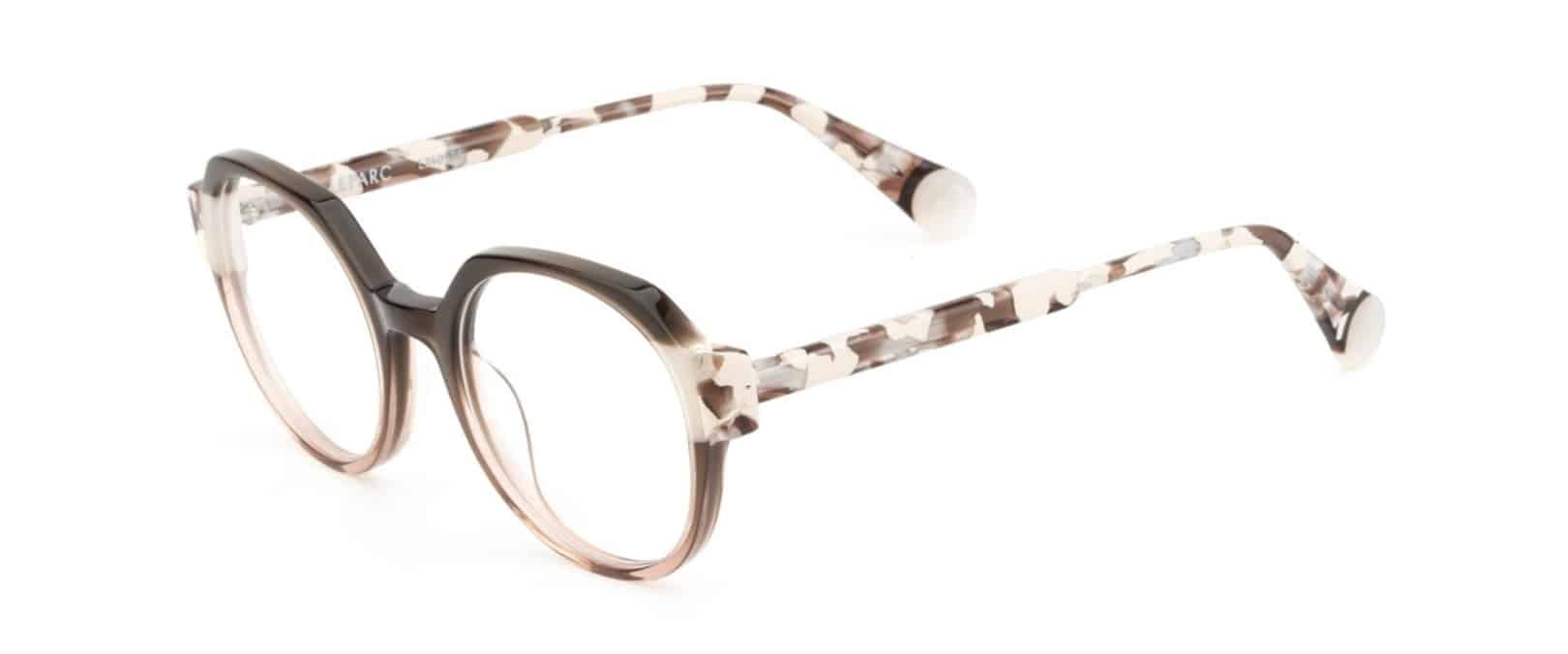
Optik Voila May-June 2025 Mood Le PArc Marcellis

From the Spring/Summer 2025 collection and “Dots” campaign, Marcelis isa sophisticated combination of acetate textures and timeless lines. Inspiredby Op Art and founder Miquel Dosta’s artistic roots, this frame captures LEPARC’s bold spirit—merging creative heritage with playful design in a refined,expressive, and accessible eyewear statement.

Distributed by Mood Eyewear: www.moodeyewear.com

About Mood Eyewear:

Mood Eyewear Inc is proud to lead in the latest European optical trends, integrating European fashion influences to enhance the visual experience. We consider it both a duty and an honor to support our business partners by providing personalized and efficient service. Our exclusive collections are carefully curated to blend creativity, innovation, art, design, craftsmanship, and cutting-edge technology.

Established in 2006, Mood Eyewear was founded with the aim of importing and offering prestigious optical and sunglass collections to the Canadian market. Our group ensures the distribution of renowned European brands, selected for their quality and distinctive aesthetics. 

We are the exclusive distributors in Canada for brands such as Blackfin, Woodys, Le Parc, Visionario, X-Ide, MIC, I-Man, Komono, and Kunoquist.

Want to see more like this article? Click here to subscribe to our FREE print magazines and e- newsletters!

Featured Posts

Canadian Association of Optometrists logo

CAO Appoints Joelle Walker as New CEO, Effective January 2026

The Canadian Association of Optometrists has appointed Joelle Walker as its new CEO, effective January 2026, succeeding François Couillard after more than 40 years of leadership.

Learn More
World Council of Optometry

ECPs Share How they Use the WCO Alcon Dry Eye Wheel in New Video

The World Council of Optometry and Alcon have released a new video featuring eye care professionals from around the world sharing how they use the Dry Eye Wheel to support dry eye diagnosis, education, and management.

Read more
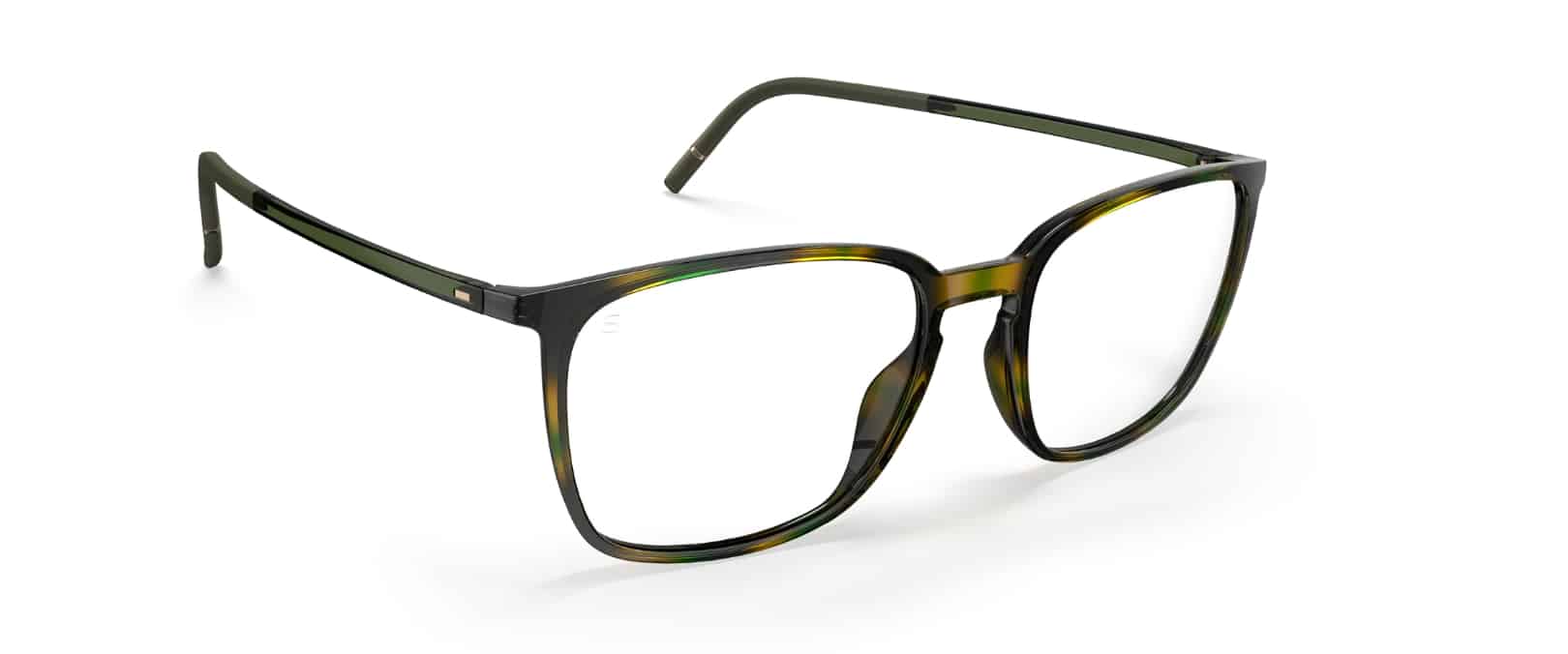
Optik Voilàs November-December 2025- COS Silhouette SPX_Illusion_2978_5530

SPX Illusion 2025: Lightness Meets Bold Style

Silhouette unveils SPX Illusion 2025, featuring two new lightweight shapes— including a striking geometric design—offered in five trend-forward colors like Canary Green Havana and Smokey Blossom. A refined, featherlight way to express personal style with elegance.

Read more
EssilorLuxottica

EssilorLuxottica Expands Ophthalmology Footprint with Acquisition of Signifeye

EssilorLuxottica will acquire Signifeye, adding 15 Belgian clinics to its growing ophthalmology network and strengthening its integrated medical eye-care strategy.

Read more
Centre for Ocular Research & Education (CORE)

CORE Summarizes TFOS DEWS III Reports to Boost Dry Eye Knowledge

CORE has published issue 87 of Contact Lens Update, summarizing key findings from the TFOS DEWS III dry eye reports. Expert-authored content and downloadable PDFs provide clinicians with practical guidance on diagnosis, management, and evolving best practices.

Read more
Canadian Association of Optometrists logo

CAO Appoints Joelle Walker as New CEO, Effective January 2026

The Canadian Association of Optometrists has appointed Joelle Walker as its new CEO, effective January 2026, succeeding François Couillard after more than 40 years of leadership.

Learn More
World Council of Optometry

ECPs Share How they Use the WCO Alcon Dry Eye Wheel in New Video

The World Council of Optometry and Alcon have released a new video featuring eye care professionals from around the world sharing how they use the Dry Eye Wheel to support dry eye diagnosis, education, and management.

Read More
Optik Voilàs November-December 2025- COS Silhouette SPX_Illusion_2978_5530

SPX Illusion 2025: Lightness Meets Bold Style

Silhouette unveils SPX Illusion 2025, featuring two new lightweight shapes— including a striking geometric design—offered in five trend-forward colors like Canary Green Havana and Smokey Blossom. A refined, featherlight way to express personal style with elegance.

Read More
EssilorLuxottica

EssilorLuxottica Expands Ophthalmology Footprint with Acquisition of Signifeye

EssilorLuxottica will acquire Signifeye, adding 15 Belgian clinics to its growing ophthalmology network and strengthening its integrated medical eye-care strategy.

Read More
Centre for Ocular Research & Education (CORE)

CORE Summarizes TFOS DEWS III Reports to Boost Dry Eye Knowledge

CORE has published issue 87 of Contact Lens Update, summarizing key findings from the TFOS DEWS III dry eye reports. Expert-authored content and downloadable PDFs provide clinicians with practical guidance on diagnosis, management, and evolving best practices.

Read More
Canadian Association of Optometrists logo

CAO Appoints Joelle Walker as New CEO, Effective January 2026

The Canadian Association of Optometrists has appointed Joelle Walker as its new CEO, effective January 2026, succeeding François Couillard after more than 40 years of leadership.

Learn More
World Council of Optometry

ECPs Share How they Use the WCO Alcon Dry Eye Wheel in New Video

The World Council of Optometry and Alcon have released a new video featuring eye care professionals from around the world sharing how they use the Dry Eye Wheel to support dry eye diagnosis, education, and management.

Read more
Optik Voilàs November-December 2025- COS Silhouette SPX_Illusion_2978_5530

SPX Illusion 2025: Lightness Meets Bold Style

Silhouette unveils SPX Illusion 2025, featuring two new lightweight shapes— including a striking geometric design—offered in five trend-forward colors like Canary Green Havana and Smokey Blossom. A refined, featherlight way to express personal style with elegance.

Read more
EssilorLuxottica

EssilorLuxottica Expands Ophthalmology Footprint with Acquisition of Signifeye

EssilorLuxottica will acquire Signifeye, adding 15 Belgian clinics to its growing ophthalmology network and strengthening its integrated medical eye-care strategy.

Read more
Centre for Ocular Research & Education (CORE)

CORE Summarizes TFOS DEWS III Reports to Boost Dry Eye Knowledge

CORE has published issue 87 of Contact Lens Update, summarizing key findings from the TFOS DEWS III dry eye reports. Expert-authored content and downloadable PDFs provide clinicians with practical guidance on diagnosis, management, and evolving best practices.

Read more
Canadian Association of Optometrists logo

CAO Appoints Joelle Walker as New CEO, Effective January 2026

The Canadian Association of Optometrists has appointed Joelle Walker as its new CEO, effective January 2026, succeeding François Couillard after more than 40 years of leadership.

Learn More
World Council of Optometry

ECPs Share How they Use the WCO Alcon Dry Eye Wheel in New Video

The World Council of Optometry and Alcon have released a new video featuring eye care professionals from around the world sharing how they use the Dry Eye Wheel to support dry eye diagnosis, education, and management.

Read more
Optik Voilàs November-December 2025- COS Silhouette SPX_Illusion_2978_5530

SPX Illusion 2025: Lightness Meets Bold Style

Silhouette unveils SPX Illusion 2025, featuring two new lightweight shapes— including a striking geometric design—offered in five trend-forward colors like Canary Green Havana and Smokey Blossom. A refined, featherlight way to express personal style with elegance.

Read more
EssilorLuxottica

EssilorLuxottica Expands Ophthalmology Footprint with Acquisition of Signifeye

EssilorLuxottica will acquire Signifeye, adding 15 Belgian clinics to its growing ophthalmology network and strengthening its integrated medical eye-care strategy.

Read more
Centre for Ocular Research & Education (CORE)

CORE Summarizes TFOS DEWS III Reports to Boost Dry Eye Knowledge

CORE has published issue 87 of Contact Lens Update, summarizing key findings from the TFOS DEWS III dry eye reports. Expert-authored content and downloadable PDFs provide clinicians with practical guidance on diagnosis, management, and evolving best practices.

Read more