Researchers from the University of Manchester unveiled a microbiosensor embedded in a contact lens case that can detect unsafe levels of living organisms, alerting CL wearers to discard the lenses. The findings were presented on September 18th, at the Interscience Conference of Antimicrobial Agents and Chemotherapy (ICAAC) in San Diego.
“We have devised a real-time sensing device, embedded within a contact lens case, which is capable of signaling the presence of abnormally high levels of live bacteria,” said Nishal Govindji-Bhatt, a Post-doctoral Research Associate.
The sensor uses a tetrazolium dye which changes colour when bacterial levels reach over a million per 1 mL solution within 8 hours. The dyes are set into a surface embedded in the contact lens case. “We tested if a colour change from yellow to dark blue would take place when harmful levels of bacteria were present, and ensured that the colour change could be clearly seen by the user,” said Govindji-Bhatt.
Further information: https://www.asm.org/index.php/asm-newsroom2/press-releases/93735-microbiosensor-a-device-for-monitoring-bacterial-contamination-in-contact-lens-cases
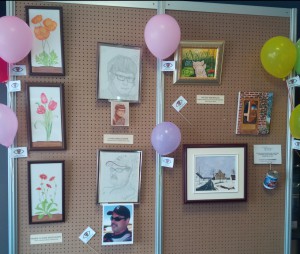
 Essilor facilities across Canada placed its employees’ artistic talents on display this week to celebrate World Sight Day. The walls along hallways and common areas proudly showcased photography, paintings, drawings and other artistic endeavours contributed by employees.