
fbpx
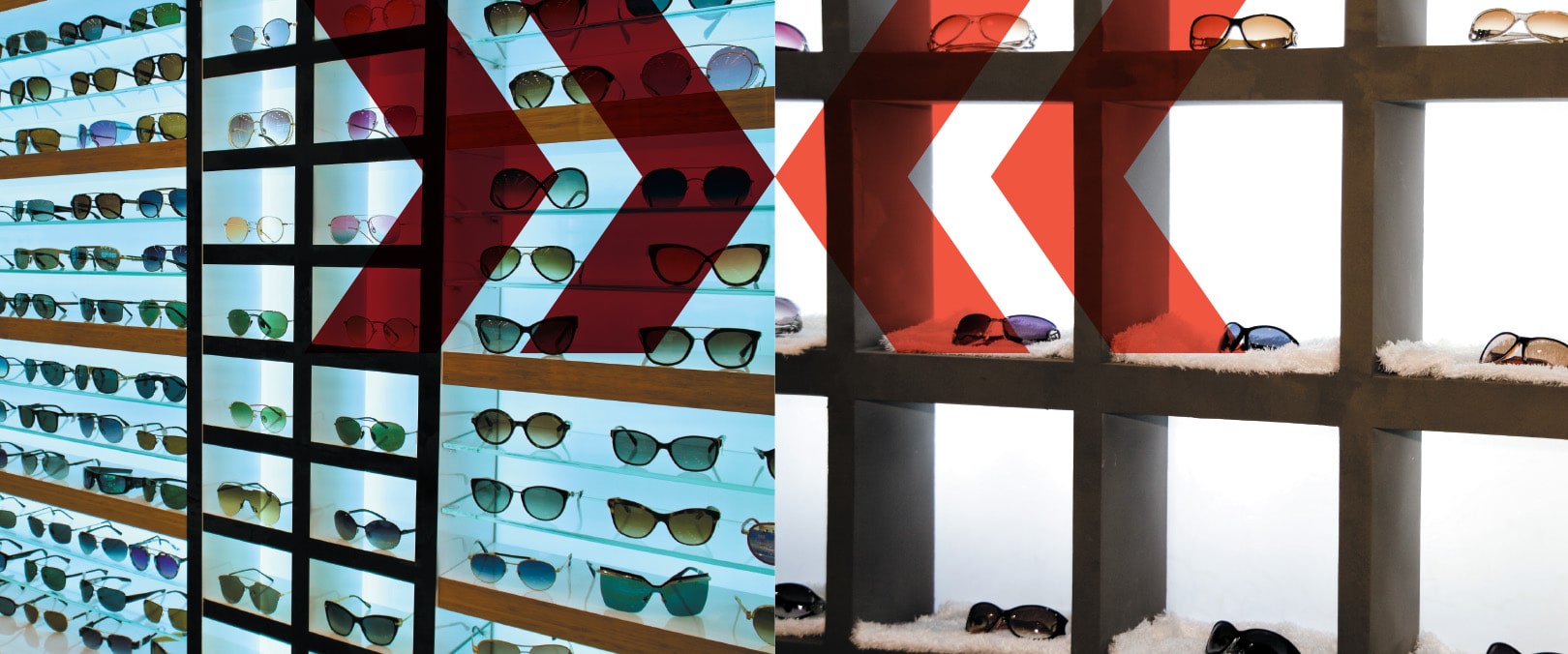
Two different optical store displays, side-by-side, with a red arrow graphic overlaid.

Quantity vs Frame Quality

By Sarah Bureau, RO


How Choosing Low Quality Can Cost You More


The world of Opticianry has a place for everyone and their preferred marketing strategies. Some opticals will opt to sell lower priced products, with multiple pair sales and deeply discounted eyewear. Others will choose to go the boutique route, offering artisanal eyewear from independent designers around the world. While there is no right way to build your brand, there is one key frame quality strategy that every type of optical should avoid!

Frame quality vs quantity is one of the fastest ways to either succeed or fail in the optical industry.


Optical dispensary owners receive daily targeted advertisements from companies offering bulk frame purchases at surprisingly low prices. While it is tempting to see how these low-end products can turn a high profit, choosing quantity over quality can be a fast track to money slipping away.


Here are some ways that low frame quality products can end up costing your dispensary more:

  • Time spent with the optician. If the frame quality is poor and frequently out of
    alignment, the client will need to come into the dispensary for adjustments more often than compared with a quality frame. An optician’s time is more profitable when they can focus on new sales than on frustrating repairs and adjustments.
  • Warranties and returns. When a collection has more breakage, it also means recurrent warranties or returns for reimbursement. While the frame company may replace a broken product at no charge, additional costs are incurred for the optical store. Time spent by staff dealing with acquiring a replacement frame, managing return authorizations, and the time and charges to ship broken frames back to the manufacturer all add up to disappearing dollars in the end.
  • Loss of the client’s trust. When a client purchases a frame, they anticipate that it will last them for many years. If their eyewear is frequently breaking or requiring adjustment, they will question the quality of products being sold at your store. It is also incredibly frustrating for them to have to continue taking the time to return to the dispensary for service. The combination of the loss of their trust and time may affect retention of their future purchases.

The Ray-Ban Lesson

Making high sales of poorly fabricated eyewear over fewer sales of quality products is a potential recipe for disaster. A perfect example of how a business plummeted with this strategy is illustrated in the history of Ray-Ban. Ray-Ban built their original success over decades of innovation in sunglass sales. From the original aviators designed during the war in 1929 for military pilots to the fashionable cat eyes worn by celebrities on the sets of movie filming in the 1950s and beyond. After decades of leading-edge designs and brilliant marketing, Ray-Ban made a choice to make their frames available to an even larger audience. By reducing the quality of their sunglasses, they were able to offer low priced products in convenience stores and gas stations. 

This choice to prioritize quantity over quality sent the brand’s reputation tumbling as their products were no longer performing as the public expected. Using antiquated tooling and cheaper materials, the frame quality was terrible. It was at this point, when the Ray-Ban reputation was at its lowest, that Luxottica made a bid to purchase the Bausch + Lomb eyewear brands in 2000. At that point Ray-Ban frames were falling apart four times faster than any other Luxottica brand. 

With convenience stores not being known for selling quality optical frames, they made the difficult decision to pull the product from 13,000 points of sale in the early 2000s. This decision would impact their profits in the short term, but they hoped it would pay off in the long run. By changing many aspects of the manufacturing process, including materials and the facilities they were being fabricated in, Luxottica was able to improve the construction of their frames. By 2004, the improved quality combined with their preexisting relationships with companies like Neiman Marcus and Saks Fifth Avenue, they were able to start selling Ray-Ban frames for higher price points again. 
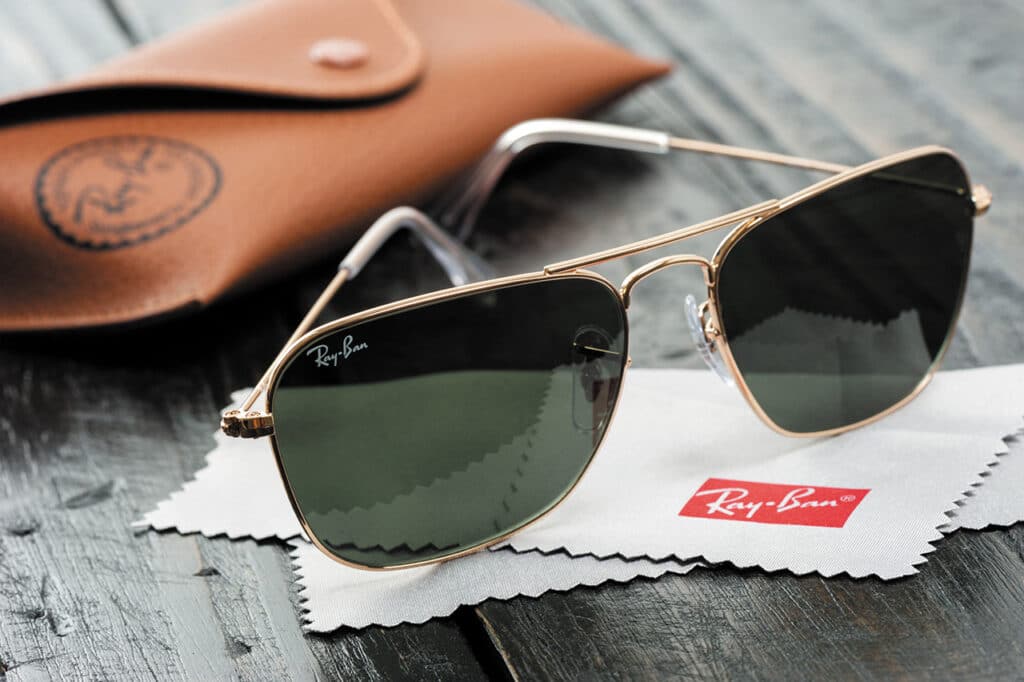
A pair of Ray-Ban sunglasses on top of a Ray-Ban micro-fibre cloth. A Ray-Ban leather glasses cases is behind, out of focus.

At the time of the acquisition in 2000, frames started at $79. As the poor-quality frames disappeared from the market and the reputation of the new product improved, the starting price point had jumped to $129 by 2009. Today, Ray-Ban is the most popular sunglass brand on the planet! The collection is worn by celebrities and the general public alike and you can’t walk down the street without seeing them on multiple faces. The lesson behind this story is that the decision to sell more for less can actually become the death of an established brand.

By selling quality eyewear you will save money on staffing, create confident relationships with your clientele, and avoid a lot of frustration on both sides of the dispensing table! 


Want to see more like this article? Subscribe to our FREE print magazines and e-newsletters!

Featured Posts

Optik Voila May-June 2026 OGI Article One AOMW 2.0

Next-Generation Sun Lenses with TR-18 Tritan™

Article One AOMW 2.0 updates the original concept with refined proportions, a unifit bridge, OBE spring hinges, and TR18 polarized lenses designed for clear, comfortable sunwear.

Learn More
Eye On the Industry podcast EOTI

Eye on the Industry Podcast Celebrates One-Year Anniversary with Special Reflection Episode

Christine Ziegle and Isabelle Tremblay celebrate one year of the Eye on the Industry podcast, reflecting on memorable guests, industry insights, leadership lessons, and the future of eye care.

Read more
EssilorLuxottica

EssilorLuxottica and Applied Materials Partner on AR Optics for Smart Glasses

EssilorLuxottica and Applied Materials have announced a long-term joint development agreement to accelerate the commercialization of advanced optical systems for augmented reality and AI-powered smart eyewear.

Read more
World Council of Optometry and Alcon logos 2026

World Council of Optometry and Alcon Release Updated Dry Eye Wheel

The World Council of Optometry and Alcon have released an updated version of the WCO Alcon Dry Eye Wheel, adding TFOS DEWS III recommendations, dry eye etiological drivers, the OSDI-6 questionnaire and refined management options.

Read more
The Vision Council Foundation logo

The Vision Council Foundation and UOA Partner to Promote UV Safety for National Sunglasses Day

The Vision Council Foundation and the United Opticians Association are partnering for National Sunglasses Day to promote UV safety awareness and highlight the role of opticians and eyecare providers in sunwear education.

Read more
Optik Voila May-June 2026 OGI Article One AOMW 2.0

Next-Generation Sun Lenses with TR-18 Tritan™

Article One AOMW 2.0 updates the original concept with refined proportions, a unifit bridge, OBE spring hinges, and TR18 polarized lenses designed for clear, comfortable sunwear.

Learn More
Eye On the Industry podcast EOTI

Eye on the Industry Podcast Celebrates One-Year Anniversary with Special Reflection Episode

Christine Ziegle and Isabelle Tremblay celebrate one year of the Eye on the Industry podcast, reflecting on memorable guests, industry insights, leadership lessons, and the future of eye care.

Read More
EssilorLuxottica

EssilorLuxottica and Applied Materials Partner on AR Optics for Smart Glasses

EssilorLuxottica and Applied Materials have announced a long-term joint development agreement to accelerate the commercialization of advanced optical systems for augmented reality and AI-powered smart eyewear.

Read More
World Council of Optometry and Alcon logos 2026

World Council of Optometry and Alcon Release Updated Dry Eye Wheel

The World Council of Optometry and Alcon have released an updated version of the WCO Alcon Dry Eye Wheel, adding TFOS DEWS III recommendations, dry eye etiological drivers, the OSDI-6 questionnaire and refined management options.

Read More
The Vision Council Foundation logo

The Vision Council Foundation and UOA Partner to Promote UV Safety for National Sunglasses Day

The Vision Council Foundation and the United Opticians Association are partnering for National Sunglasses Day to promote UV safety awareness and highlight the role of opticians and eyecare providers in sunwear education.

Read More
Optik Voila May-June 2026 OGI Article One AOMW 2.0

Next-Generation Sun Lenses with TR-18 Tritan™

Article One AOMW 2.0 updates the original concept with refined proportions, a unifit bridge, OBE spring hinges, and TR18 polarized lenses designed for clear, comfortable sunwear.

Learn More
Eye On the Industry podcast EOTI

Eye on the Industry Podcast Celebrates One-Year Anniversary with Special Reflection Episode

Christine Ziegle and Isabelle Tremblay celebrate one year of the Eye on the Industry podcast, reflecting on memorable guests, industry insights, leadership lessons, and the future of eye care.

Read more
EssilorLuxottica

EssilorLuxottica and Applied Materials Partner on AR Optics for Smart Glasses

EssilorLuxottica and Applied Materials have announced a long-term joint development agreement to accelerate the commercialization of advanced optical systems for augmented reality and AI-powered smart eyewear.

Read more
World Council of Optometry and Alcon logos 2026

World Council of Optometry and Alcon Release Updated Dry Eye Wheel

The World Council of Optometry and Alcon have released an updated version of the WCO Alcon Dry Eye Wheel, adding TFOS DEWS III recommendations, dry eye etiological drivers, the OSDI-6 questionnaire and refined management options.

Read more
The Vision Council Foundation logo

The Vision Council Foundation and UOA Partner to Promote UV Safety for National Sunglasses Day

The Vision Council Foundation and the United Opticians Association are partnering for National Sunglasses Day to promote UV safety awareness and highlight the role of opticians and eyecare providers in sunwear education.

Read more
Optik Voila May-June 2026 OGI Article One AOMW 2.0

Next-Generation Sun Lenses with TR-18 Tritan™

Article One AOMW 2.0 updates the original concept with refined proportions, a unifit bridge, OBE spring hinges, and TR18 polarized lenses designed for clear, comfortable sunwear.

Learn More
Eye On the Industry podcast EOTI

Eye on the Industry Podcast Celebrates One-Year Anniversary with Special Reflection Episode

Christine Ziegle and Isabelle Tremblay celebrate one year of the Eye on the Industry podcast, reflecting on memorable guests, industry insights, leadership lessons, and the future of eye care.

Read more
EssilorLuxottica

EssilorLuxottica and Applied Materials Partner on AR Optics for Smart Glasses

EssilorLuxottica and Applied Materials have announced a long-term joint development agreement to accelerate the commercialization of advanced optical systems for augmented reality and AI-powered smart eyewear.

Read more
World Council of Optometry and Alcon logos 2026

World Council of Optometry and Alcon Release Updated Dry Eye Wheel

The World Council of Optometry and Alcon have released an updated version of the WCO Alcon Dry Eye Wheel, adding TFOS DEWS III recommendations, dry eye etiological drivers, the OSDI-6 questionnaire and refined management options.

Read more
The Vision Council Foundation logo

The Vision Council Foundation and UOA Partner to Promote UV Safety for National Sunglasses Day

The Vision Council Foundation and the United Opticians Association are partnering for National Sunglasses Day to promote UV safety awareness and highlight the role of opticians and eyecare providers in sunwear education.

Read more