
24-Month Study Data Support Efficacy of DOT Lenses in Young Children
Thursday, May 7 2026 | 15 h 30 min | News
SightGlass Vision has released new 24-month clinical data indicating that its DOT™ spectacle lenses for myopia control reduced progression by more than 1.00 diopter on average in Chinese children aged 6 to 10, according to the company.
The findings build on previously reported 12-month CATHAY study results and add to the evidence base supporting contrast management as an approach to myopia control.
Across the full study population of Chinese children aged 6 to 13, SightGlass Vision reported that DOT lenses slowed average myopia progression by 0.78D and average axial length progression by 0.40 mm over 2 years, compared with the control group. According to the company, those results represent a 67% reduction in myopia progression and a 62% reduction in axial length progression.
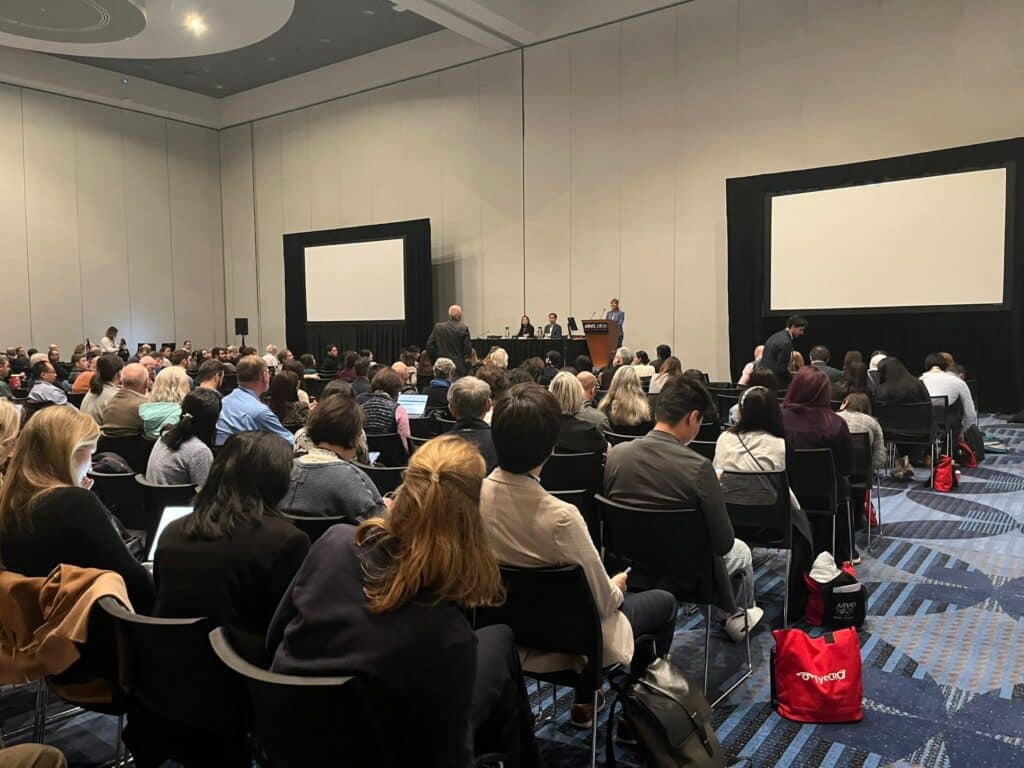
The data were presented at the ARVO 2026 Annual Meeting in a presentation titled Control of Myopia Using Contrast Modulation Spectacle Lenses in a Chinese Population: 24-Month Results.
“Our CATHAY two-year results add to the robust data that establishes DOT lenses as a high-efficacy, non-defocus spectacle solution crucial for practices engaged in myopia management to complete their portfolio,” said Andrew Sedgwick, chief executive officer of SightGlass Vision. “The strength of the outcomes, particularly in younger children, reinforces the importance of early intervention.”
According to SightGlass Vision, DOT lenses differ from defocus-based approaches by using light-scattering elements designed to reduce retinal contrast signalling.
Additional findings from the study showed that 59% of children wearing DOT lenses experienced 0.50D or less myopia progression after 2 years, compared with 19% in the control group.

The CATHAY trial was launched following SightGlass Vision’s North American CYPRESS study and was designed to compare DOT lenses with conventional single vision lenses in Chinese children. A total of 172 myopic children aged 6 to 13 completed the second year of the study.
SightGlass Vision also cited other research presented at ARVO 2026, including findings suggesting no significant relationship between pupil size and myopia progression among children wearing DOT lenses at 12 months, as well as data indicating similar viewing behaviour between DOT lenses and single vision lenses across a range of daily activities.


DOT lenses are now commercially available in China, Canada, Israel, Spain, and the United Kingdom.
Click HERE for the press release.
Want to see more like this article? Click here to subscribe to our FREE print magazines and e-newsletters!