CIBC Commercial Banking is expanding its presence in the Canadian optometry sector through a new collaboration with Eye Care Business Canada.
The bank recently made its debut with the Canadian optometry community as sponsor and presenter of Through a Banker’s Lens: Buying an Optometric Practice, part of the Optometry Practice Strategies Series – Build • Grow • Transition.
Presented by Rachel McKay and Christopher Crofoot of CIBC Commercial Banking, the webinar focused on practice acquisition from a lender’s perspective, including financial preparedness, how banks evaluate acquisition opportunities, and what prospective buyers should understand before seeking financing.
The session was designed for optometrists considering practice ownership, an additional acquisition, or simply looking to better understand how lenders assess professional practice transactions.
For CIBC, the program represents an opportunity to engage more directly with optometrists at a time when practice ownership, succession and consolidation continue to shape the profession.
The webinar was presented through Eye Care Business Canada, which produces the Optometry Practice Strategies Series to address the business issues optometrists encounter throughout the lifecycle of a practice.
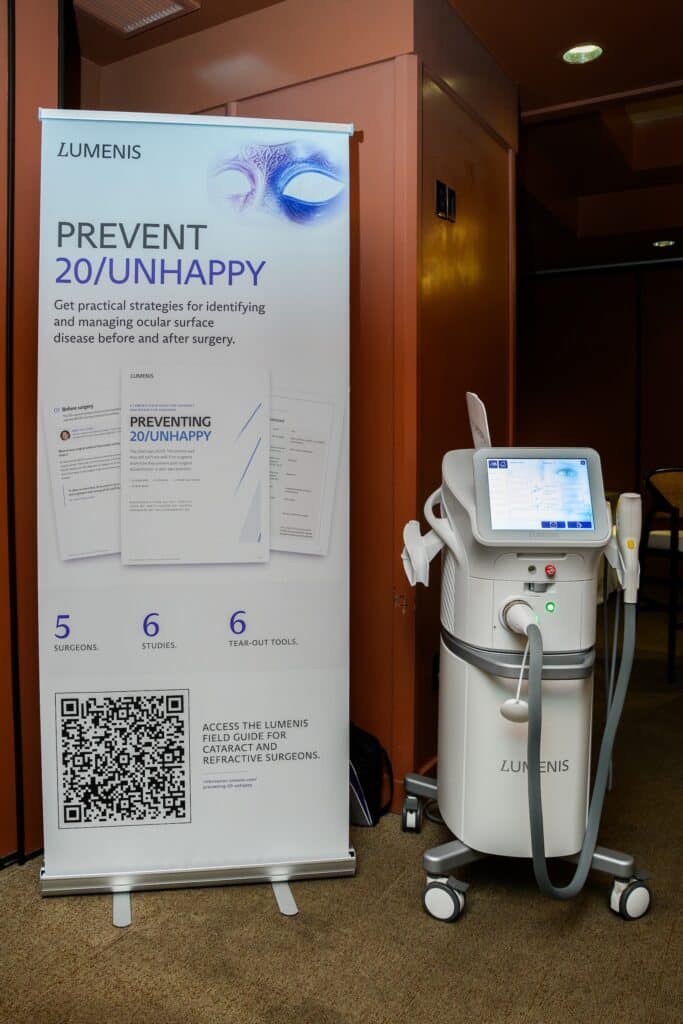
Lumenis has introduced a new perioperative ocular surface care field guide designed to help cataract and refractive surgeons identify and manage ocular surface disease that may contribute to the “unhappy 20/20 patient.” The resource, Preventing 20/Unhappy: A Field Guide for Cataract and Refractive Surgeons, debuted at the 2026 American Academy of Ophthalmology (AAO) annual meeting in New Orleans.
The guide brings together current research, insights from leading surgeons, and practical tools to help clinicians understand why excellent visual acuity does not always translate to patient satisfaction—and how ocular surface disease can undermine surgical outcomes.
A Two‑Part Guide Combining Clinical Strategy and Practice Integration
The field guide is divided into two sections:
The Read — covering clinical considerations such as preoperative screening, matching treatment to disease severity, patient communication, and postoperative care.
The Rollout — focusing on implementation, including demonstrating the value of ocular surface care, building the right team, and securing staff engagement.
The resource incorporates insights from five cataract and refractive surgeons—Christopher Starr, MD, FACS; Preeya Gupta, MD; Brett Levinson, MD; Shareen Greenbaum, MD; and Eric Gershenbaum, MD—along with findings from six studies. It also includes six tear‑out clinical tools designed for use in busy surgical practices.
“Ocular surface disease is so common in surgical patients that waiting to address it until after surgery is a mistake,” said Dr. Preeya Gupta, founding partner of Triangle Eye Consultants. “When patients feel their concerns are taken seriously, they’re more likely to return for future care.”
Research highlighted in the guide shows how frequently ocular surface disease goes undetected before cataract surgery. In a study co‑authored by Dr. Gupta and Dr. Starr, 80% of patients presenting for cataract evaluation had at least one abnormal tear test—even among asymptomatic patients, 85% showed abnormal results.
Unmasking Hidden Ocular Surface Issues
Dr. Starr emphasized the importance of objective testing: “If you’re relying on symptoms alone, you may miss ocular surface disease because these patients often aren’t complaining.” The guide includes a 30‑second ocular surface check designed to make screening simple and reproducible.
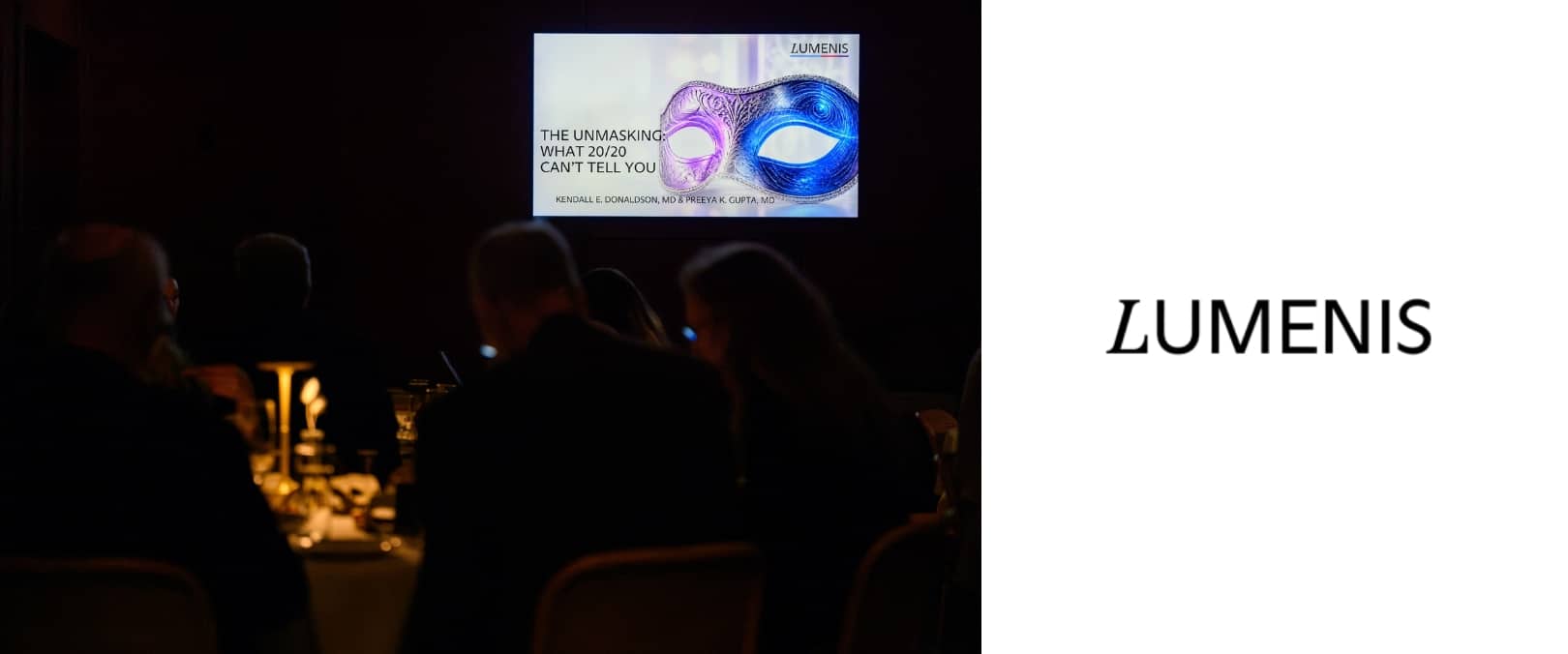
Lumenis unveiled the guide during a New Orleans‑themed masquerade dinner at AAO 2026. Attendees received Mardi Gras‑style masks, removing them together as the presentation began—a symbolic reminder that 20/20 vision can conceal underlying ocular surface concerns.
“Achieving 20/20 doesn’t guarantee a happy patient,” said Stacey Winter, President, North America, Lumenis. “Dry, irritated eyes can undermine even a technically perfect surgical outcome. This resource gives surgeons practical tools to make ocular surface care a deliberate part of the surgical journey.”
The guide also outlines treatment planning, disease severity matching, and surgical readiness. It highlights options including OptiLIGHT, the first and only FDA‑approved intense pulsed light (IPL) device for dry eye management due to meibomian gland dysfunction.
The World Council of Optometry (WCO) and Alcon have expanded access to their dry eye digital learning tools, now available in 10 languages. Eye care providers can use both the WCO Alcon Dry Eye Wheel and the Dry Eye Management Map in English, French, Spanish, Arabic, Chinese, Hungarian, Dutch, Bahasa, Ukrainian and Czech.
These free online resources support clinical decision‑making for dry eye disease, offering practical, evidence‑based guidance for eye care professionals, educators and students worldwide.
Updated Tools Supporting Global Dry Eye Management
The WCO Alcon Dry Eye Wheel is an interactive platform designed to help practitioners navigate dry eye care through three key steps: mitigation, measurement and management. Earlier this year, the tool was updated to reflect the latest recommendations from the TFOS DEWS III report.
Complementing the wheel, the Dry Eye Management Map provides an interactive, research‑based framework to assist clinicians in evaluating and managing dry eye disease. While these tools offer structured support, WCO emphasizes that optometrists retain full medical judgment in determining appropriate care.
“The WCO and Alcon dry eye initiative is a global program, and we’re committed to spreading awareness of dry eye and the resources available for diagnosis and treatment,” said Cindy Tromans, president of WCO. She highlighted the contributions of WCO volunteers who dedicated time to translating the tools, ensuring broader accessibility for eye care providers.
Dry Eye on the Rise Worldwide
“As digital devices become an increasingly constant part of daily life, people may blink less frequently and incompletely, disrupting the tear film and contributing to dry eye symptoms,” said Carla Mack, Global Head of Professional Education and Development at Alcon. She noted that expanding these resources into additional languages is essential to help practitioners recognize signs, guide patients and deliver individualized care.
Dry eye disease is a chronic condition that can significantly impact quality of life. Its prevalence continues to rise due to increased screen use, environmental factors and aging demographics. An estimated 1.6 billion people worldwide experience dry eye symptoms daily.
Marcolin and TBL Licensing LLC have announced the extension of their long‑standing licensing agreement for the design, production and worldwide distribution of Timberland® optical frames and sunglasses.
The renewed partnership now runs through 2031, reinforcing more than two decades of successful collaboration.
Established in 2003, the relationship between the two companies has grown steadily, driven by shared values and a commitment to quality, performance and innovation.
The five‑year renewal reflects the mutual trust and aligned vision that continue to shape Timberland Eyewear’s global presence.
A Shared Commitment to Quality, Performance and Outdoor‑Inspired Design
Timberland is recognized worldwide for premium footwear, apparel and accessories designed for people who embrace the outdoors. The brand consistently seeks new ways to blend durability, performance and contemporary style.
Marcolin mirrors this philosophy, creating eyewear collections that capture Timberland’s distinctive spirit of adventure and innovation. The sunglasses and optical frames feature bold, modern designs that combine the brand’s heritage with updated shapes, color palettes and materials — including bio‑based components used across many styles.
Global Availability and Continued Growth
Timberland Eyewear is available at select Timberland® stores, independent retailers, e‑commerce partners and optical professionals worldwide. The extended agreement strengthens the foundation for continued growth, ensuring that Timberland’s outdoor‑inspired eyewear remains accessible to consumers across global markets.
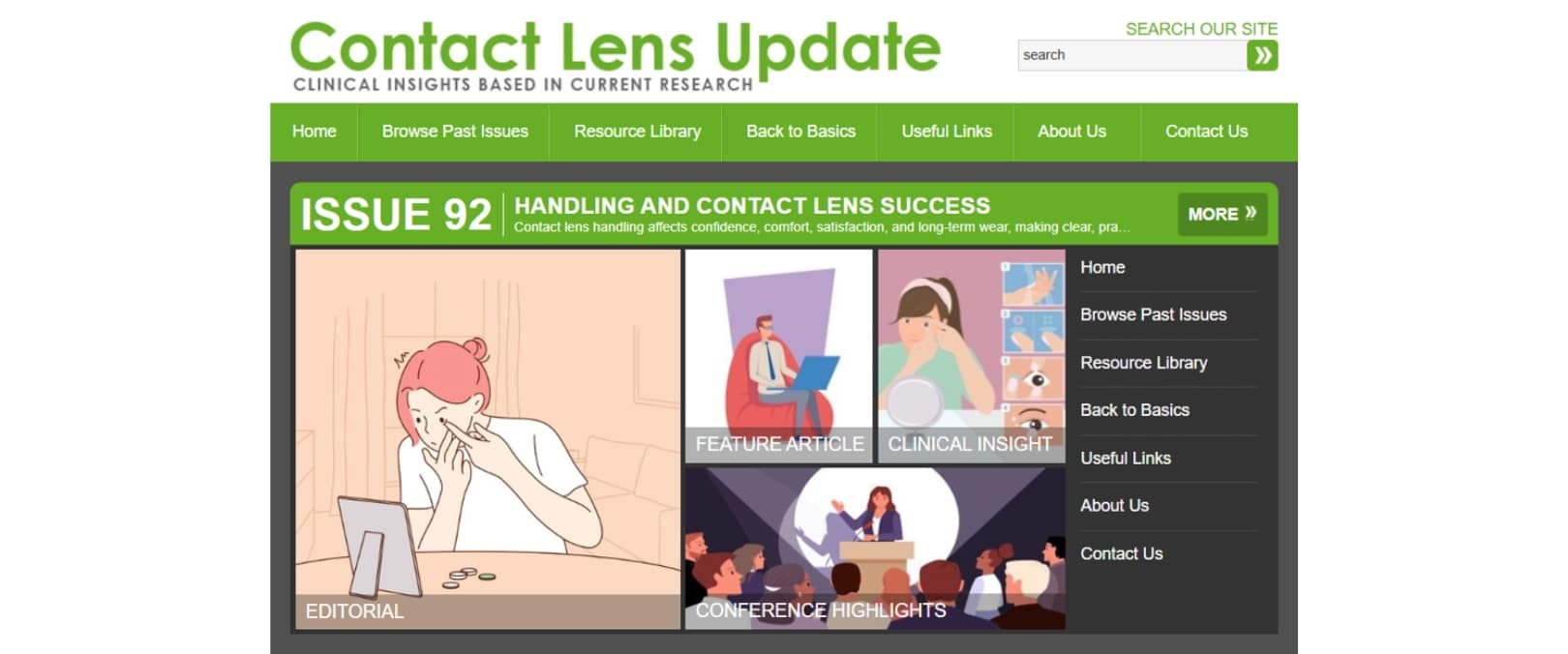
The Centre for Ocular Research & Education (CORE) has published Issue 92 of Contact Lens Update, focusing on the role of contact lens handling in successful wear and its influence on patient dropout. The bi‑monthly publication is available free of charge at ContactLensUpdate.com.
Handling remains a critical part of the contact lens experience, influencing patient confidence, satisfaction and long‑term success. Difficulties with application, removal or lens care can lead to frustration and, in some cases, discontinuation. According to Daddi Fadel, adjunct assistant professor at the University of Waterloo and consultant for CORE, clear and practical handling education should be considered an essential component of contact lens care.
Exploring Handling Challenges and Dropout Drivers
The opening editorial, co‑authored by Meredith Bishop, OD, MS, FAAO (Director of Global Medical Education, Vision, Johnson & Johnson) and Stephanie Wong (clinical scientist at CORE and associate editor of Contact Lens Update), examines how handling difficulties contribute to dropout. The authors outline strategies for tailored training, patient education and ongoing support to promote successful, sustained wear.
The feature article, written by Sebastian Marx, optometrist, professor and researcher at the JENVIS Research Institute in Germany, reviews the primary causes of contact lens dropout — including visual dissatisfaction, handling challenges, discomfort and ocular surface disease — and highlights approaches to improve retention and re‑engage former wearers.
Practical Clinical Tools and New Research Insights
CORE’s clinical insight section offers practitioners a practical video series demonstrating step‑by‑step handling techniques for corneal, soft and scleral lenses. The videos cover insertion, removal, cleaning and safe lens care, translating essential techniques into clear, clinically useful guidance to help patients build confidence and establish consistent routines.
The conference highlight, authored by Anna Sulley, optometrist and Visiting Research Fellow at Aston University, presents findings from a study comparing spherical and toric daily disposable lenses made from the same material. Over 10 hours of wear, both lens types showed similar comfort, wettability, fitting, handling and chair time.
Clockwise from Top Left: Meredith Bishop, Stephanie Wong, Anna Sulley, and Sebastian Marx
ContactLensUpdate.com also provides a complete archive of past issues and a resource library offering free professional tools, patient materials, images, videos and technical training content produced by the International Association of Contact Lens Educators, along with an industry glossary. Visitors can access Issue 92 directly or sign up for email delivery of future editions.
The publication is supported by the educational divisions of Alcon, CooperVision and Johnson & Johnson Vision.
Academy 2026 Anaheim showcased major research, innovation and leadership in optometry, featuring landmark studies, new Fellows and advances shaping the future of eye care.
ZEISS gathered eye care professionals in Vancouver for the Myopia Innovation Summit, introducing MyoActive and showcasing evidence based strategies for myopia management.
Learn how early optometry practice succession planning can improve practice value, reduce owner dependence, protect tax eligibility, and create a smoother transition.
CIBC Commercial Banking is stepping into Canadian optometry through a new collaboration with Eye Care Business Canada, debuting with a webinar on buying an optometric practice.
Academy 2026 Anaheim showcased major research, innovation and leadership in optometry, featuring landmark studies, new Fellows and advances shaping the future of eye care.
ZEISS gathered eye care professionals in Vancouver for the Myopia Innovation Summit, introducing MyoActive and showcasing evidence based strategies for myopia management.
Learn how early optometry practice succession planning can improve practice value, reduce owner dependence, protect tax eligibility, and create a smoother transition.
CIBC Commercial Banking is stepping into Canadian optometry through a new collaboration with Eye Care Business Canada, debuting with a webinar on buying an optometric practice.
Academy 2026 Anaheim showcased major research, innovation and leadership in optometry, featuring landmark studies, new Fellows and advances shaping the future of eye care.
ZEISS gathered eye care professionals in Vancouver for the Myopia Innovation Summit, introducing MyoActive and showcasing evidence based strategies for myopia management.
Learn how early optometry practice succession planning can improve practice value, reduce owner dependence, protect tax eligibility, and create a smoother transition.
CIBC Commercial Banking is stepping into Canadian optometry through a new collaboration with Eye Care Business Canada, debuting with a webinar on buying an optometric practice.
Academy 2026 Anaheim showcased major research, innovation and leadership in optometry, featuring landmark studies, new Fellows and advances shaping the future of eye care.
ZEISS gathered eye care professionals in Vancouver for the Myopia Innovation Summit, introducing MyoActive and showcasing evidence based strategies for myopia management.
Learn how early optometry practice succession planning can improve practice value, reduce owner dependence, protect tax eligibility, and create a smoother transition.
CIBC Commercial Banking is stepping into Canadian optometry through a new collaboration with Eye Care Business Canada, debuting with a webinar on buying an optometric practice.