
Specsavers Canada announced a landmark national partnership with the Toronto Blue Jays™, naming Specsavers as an official partner of Canada’s baseball team. This multi-year agreement reflects Specsavers’ commitment to making high-quality eyewear and eyecare accessible to more Canadians.
The Blue Jays have built a franchise worthy of the whole country – not just one city. Specsavers has spent five years doing the same for eyecare, growing from its first B.C. locations to more than 270 stores across nine provinces and one territory, with the goal of making quality eyecare and eyewear accessible for Canadians.
“The Toronto Blue Jays are more than a baseball team, they are a unifying force for Canadians from Victoria to St. John’s,” said Derek Fukui, Head of Marketing, Specsavers Canada. “We’ve spent five years showing up for communities across this country, and this partnership gives us a chance to do that on the biggest stage Canadian sports has to offer. I can’t wait to see what we build together.”
The Toronto Blue Jays boast the largest fan base in Canadian professional sports, with more than 15 million fans nationwide. Home games draw nearly one million average viewers on Rogers Sportsnet, making the Blue Jays the top broadcast sports property in Canada through the summer months. Coming off a historic World Series run that captured the attention of fans in every province and territory, the Blue Jays head into the 2026 season as one of the most talked-about franchises in the country.
“The Toronto Blue Jays are proud to welcome Specsavers as an official partner,” said Mark Ditmars, Vice President of Partnerships for the Toronto Blue Jays. “As Canada’s team, we are focused on working with brands that deliver real value to fans across the country, and Specsavers’ commitment to make high-quality eyewear and eyecare accessible makes them a natural fit. Together, we look forward to helping more Canadians show up at their best, both on and off the field.”
The partnership includes Specsavers as the Blue Jays presenting sponsor of the Strike Zone Challenge, based on the new Automated Ball-Strike (ABS) Challenge System – a new feature making its Major League Baseball debut this season. The Automated Ball-Strike (ABS) system allows players to challenge a home-plate umpire’s ball or strike calls: by tapping their cap or helmet, a batter, pitcher or catcher can trigger an instant review, with results displayed on the Rogers Centre videoboard and integrated into Sportsnet’s broadcast. The system adds a compelling new layer of strategy to the sport – and is a natural fit for a brand whose goal is to help more Canadians see the game clearly.
Optometry has evolved from paper files to digital records, from phone calls to virtual communication, and in the future, perhaps even to robots (bots) assisting humans. Every day, innovation takes on a new dimension as artificial intelligence (AI) is integrated into electronic medical record (EMR) systems. The future of communication and diagnostics in eye care remains uncertain: will AI replace parts of what we do, or simply help us work more efficiently, more accurately, and at lower cost while improving the patient experience?
1: AI Reduces Office Time, Improves Documentation, and Enhances the Patient Experience
AI can capture the doctor–patient conversation and generate clinical notes automatically. Unlike basic dictation tools, more advanced systems can organize information into the appropriate sections such as chief complaint, history, exam findings, assessment, and plan.
AI can also support tasks such as:
Billing and coding support
Documenting diagnostic impressions and recommended next steps
Used well, these tools can improve the patient–doctor experience. The clinician can stay more present with the patient, while reducing clerical workload and documentation interruptions. This can also help reduce clinician burnout by making charting more seamless and efficient at the point of care, reducing the need for after-hours documentation.
2: Integrating AI and EMR
When AI outputs can be structured and integrated into an optometry EMR, the system can help identify patterns and automate repetitive, but necessary, tasks. Depending on the platform and workflow, AI-enabled EMR integration may support:
Prescriptions and documentation support
Referrals and communication templates
Treatment plan tracking and management
Patient education materials based on clinical findings
Interpretation support and clinical prompts
Revenue cycle support
Analytics and reporting
With thoughtful integration, the EMR can begin to function less like a passive record and more like an active clinical assistant.
3: AI Imaging as Clinical Support
OCT, fundus photography, corneal topography, and visual field data can be analyzed using AI models trained on large datasets. Applications may include:
Diabetic retinopathy screening
Glaucoma risk and progression monitoring
AMD risk stratification and progression tracking
Corneal irregularity detection
Automated comparison of serial scans
AI-powered support tools may also combine imaging with clinical measurements such as intraocular pressure, pachymetry, and refraction. These tools are not a replacement for clinical judgment, but they can add a layer of insight and help flag subtle changes that are easy to miss in busy practice.
4: AI’s Impact on Practice Management
Administrative inefficiencies are a major source of stress and cost in many practices. AI-enabled systems can assist with:
Insurance claim submission, verification, and follow-up
Coding support, rejection handling, and resubmissions
Appointment scheduling, reminders, and recall workflows
By reducing errors and repetitive front-desk work, AI can free staff to focus on higher-value patient service and practice operations; helping reduce administrative burden and improve consistency.
5: Patient Communication
AI can improve patient understanding and satisfaction by:
Providing personalized summaries of findings
Explaining recommendations and outcomes in plain language
Generating visuals or simplified graphics that help patients understand their results
Supporting appointment booking and capturing patient concerns ahead of visits
Providing relevant pre-visit or post-visit information for recommended procedures
Practice bonus: when patients are better informed, they are often more confident and more compliant, leading to smoother visits, fewer misunderstandings, and a stronger overall experience for patients, staff, and clinicians.
6: Standardization Through AI and EMR Connectivity
A major advantage of AI is its potential to integrate with EMR systems more seamlessly than older workflows. Historically, many EMRs operated in silos, requiring manual entry and increasing the risk of transcription errors.
With tighter device-to-EMR integration, key data, such as refractions, visual acuities, intraocular pressure measurements, and imaging results, can populate charts automatically. This reduces redundancy, improves accuracy, and supports standardization across the clinical team.
7: The Advantage of an AI-Enhanced Practice
When documentation, scheduling, coding, and routine analysis are partially automated, optometrists gain time to do what matters most: be human. That means having more capacity to educate, reassure, and build trust without sacrificing the operational demands of modern practice.
The future of optometry will be shaped by clinicians who use AI strategically to enhance care, reduce burnout, and elevate the patient experience. Practices that adopt AI, and integrate it effectively into their EMR, will be better positioned to improve efficiency, strengthen resilience, and pursue clinical excellence in the face of tomorrow’s practice challenges.
About the Author:
Dr. Diana M. Monea, OD, FAAO, MHRM
Dr. Diana M. Monea is an award-winning optometrist, author, and keynote speaker with more than four decades of leadership in clinical practice, business ownership, and professional education. Founder and former CEO of Eye Health Centres, she now focuses on consulting, mentorship, patient care, and public speaking.
Want to see more articles like this? Click here to subscribe to our FREE print magazine and newsletters!
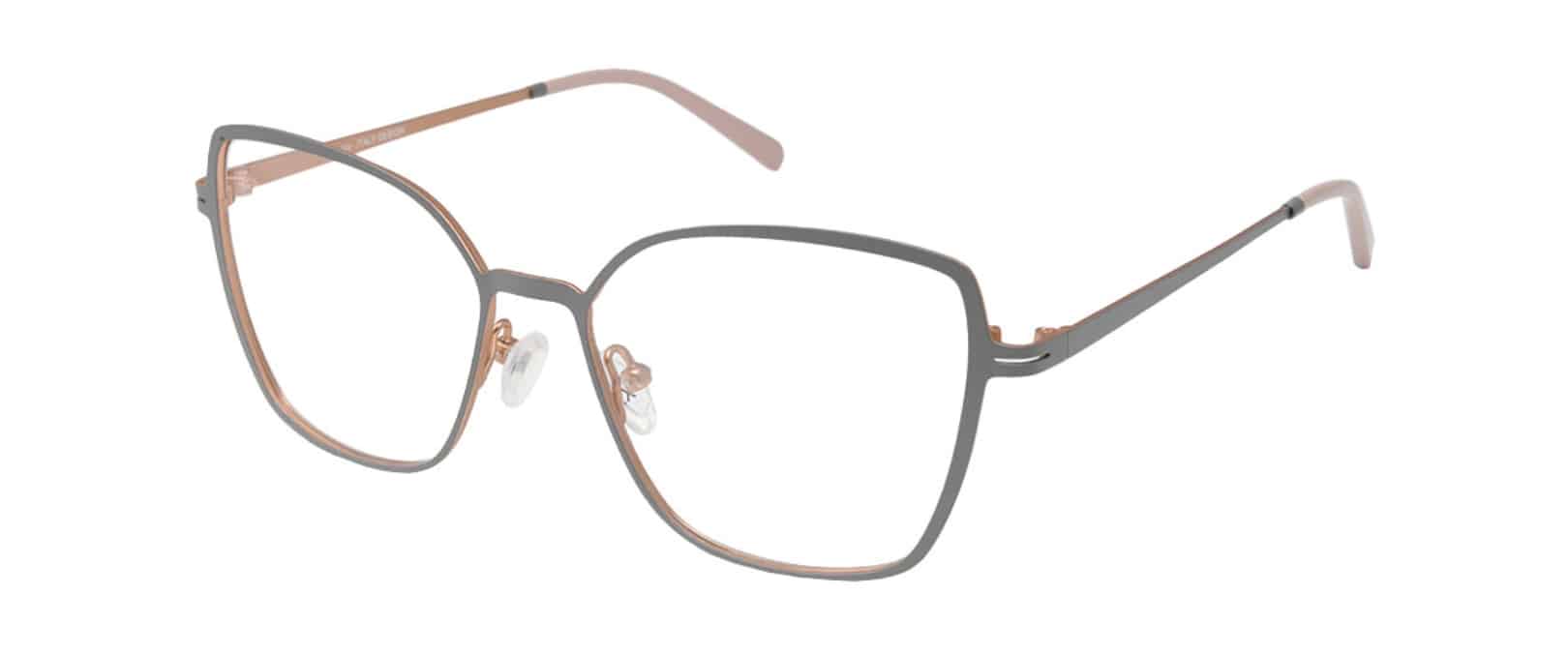
AOMW 2.0 sharpens the original concept with refined proportions anduniversal fit. The unifit bridge and OBE spring hinges ensure lastingcomfort, while TR18 polarized lenses deliver crisp clarity. Timeless neutralsand polished seasonal hues make this frame a statement in versatility.
Founded in 2002, The Optical Foundry is a collective of nine independent eyewear brands (Article One, l.a.Eyeworks, OGI, OGI Kids, Red Rose, Seraphin, Seraphin Shimmer, SCOJO New York, and SCOJO NYC 212) and Sayduck virtual try-on technology. Guided by the motto “Independence for Independents,” we empower optical professionals with quality products, innovative tools, and steadfast support.
Want to see more like this article? Click here to subscribe to our FREE print magazines and e- newsletters!
The latest episode of the Eye on the Industry podcast marks a significant milestone as co-hosts Christine Zeggil and Isabelle Tremblay celebrate the show’s first anniversary with a special retrospective episode.
Over the past year, the podcast has featured a diverse lineup of leaders, innovators, and industry advocates from across the optical profession. In this anniversary edition, Christine and Isabelle look back on the conversations, lessons, and memorable moments that have shaped the series since its launch.
The hosts share highlights from the podcast’s first year, which generated more than 80,000 trade media impressions, over 200,000 brand impressions, and more than 12,000 views across platforms including YouTube, Spotify, Amazon Music, LinkedIn, and Instagram. They also reflect on the remarkable guests who have contributed their expertise and personal stories, covering topics ranging from leadership and practice management to resilience, innovation, advocacy, and professional growth.
Listeners will hear behind-the-scenes stories from the podcast’s beginnings, personal reflections on lessons learned, and a few lighthearted moments—including some of the hosts’ most memorable and embarrassing experiences in the optical industry.
Among the guests featured during the podcast’s inaugural year were industry leaders including Robert Dalton, Helen Whitaker, Rachel Hill, Sheena Taff, Michael White, Dr. Kieran Ramesh, Kevin Wilhelm, Dr. V. Tuban, Teri Hart, Dr. Harbir Sian, and Dr. Diana Monea. Together, their conversations explored the evolving role of eye care professionals, leadership development, business growth, community building, and the future of the optical industry.
As they look ahead to the next chapter, Christine and Isabelle express their gratitude to listeners, guests, sponsors, and media partners who have supported the podcast’s growth and helped foster meaningful conversations across the profession.
The anniversary episode is now available on major podcast platforms.
Want to see more like this article? Click here to subscribe to our FREE print magazines and e-newsletters!

EssilorLuxottica and Applied Materials, Inc. announced a long-term joint development agreement to accelerate the commercialization of next-generation intelligent optical systems for augmented reality and AI-powered smart eyewear.
The collaboration combines EssilorLuxottica’s global leadership in lenses, frames and smart eyewear with Applied Materials’ expertise in materials engineering and waveguide technologies to advance scalable optical platforms capable of delivering lightweight, high-performance visual experiences for the next era of computing.
Together, the companies will collaborate on research and development of advanced optical technologies, including waveguides, adaptive lens systems and materials innovations, which can enable future intelligent lenses and augmented reality (AR) experiences. Waveguides are fundamental to AR devices, providing the optical layer, which power projected images to be coupled into, guided through and emitted from a transparent lens while maintaining visibility of the real world. Light-adaptive and electro-active lenses dynamically adjust lens tint offering vision and well-being benefits in all light conditions, while advanced lens encapsulation technologies help preserve the optical performance of AR display systems.
By combining complementary expertise and intellectual property, the companies aim to accelerate the path from breakthrough innovation to manufacturable and scalable optical solutions through joint research initiatives conducted at a dedicated collaboration lab located on Applied Materials’ Silicon Valley campus.
“We believe the convergence of advanced optics, AI and wearable technologies will unlock a new generation of experiences for consumers,” said Francesco Milleri, Chairman and CEO, EssilorLuxottica. “For decades, EssilorLuxottica has advanced breakthrough innovations in lenses and visual performance, helping redefine how people experience the world around them. Together with Applied Materials, we look forward to exploring intelligent optical technologies that can help shape the future of smart glasses and next-generation visual computing, creating a new global force for the expansion of the display wearables category.”
“Designing, building and scaling next-generation smart glasses will require deep collaboration across the technology ecosystem,” said Gary Dickerson, President and CEO, Applied Materials. “By bringing together Applied Materials’ leadership in photonics and materials engineering with EssilorLuxottica’s expertise in lenses and smart eyewear, we are accelerating the development and commercialization of advanced display smart glasses that can create entirely new user experiences.”
Applied Materials and EssilorLuxottica also plan to jointly explore additional strategic opportunities to further develop and commercialize technologies created through the collaboration.
SightGlass Vision’s DOT™ spectacle lenses have won a Gold Stevie® Award for Technology Breakthrough of the Year, recognizing their contrast management innovation and clinical impact in slowing myopia progression in children. The award highlights strong clinical evidence, rapid adoption and growing industry recognition.
DaTE 2026 opens in four days in Napoli, where more than 130 independent eyewear brands will gather at Salone Margherita from 12–14 September. The event brings together designers, opticians, buyers and industry professionals for three days of discovery, networking and creative exchange.
A new Canadian survey from Bausch + Lomb reveals that dry eye patients often face delays in diagnosis and wish they had accessed prescription treatment sooner, highlighting key gaps in education and care pathways for older adults.
Discover how AI in eye care is transforming clinical practice. Explore 6 AI-enabled tools, including OphtAI and Altris AI, that improve diagnostics and workflow efficiency.
Now available in Canada, Demi + Dash brings contemporary eyewear to style-conscious kids ages 7–12, combining fashion-forward design with fit, flexibility and everyday performance.
SightGlass Vision’s DOT™ spectacle lenses have won a Gold Stevie® Award for Technology Breakthrough of the Year, recognizing their contrast management innovation and clinical impact in slowing myopia progression in children. The award highlights strong clinical evidence, rapid adoption and growing industry recognition.
DaTE 2026 opens in four days in Napoli, where more than 130 independent eyewear brands will gather at Salone Margherita from 12–14 September. The event brings together designers, opticians, buyers and industry professionals for three days of discovery, networking and creative exchange.
A new Canadian survey from Bausch + Lomb reveals that dry eye patients often face delays in diagnosis and wish they had accessed prescription treatment sooner, highlighting key gaps in education and care pathways for older adults.
Discover how AI in eye care is transforming clinical practice. Explore 6 AI-enabled tools, including OphtAI and Altris AI, that improve diagnostics and workflow efficiency.
Now available in Canada, Demi + Dash brings contemporary eyewear to style-conscious kids ages 7–12, combining fashion-forward design with fit, flexibility and everyday performance.
SightGlass Vision’s DOT™ spectacle lenses have won a Gold Stevie® Award for Technology Breakthrough of the Year, recognizing their contrast management innovation and clinical impact in slowing myopia progression in children. The award highlights strong clinical evidence, rapid adoption and growing industry recognition.
DaTE 2026 opens in four days in Napoli, where more than 130 independent eyewear brands will gather at Salone Margherita from 12–14 September. The event brings together designers, opticians, buyers and industry professionals for three days of discovery, networking and creative exchange.
A new Canadian survey from Bausch + Lomb reveals that dry eye patients often face delays in diagnosis and wish they had accessed prescription treatment sooner, highlighting key gaps in education and care pathways for older adults.
Discover how AI in eye care is transforming clinical practice. Explore 6 AI-enabled tools, including OphtAI and Altris AI, that improve diagnostics and workflow efficiency.
Now available in Canada, Demi + Dash brings contemporary eyewear to style-conscious kids ages 7–12, combining fashion-forward design with fit, flexibility and everyday performance.
SightGlass Vision’s DOT™ spectacle lenses have won a Gold Stevie® Award for Technology Breakthrough of the Year, recognizing their contrast management innovation and clinical impact in slowing myopia progression in children. The award highlights strong clinical evidence, rapid adoption and growing industry recognition.
DaTE 2026 opens in four days in Napoli, where more than 130 independent eyewear brands will gather at Salone Margherita from 12–14 September. The event brings together designers, opticians, buyers and industry professionals for three days of discovery, networking and creative exchange.
A new Canadian survey from Bausch + Lomb reveals that dry eye patients often face delays in diagnosis and wish they had accessed prescription treatment sooner, highlighting key gaps in education and care pathways for older adults.
Discover how AI in eye care is transforming clinical practice. Explore 6 AI-enabled tools, including OphtAI and Altris AI, that improve diagnostics and workflow efficiency.
Now available in Canada, Demi + Dash brings contemporary eyewear to style-conscious kids ages 7–12, combining fashion-forward design with fit, flexibility and everyday performance.