Survey finds Canadians aren’t wearing sunglasses enough, which can increase risk of cataracts
Many Canadians love basking in the sun during the long-awaited summer months, but they’re not taking enough precautions to protect their eyes from damaging UV rays that can lead to cataracts, one of the four leading eye diseases. In time for UV Safety Awareness Month, a joint survey from the Canadian Ophthalmological Society and the Canadian Association of Optometrists reveals that just two-thirds of Canadians regularly wear sunglasses on a sunny day (64 per cent) or during the summer months (63 per cent), and only 33 per cent wear them all year long. If left untreated, cataracts can cause blindness.
“It’s important to protect our eyes from harmful UV rays all year long to decrease the risk of developing cataracts later in life,” says Dr. Phil Hooper, President of the Canadian Ophthalmological Society. “While this eye disease is more common in people over 60, young people are still at risk, so taking the necessary precaution now will only help decrease their chances of getting this eye disease in the future.”
The survey also revealed that younger Canadians may not be taking enough precaution in protecting their eyes from harmful UV rays. Only a third of respondents say that their children regularly wear sunglasses on a sunny day (33 per cent) or during the summer months (32 per cent), and only 13 per cent say their children wear them on a cloudy day, despite the fact that UV rays are still present.
Over 2.5 million people in Canada are living with cataracts, and while the eye disease is most common in people over the age of 60, changes to the lens generally start around the age of 40.
ZEISS ClearView Single Vision lenses represent a milestone in optics and aesthetics of Standard Single Vision lenses
Standard single vision (SV), whether spherical (SPH) or aspherical (AS) is the most sold ophthalmic lens type worldwide. Now ZEISS has identified a way to get many attributes of complex single vision freeform lens designs into both stock FSV lenses and standard SV surfaced lenses. The result is ZEISS ClearView Single Vision lenses. It offers high optical quality in order to provide clear vision from the lens center to the periphery and is very thin and flat at the same time.
A closer look at different single vision lens designs
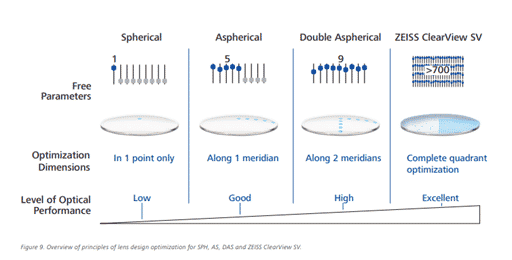
To get a better understanding of this ZEISS innovation, it makes sense to take a closer look at single vision lens designs. The choice of lens design impacts the aesthetics, comfort of the lens, and optical performance. Spherical (SPH) single vision lenses, for example, are typically optimized using only one free parameter (the radii of curvature of the lens surface). Aspheric (AS) single vision lenses have a more complex shape. Typically, the lens front surface is optimized with a low number of free parameters in one meridian. Double aspherical single vision lenses are generally optimized using twice the number of free parameters. But in summary, all these lens designs do not adequately address the peripheral optics of most prescriptions.
In the 1990s ZEISS pioneered freeform lens design technology in surfaced lenses – which are made to order. And now it is also ZEISS that has introduced single vision freeform lens design to improve the optics and aesthetics of the SV lens category. This is possible due to a specially created freeform lens design for FSV and the new ClearForm manufacturing process that incorporates this design into the finished lens. The lens design includes point-by-point optimization with the use of around 700 free parameters across the lens. This ClearForm process utilizes the latest computer numerically controlled (CNC) generators that use special diamond cutting and polishing tools to surface the complex shaped molds for ZEISS ClearView FSV lenses. The final lens delivers, on average, a three times larger zone of excellent clear vision,[1] to provide the wearer with more clarity from the lens center to the periphery. It is therefore designed to deliver a higher level of comfort and satisfaction for the eyeglasses wearer. In addition, the complex lens shapes allow wearers to experience this vision clarity in a flatter and thinner lens than conventional SV lens designs that rely on steeper base curves to provide just acceptable optical performance. In numbers, this means: ZEISS SV ClearView lenses are on average 34 percent flatter across all prescriptions and up to 16 percent thinner compared to typical spherical single vision lenses.[2],[3]
Principles of lens design optimization for spherical, aspherical, double aspherical and ZEISS ClearView SVs.
“ZEISS is transforming the single vision market by bringing many aspects of freeform lens design to the SV lens category,” explains Bryan Rossi, the President of Zeiss Vision Care Canada. “Freeform lens design combined with the ClearForm technology used in ZEISS ClearView SV enables complex lens shapes that were previously only possible in surfaced single vision lenses. ZEISS now offers premium quality optics in finished single vision lenses, combined with fast delivery and affordable pricing to ensure everyone can access the benefits of ZEISS optics,” adds Maryam Karbalaei, the Marketing Manager of Zeiss Vision Care Canada.
[1] Based on a visual clarity simulation on a 50 mm diameter lens area for 1.60 index ZEISS FSV ClearView lenses compared to 1.60 ZEISS AS FSV lenses. Average of +5 D, +3 D, +1 D, -1 D, -3 D, -5 D, and -7 D with and without a cylinder of -2 D. Quantitative analyses by Technology & Innovation, Carl Zeiss Vision GmbH, 2020.
[2] Measurements of lens flatness (base curve) on 1.60 ZEISS ClearView FSV lenses compared to ZEISS Spherical FSV lenses. Average of -5, -3, -1, +1, +3, +5 D with and without cyl -2 D. Maximum reduction of 49% of -5.00 D with and without -2 D cyl for minus lenses. Maximum reduction of 25% of 5.00 D with and without 2 D cyl for plus lenses. Quantitative analyses by Technology & Innovation, Carl Zeiss Vision GmbH, DE, 2020.
[3] Measurements of lens thickness on 1.60 ZEISS ClearView FSV lenses compared to ZEISS spherical FSV lenses over a range of prescriptions (-5, -3, -1, +1, +3, +5 D with and without cyl -2 D). Maximum reduction of 16% for center thickness of +5.00/-2.00. Quantitative analyses by Technology & Innovation, Carl Zeiss Vision GmbH, DE, 2020.
An undeniable international business hub and a remarkable platform for envisioning the future of the optical and eyewear industry, SILMO Paris is its most tangible reflection. Far from just a marketing slogan, its message, “Welcoming Visionaries”, is a rallying cry convening new ideas, concepts, technological developments, and trends.
An overview of the highlights not to be missed throughout SILMO Paris 2022!
At the heart of the event, professionals cannot overlook the interdisciplinary discussion space SILMO Next.
This showcase for creation and innovation hinges around various complementary focuses: lectures, workshops exploring new technologies (the Metaverse, intelligent glasses, and so on), and talks, not to mention the digital village where companies gather to promote and sell their high-tech products.
But what would technology be without tradition and savoir-faire?
That’s why the Meilleurs Ouvriers de France (MOF) will also be highlighted on SILMO Next. This expression of eyewear crafting heritage will demonstrate that the present and future intermingle in creativity and tradition.
In this echo chamber of imagination, conception and design, don’t miss the Trends Forum. With its selection of the best optical and sunglasses frames of all the exhibitors attending the trade fair, it reflects the TRENDS by SILMO digital magazine.
The SILMO d’OR awards will also occupy a place of choice. Like a living showcase for innovation, the products nominated for the 2022 edition and the winners will be revealed to the entire profession.
And, new in 2022, the SILMO Next will exhibit the winning creations of the first OPTICAL DESIGN CONTEST. A prize deserving of the challenge will be awarded to the winner of the competition at the next SILMO Paris.
In keeping with this approach, and to accompany ophthalmic optical professionals in their pursuit of excellence, SILMO Paris will, once again, support research in the Vision and Optical Sciences with SILMO Academy. The Scientific Council will select one project to receive a grant of €10,000. This year will also be an opportunity to discover the results or developments of the winning projects which received SILMO Academy grants in 2021, 2020 and 2019.
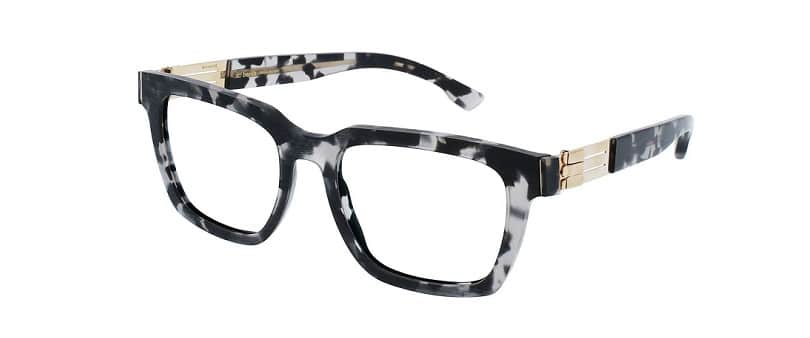
Introduced in the Acetate Hybrid Collection launched in March from ic! berlin, the Geoffrey frame reintroduces the vintage square style we all love with bold new colourways. The acetate used is biodegradable and is sourced from a premium provider with a rich legacy. The Geoffrey is very reminiscent of its cousin Mr. Yang. George is the brother of Geoffrey with nose pads.
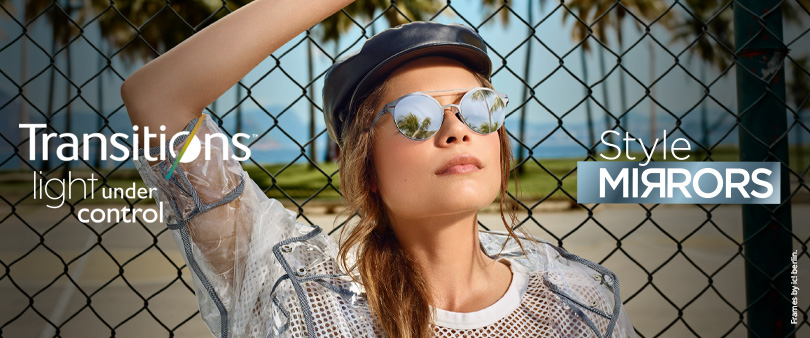
To bring patients extra style this summer, Transitions® XTRActive® new generations lenses come in five stunning Style Mirror colours. Available in gold, silver, copper, blue green and blue violet, wearers can create all their own by pairing any colour lens with their favorite frames. Plus, these light intelligent lenses adapt seamlessly to any lighting environment providing the icon look patients want with the all-day protection they need. So, your patients have the choice to select the iconic colors as Grey, Brown and Graphite Green and add some style with one of the 5 mirrors.
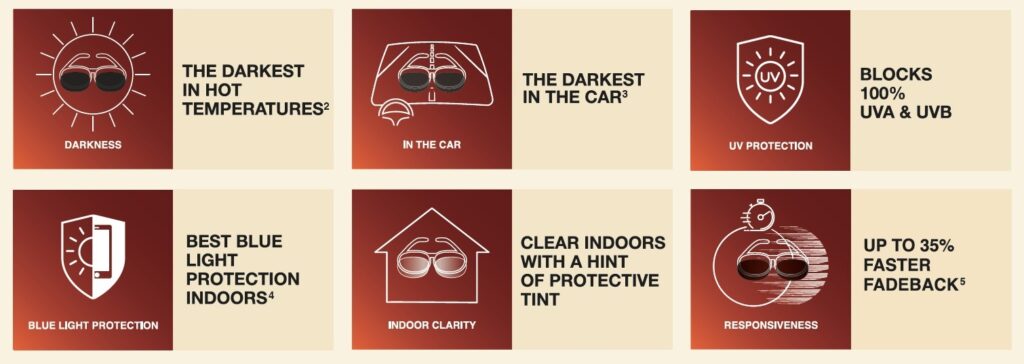
Compared to the old Transitions XTRActive lenses, this new generation is darker overall[vi], darker in hot temperatures and in the car, and up to 35% faster to fade back[vii]. These advances are possible thanks to the new nano-composite matrix technology combined with new, extra powerful broad spectrum dyes which activate in both the UV and visible light spectrum.
“People are experiencing increased symptoms of eye strain and discomfort whether inside from screens or outdoors, and Transitions XTRActive lenses were designed with this issue in mind. In fact, three out of ten eyeglass wearers are very light sensitiveiv” said Brian O’Neil, Ph.D., global vice president, Innovation, Technology & Operations, Transitions Optical. “Wearers of Transitions Optical technology want flexibility between indoors, outdoors and driving to be better protected at all times. The new generation of Transitions XTRActive provides light protection regardless of the situation.”
In addition to this new generation, Transitions Optical began the rolling launch of Transitions® XTRActive® Polarized™ in Canada in January 2021. Both products provide extra protection for eyeglass wearers who are frequently in intense light situations or who are very light sensitive. Transitions XTRActive Polarized is an extension of the Transitions XTRActive range bringing the additional benefits of polarization to the extra dark photochromic category, while Transitions XTRActive new generation lenses offer the best extra darkness[viii]. Transitions XTRActive Polarized lenses are designed for patients who want extra protection in high-glare situations. The unique polarization technology reduces glare outdoors, providing sharper vision, a larger field of view and bright, vivid colours.
Transitions XTRActive new generation and Transitions XTRActive Polarized lenses are available now. Please contact your local laboratory that provides you the Transitions XTRActive portfolio to know more about their product availability.
[i] In the clear to dark photochromic category. Tests across polycarbonate and 1.5 grey lenses at 35°C achieving <18%T using Transitions Optical’s standard testing method.
[ii] Clear to dark photochromic category. Polycarbonate and 1.5 grey lenses tested at 23°C behind the windshield achieving between 18%T and 43%T.
[iii] Clear to dark photochromic category. Tested on grey lenses across materials at 23°C outdoors achieving >8%T (Category 3 Darkness Levels) using Transitions Optical’s standard testing method.
[iv] Protection from harmful blue light (380nm-460nm) across the following light situations: indoors at 23°C, behind the windshield and outdoors at 23°C, among polycarbonate and 1.5 grey lenses in the clear to dark photochromic category.
[v] From harmful blue light (380nm-460nm) at 23°C among polycarbonate and 1.5 grey lenses in the clear to dark photochromic category.
iv Transitions Optical, Quality of Vision and Vision Experience Test in Controlled Lab Situations (Lab Wearer Testing), U.S., Eurosyn, Q4 2019, N=135.
[vi] Compared to the previous generation, across materials tested on grey lenses at 23°C and 35°C.
[vii] Compared to the previous generation, across materials tested on grey lenses fading back to 70% transmission at 23°C.
[viii] In hot temperatures and in the car in the clear to dark photochromic category. Tests across polycarbonate and 1.5 grey lenses at 23°C and 35°C using Transitions Optical’s standard testing method.
New Look President Jacinthe Laurendeau joins Eye on the Industry to celebrate the company’s 40th anniversary and discuss innovation, technology, customer experience and what comes next.
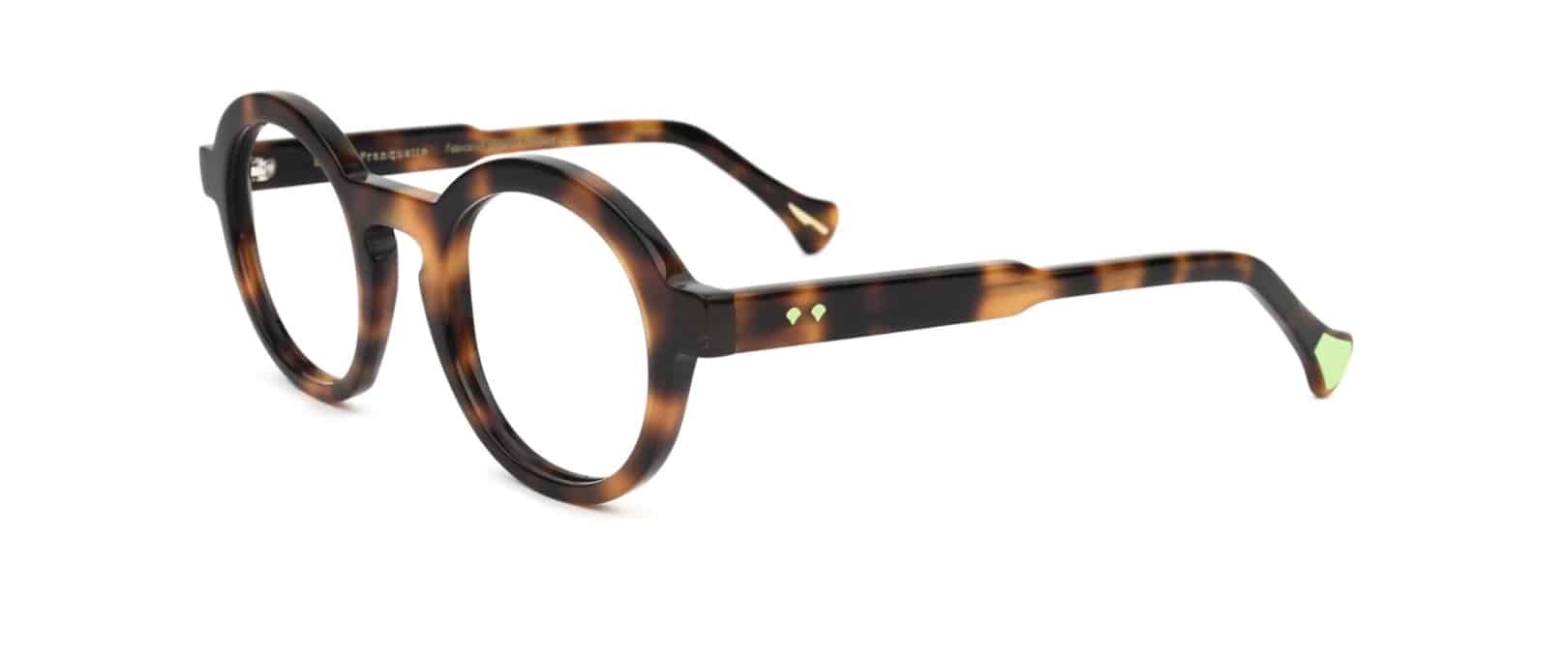
Created with French chef Mathieu Pérou, Silure de Loire pairs a round acetate silhouette with tortoise tones, subtle green accents and resin details inspired by fish scales.
The Students of Vision Scholarship Program, presented by Transitions Optical and the Opticians Association of Canada, challenges future eye care professionals to develop a creative initiative that helps young adults better understand the impact of light on visual comfort, performance and everyday life. Top submissions will receive scholarships and smart eyewear equipped with Transitions lenses.
A new Vision Council report shows most adults with digital eye strain symptoms never seek care, underscoring the importance of eyecare providers in guiding patients.
Applications are now open for the MIDO AWARDS 2027, including the CSE Award, CSE Corporate Award and Best Store Award, recognizing sustainability, innovation and excellence across the global optical industry.
New Look President Jacinthe Laurendeau joins Eye on the Industry to celebrate the company’s 40th anniversary and discuss innovation, technology, customer experience and what comes next.
Created with French chef Mathieu Pérou, Silure de Loire pairs a round acetate silhouette with tortoise tones, subtle green accents and resin details inspired by fish scales.
The Students of Vision Scholarship Program, presented by Transitions Optical and the Opticians Association of Canada, challenges future eye care professionals to develop a creative initiative that helps young adults better understand the impact of light on visual comfort, performance and everyday life. Top submissions will receive scholarships and smart eyewear equipped with Transitions lenses.
A new Vision Council report shows most adults with digital eye strain symptoms never seek care, underscoring the importance of eyecare providers in guiding patients.
Applications are now open for the MIDO AWARDS 2027, including the CSE Award, CSE Corporate Award and Best Store Award, recognizing sustainability, innovation and excellence across the global optical industry.
New Look President Jacinthe Laurendeau joins Eye on the Industry to celebrate the company’s 40th anniversary and discuss innovation, technology, customer experience and what comes next.
Created with French chef Mathieu Pérou, Silure de Loire pairs a round acetate silhouette with tortoise tones, subtle green accents and resin details inspired by fish scales.
The Students of Vision Scholarship Program, presented by Transitions Optical and the Opticians Association of Canada, challenges future eye care professionals to develop a creative initiative that helps young adults better understand the impact of light on visual comfort, performance and everyday life. Top submissions will receive scholarships and smart eyewear equipped with Transitions lenses.
A new Vision Council report shows most adults with digital eye strain symptoms never seek care, underscoring the importance of eyecare providers in guiding patients.
Applications are now open for the MIDO AWARDS 2027, including the CSE Award, CSE Corporate Award and Best Store Award, recognizing sustainability, innovation and excellence across the global optical industry.
New Look President Jacinthe Laurendeau joins Eye on the Industry to celebrate the company’s 40th anniversary and discuss innovation, technology, customer experience and what comes next.
Created with French chef Mathieu Pérou, Silure de Loire pairs a round acetate silhouette with tortoise tones, subtle green accents and resin details inspired by fish scales.
The Students of Vision Scholarship Program, presented by Transitions Optical and the Opticians Association of Canada, challenges future eye care professionals to develop a creative initiative that helps young adults better understand the impact of light on visual comfort, performance and everyday life. Top submissions will receive scholarships and smart eyewear equipped with Transitions lenses.
A new Vision Council report shows most adults with digital eye strain symptoms never seek care, underscoring the importance of eyecare providers in guiding patients.
Applications are now open for the MIDO AWARDS 2027, including the CSE Award, CSE Corporate Award and Best Store Award, recognizing sustainability, innovation and excellence across the global optical industry.